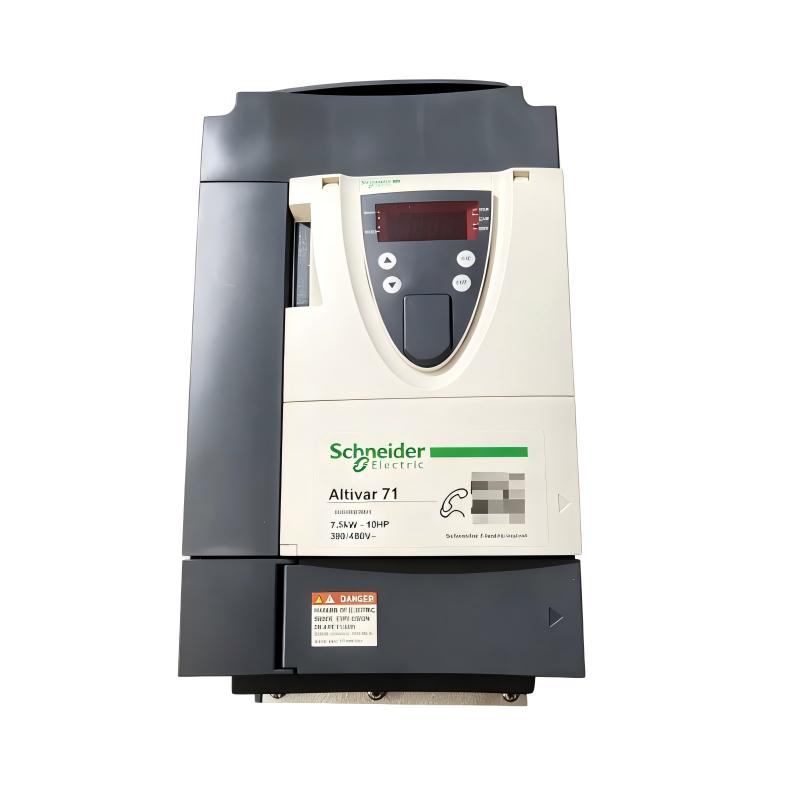
Schneider ATV71HU75N4Z383 Variable Speed Drive Installation Guide (Permanent Magnet Motor Setup & Commissioning)
Schneider ATV71HU75N4Z383 variable speed drive installation problems are usually caused by incorrect permanent magnet motor parameters, encoder configuration errors, unsuitable control mode selection, or incorrect wiring rather than drive hardware failure. In permanent magnet synchronous motor applications, the drive may start normally but fail to achieve stable torque control if motor identification data, feedback settings, or commissioning parameters are incorrect.
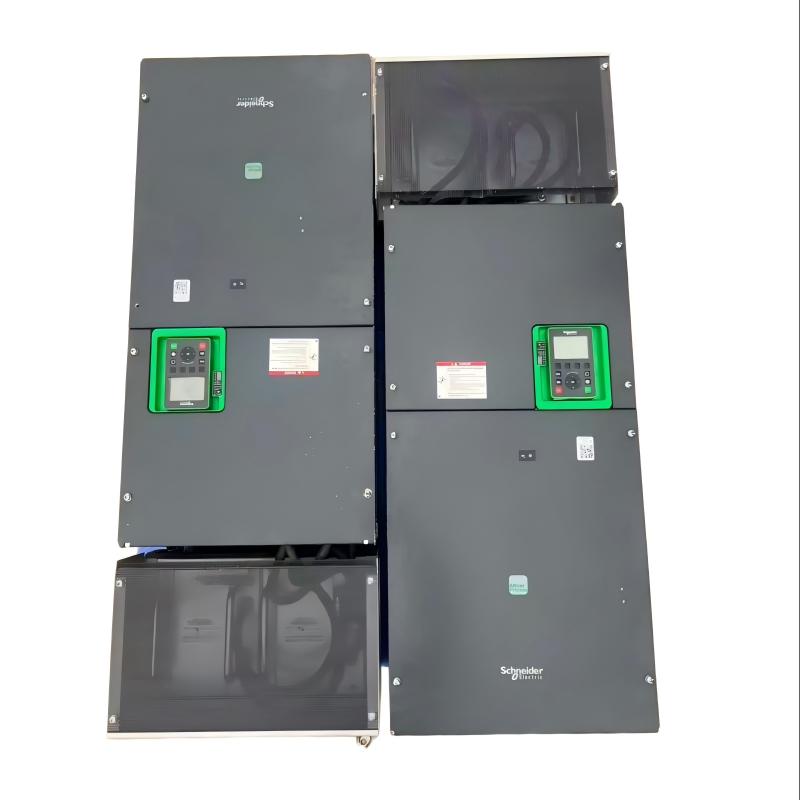
The Schneider ATV71HU75N4Z383 Variable Speed Drive is a specialized Altivar 71 series drive variant designed for synchronous motor applications requiring precise speed and torque control. The “383” extension identifies versions intended for synchronous motors with speed feedback, providing improved motor control performance for demanding industrial applications.
Schneider ATV71HU75N4Z383 Permanent Magnet Motor Drive Application Overview
The ATV71HU75N4Z383 operates as the control center between the industrial power supply and a permanent magnet synchronous motor (PMSM).
Typical system architecture:
 id="atv71pmsm01"
Three Phase AC Supply
          |
          |
Schneider ATV71HU75N4Z383 Drive
          |
          |
Encoder / Speed Feedback
          |
          |
Permanent Magnet Synchronous Motor
          |
          |
Pump / Fan / Machine Load
Main functions:
- Permanent magnet motor speed regulation
- High-accuracy torque control
- Encoder feedback processing
- Adjustable acceleration and deceleration
- Motor protection and monitoring
Typical applications:
- Precision production machinery
- High-efficiency pump systems
- Servo-like industrial drives
- Packaging equipment
- Process machines requiring accurate speed control
The ATV71HU75N4Z383 is based on the Altivar 71 platform, which supports advanced motor control methods including synchronous motor operation when configured with suitable feedback equipment.
In one packaging machine upgrade project, engineers installed an ATV71HU75N4Z383 to replace a traditional induction motor drive system.
During commissioning:
- Drive power: Normal
- Motor feedback: Detected
- Motor rotation: Unstable
- Torque response: Poor
The initial assumption was a defective permanent magnet motor.
Engineers performed a field investigation:
- Checked encoder wiring
- Verified motor nameplate information
- Reviewed motor control parameters
- Performed motor identification
Measured condition:
Before correction:
- DC bus voltage: Normal
- Encoder signal: Present
- Motor current: Oscillating
- Speed feedback deviation: High
The investigation found that the encoder feedback direction was incorrect.
After correction:
- Speed feedback became stable
- Motor torque improved
- Machine positioning accuracy returned to normal
The problem was caused by commissioning configuration, not drive hardware.
Schneider ATV71HU75N4Z383 Installation Preparation and Motor System Planning
Before installing the ATV71HU75N4Z383, engineers should evaluate the complete permanent magnet motor control system.
Preparation requirements:
- Confirm PMSM motor specifications
- Verify encoder type
- Check motor rated current
- Review mechanical load characteristics
- Prepare drive parameter list
Installation checklist:
| Inspection Item | Engineering Requirement |
|---|---|
| Motor type | Permanent magnet synchronous motor |
| Feedback device | Compatible encoder system |
| Power supply | Correct three-phase voltage |
| Motor cable | Proper shielding and grounding |
| Control configuration | PMSM mode selected |
A common field mistake is using standard induction motor settings for permanent magnet motors.
PMSM applications require correct:
- Motor pole information
- Rated speed
- Back EMF parameters
- Encoder resolution
- Rotation direction
Incorrect data can cause:
- Excessive current
- Poor torque
- Motor vibration
- Startup failure
Schneider ATV71HU75N4Z383 Electrical Wiring and Feedback Installation
Correct wiring is critical for permanent magnet motor control.
Power Wiring Inspection
Verify:
- Three-phase input terminals
- Motor output U/V/W connection
- Protective grounding
- Cable shielding
Encoder Feedback Wiring
Check:
- Encoder power supply
- Signal channels
- Shield connection
- Rotation feedback direction
Control Interface Wiring
Confirm:
- Start command
- Speed reference
- Safety input
- Communication signals
During one field installation:
Initial condition:
- Drive enabled successfully
- Motor rotated briefly
- Overcurrent protection activated
Engineering inspection found:
- Power wiring was correct
- Encoder signal polarity was reversed
After correcting feedback direction:
- Motor acceleration became smooth
- Current waveform stabilized
- Commissioning completed successfully
Schneider ATV71HU75N4Z383 Permanent Magnet Motor Setup and Configuration
The setup stage determines the final motor control performance.
Important parameters include:
- Motor rated voltage
- Motor rated current
- Motor speed
- Number of poles
- Encoder resolution
- Control mode
- Acceleration time
Typical commissioning logic:
 id="atv71logic01"
IF Motor_Type = PMSM
AND Encoder_Data = Correct
AND Motor_Parameters = Valid

THEN

Enable Closed_Loop_Control
Engineers should verify:
- Correct motor direction
- Stable low-speed operation
- Accurate speed feedback
- Smooth torque response
A practical commissioning method is to change one parameter group at a time and record motor behavior.
This helps identify whether instability comes from:
- Motor data
- Feedback system
- Mechanical load
- Control tuning
Schneider ATV71HU75N4Z383 Commissioning Validation and Performance Testing
Final commissioning should include real machine testing.
Motor Performance Test
Verify:
- Startup behavior
- Speed accuracy
- Torque response
- Current stability
Machine Operation Test
Check:
- Load acceleration
- Mechanical vibration
- Process accuracy
- Continuous operation
Example commissioning results:
Before optimization:
- Speed fluctuation: High
- Motor vibration: Noticeable
- Torque response: Delayed
After adjustment:
- Stable speed control
- Smooth torque output
- Reliable machine operation
A successful Schneider ATV71HU75N4Z383 installation requires correct PMSM configuration, feedback wiring, and field-based commissioning.