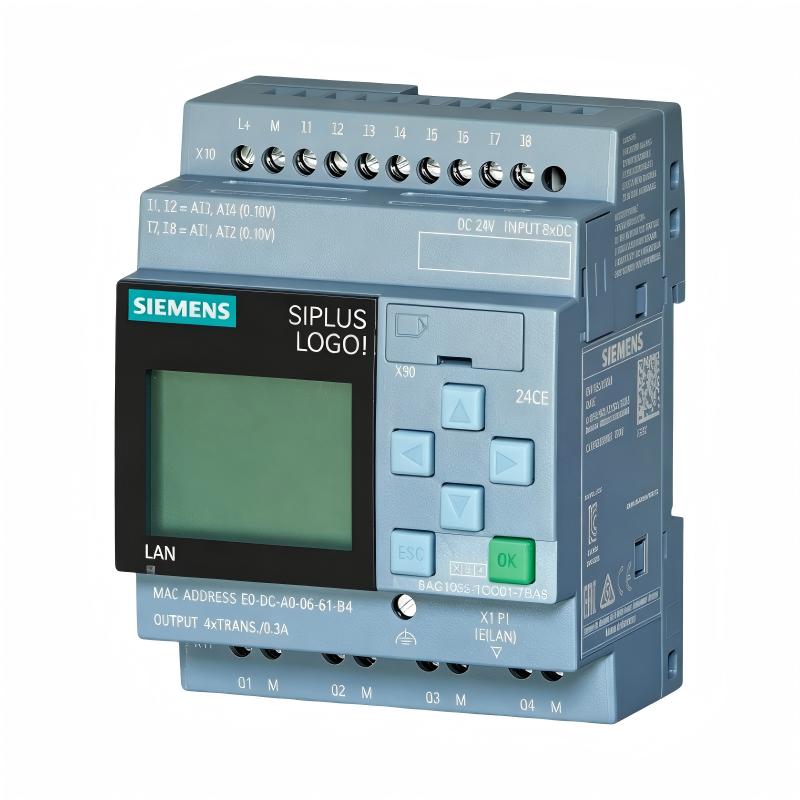
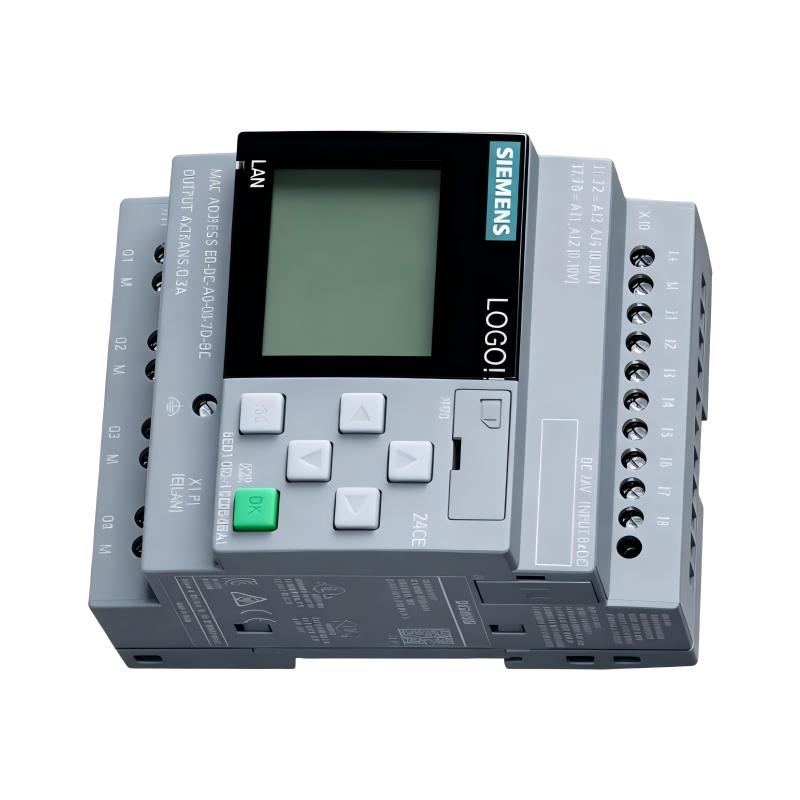
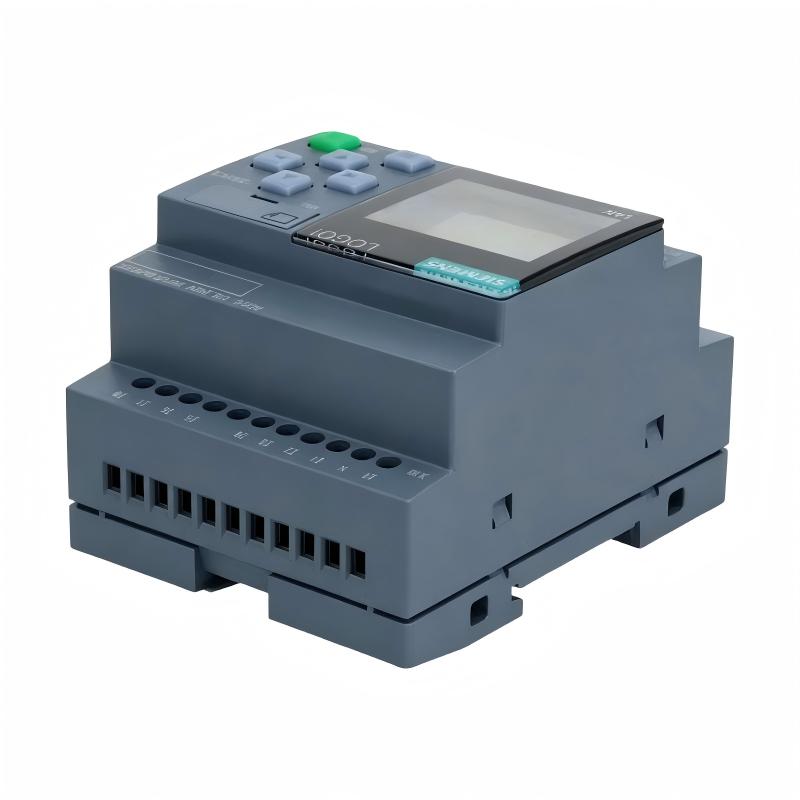
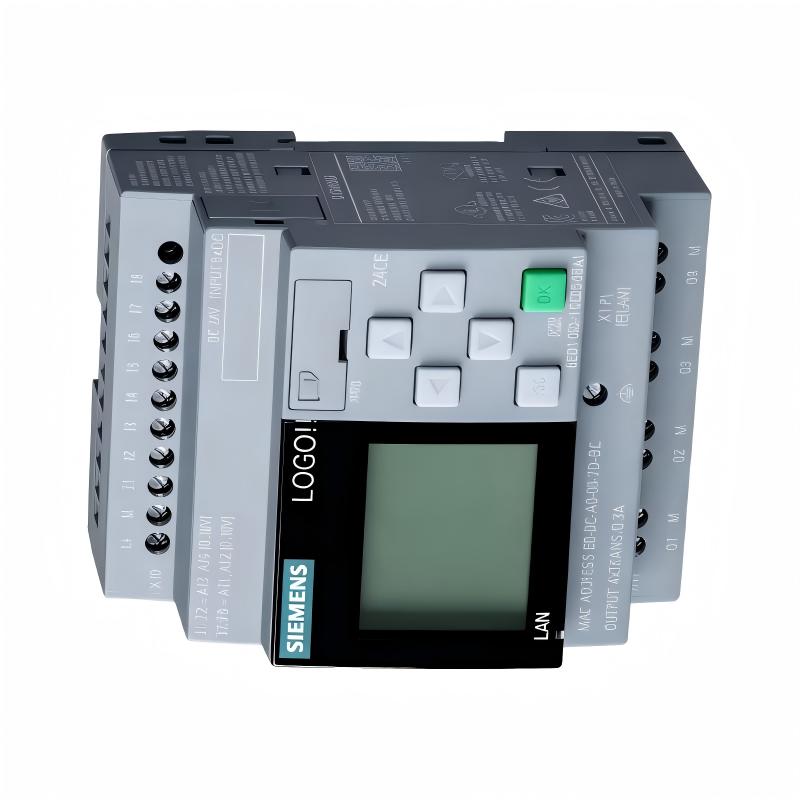
Brand:Siemens Item No.:6AG1052-1CC08-7BA0 Product Origin:Germany Product Dimensions:71.5 x 90 x 60 mm Product Weight:0.229 kg Payment:T/T, Western Union, Credit Card Goods_stock:15 Shipping Port:Xiamen, China Lead Time:1-3 Days Condition:Brand New And Original Warranty:1 Year Certificate:COO
The Siemens 6AG1052-1CC08-7BA0 Logic Module is a compact automation component intended for control applications where a full-size PLC system would be unnecessary or excessive.
Small automation systems often contain surprisingly diverse control requirements. A machine may need to start a motor after a permissive condition, operate a valve for a defined period, count production cycles, monitor several sensors, or sequence multiple outputs. A compact logic module can handle these tasks while keeping the control architecture simple.
For machine builders, this type of controller can be especially useful when designing repeatable equipment. Once the control logic has been properly developed and tested, the same architecture can be incorporated into multiple machines with appropriate application-specific adjustments.
Installation should begin with verification of the module's electrical requirements and the machine's I/O arrangement. Power wiring, signal wiring, grounding, and field-device connections should be checked before the controller is energized.
Programming quality is equally important. A compact controller can perform reliably, but poorly organized logic can make future troubleshooting unnecessarily difficult. Clear naming, logical sequencing, appropriate interlocks, and well-defined fault states can significantly improve maintainability.
When a machine behaves unexpectedly, technicians should first determine whether the problem is in the program, input signal, output circuit, power supply, or connected field device. Monitoring the actual input and output states is often more effective than immediately replacing the controller.
The supplied specification lists dimensions of 71.5 × 90 × 60 mm and a weight of 0.229 kg (0.50 lb). Its compact size makes it particularly suitable for control cabinets where available installation space is limited.
Before replacing a unit, the existing application program and wiring should be documented. After installation, test the system incrementally rather than immediately placing the machine into full production.
A properly configured Siemens logic module can provide a cost-effective and dependable control solution for small industrial machines and auxiliary automation functions.
Technical Specifications
Parameter
Specification
Brand
Siemens
Model
6AG1052-1CC08-7BA0
Product Type
LOGO! Logic Module
Application
Small-Scale Industrial Automation
Primary Function
Logic Control and Sequencing
Typical Applications
Machine Control, Building Automation, Pumps, Fans and Utility Systems
Installation
Control Cabinet / Panel
Dimensions
71.5 × 90 × 60 mm
Weight
0.229 kg (0.50 lb)
The Siemens 6AG1052-1CC08-7BA0 measures 71.5 × 90 × 60 mm and weighs 0.229 kg (0.50 lb).
Its compact dimensions make it suitable for space-conscious control-panel designs. Installation should still provide adequate access for wiring, inspection, programming, and maintenance.
Recommended Related Models
Model / Series
Product Type
Typical Application
Siemens 6AG1052-1CC08-7BA0
LOGO! Logic Module
Compact automation control
Siemens LOGO! Series
Logic Module Family
Small machine automation
Siemens S7-1200 Series
Compact PLC
Machine and process control
Siemens S7-1500 Series
Advanced PLC
High-performance automation
Siemens ET 200 Series
Distributed I/O
Modular field I/O systems
These related Siemens platforms cover different levels of control complexity. A compact logic module is generally most attractive when the application does not require the broader processing and I/O architecture of a larger PLC.
Popular Related Models
Model / Series
Product Type
Typical Use
Siemens 6AG1052-1CC08-7BA0
LOGO! Logic Module
Small automation systems
Siemens LOGO! Series
Logic Controller
Compact machine control
Siemens S7-1200 Series
Compact PLC
Machine automation
Siemens S7-1500 Series
PLC
Advanced industrial control
Siemens ET 200 Series
Distributed I/O System
Industrial field I/O
When selecting a replacement for the Siemens 6AG1052-1CC08-7BA0, verify the complete part number and ensure that the controller's electrical interface, I/O requirements, program compatibility, and application architecture match the existing installation. A correct hardware match combined with a verified control program will provide a much more reliable replacement than simply selecting a module from the same product family.
Applications
The Siemens 6AG1052-1CC08-7BA0 Logic Module is a compact automation controller designed for small-scale control tasks where straightforward logic processing, reliable switching control, and space-efficient installation are important.
Its compact format makes it particularly attractive for machine builders and panel designers who need practical automation without the footprint of a larger PLC system.
Typical applications include:
Small machine automation
Pump and fan control
Conveyor sequencing
Lighting control
Building automation
HVAC auxiliary systems
Compressor control
Door and gate automation
Simple material-handling equipment
Industrial utility systems
The module can be used where control logic involves conditions, timers, counters, sequencing, and coordinated switching operations. For OEM applications, its compact design can help simplify control-panel layouts while keeping basic automation functions centralized.
Advantages
The Siemens 6AG1052-1CC08-7BA0 offers a compact approach to implementing practical automation logic without unnecessarily increasing cabinet size or system complexity.
Compact Automation Solution
Its small physical footprint is well suited to installations where panel space is limited.
Straightforward Logic Control
The logic-module concept is particularly useful for sequencing, timing, counting, switching, and other routine automation functions.
Flexible Machine Applications
It can be applied to many small automation systems, from standalone machinery to auxiliary control functions within larger installations.
Space-Efficient Cabinet Design
The compact housing allows engineers to make efficient use of DIN-rail or control-panel space where applicable.
Reduced Control Complexity
For relatively simple applications, a compact logic controller can eliminate the need for a larger PLC architecture.
Suitable for OEM Equipment
Machine builders can use a compact controller as a practical control core for standardized equipment and repeatable machine designs.
Convenient Maintenance
A clearly structured logic program and organized I/O wiring can make troubleshooting and service work more efficient.
Lightweight Construction
The specified weight is 0.229 kg (0.50 lb), making the module easy to handle during panel assembly and replacement.
Technical FAQs
1. What is the Siemens 6AG1052-1CC08-7BA0 used for?
It is a compact Siemens logic module intended for implementing control logic in small automation and machine-control applications.
2. What types of control tasks are suitable for a logic module?
Typical tasks include switching sequences, timers, counters, interlocking logic, simple machine states, pump control, fan control, and other relatively straightforward automation functions.
3. What should be checked if the logic module does not execute the expected sequence?
Review the program logic, input states, output conditions, timers, counters, interlocks, and power supply. A logic problem does not necessarily indicate a hardware failure.
4. Why might an input signal not be detected?
Possible causes include incorrect wiring, missing field voltage, an unsuitable signal level, a defective sensor, loose terminals, or incorrect program addressing.
5. What can cause an output to remain inactive?
Check the logic conditions controlling the output, input prerequisites, interlocks, program execution, output wiring, and connected load.
6. How should intermittent control behavior be investigated?
Monitor the affected inputs and outputs while checking power stability, terminal connections, field devices, wiring, and the program conditions that control the affected function.
7. What should be considered when connecting inductive loads?
Inductive loads such as contactors, solenoids, and relays can generate switching transients. Appropriate suppression and load-interface practices should be used according to the electrical design.
8. What can cause the logic module to restart unexpectedly?
Potential causes include unstable supply voltage, wiring problems, electrical interference, an unsuitable power source, or other system-level electrical disturbances.
9. What should be backed up before replacing the module?
The control program and relevant configuration should be preserved whenever possible. Field wiring and terminal assignments should also be documented before removal.
10. How should a replacement module be commissioned?
Verify the supply and wiring first, load or restore the correct program, test individual inputs and outputs, confirm sequence operation, and then run the complete machine under controlled conditions.