Siemens

  1. Home
  2. Products
  3. Siemens
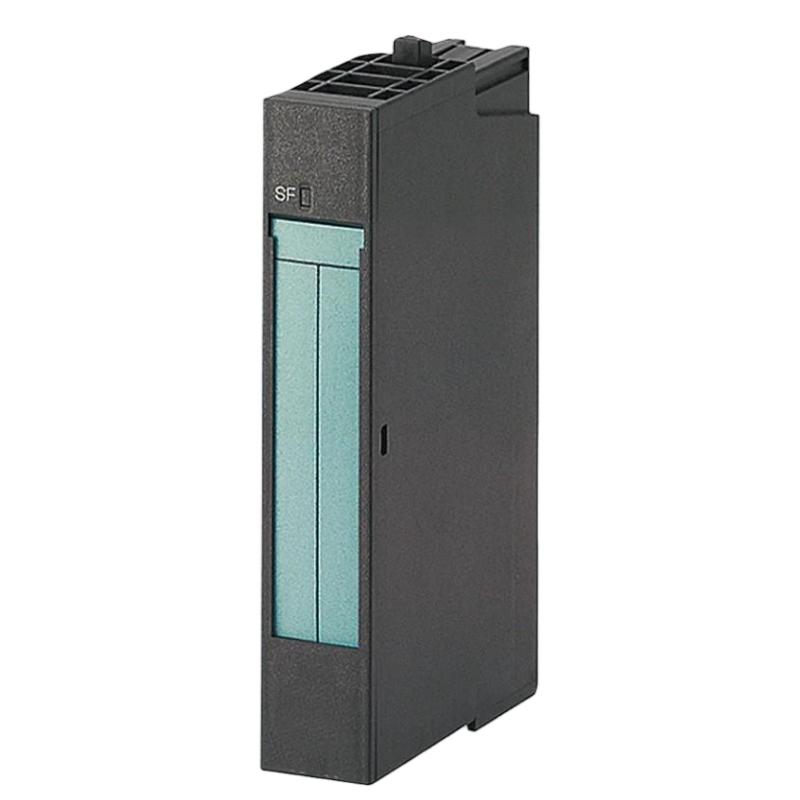
  4. Siemens 6AG1134-4NB51-2AB0 Analog Input Module
Siemens 6AG1134-4NB51-2AB0 Analog Input Module

Siemens 6AG1134-4NB51-2AB0 Analog Input Module

0.0
Points

Brand:Siemens
Item No.:6AG1134-4NB51-2AB0
Product Origin:Germany
Product Dimensions:15 × 81 × 52 mm
Product Weight:0.04 kg
Payment:T/T, Western Union, Credit Card
Goods_stock:15
Shipping Port:Xiamen, China
Lead Time:1-3 Days
Condition:Brand New And Original
Warranty:1 Year
Certificate:COO

Add to cart


Introduction

In industrial automation, accurate field measurements provide the information required for effective control. A process controller may need continuous information about temperature, pressure, flow, level, or another variable before it can adjust equipment or respond to changing operating conditions.

The Siemens 6AG1134-4NB51-2AB0 Analog Input Module is intended for compatible Siemens automation systems where analog field signals need to be acquired and processed. It can form part of an I/O system used for monitoring, regulation, alarms, sequencing, and production information.

Its compact 15 × 81 × 52 mm dimensions make it particularly attractive for installations where cabinet space is limited. The module weighs 0.04 kg (0.09 lb), allowing technicians to handle it easily during panel assembly, replacement, or scheduled maintenance.

A dependable analog measurement depends on more than the input module itself. Field instruments, signal cables, grounding, shielding, channel configuration, and PLC scaling must all be properly coordinated. Good installation practice can reduce noise and make commissioning and troubleshooting more predictable.

For OEMs, system integrators, and industrial maintenance teams, the 6AG1134-4NB51-2AB0 offers a compact approach to analog signal acquisition in compatible Siemens automation installations.


Technical Specifications

SpecificationDetails
BrandSiemens
Model6AG1134-4NB51-2AB0
Product TypeAnalog Input Module
I/O FunctionAnalog Signal Acquisition
Primary FunctionIndustrial Process Measurement
ApplicationPLC and Industrial Automation
Typical UseProcess Monitoring and Machine Control
InstallationIndustrial Control / I/O System
Dimensions15 × 81 × 52 mm
Weight0.04 kg (0.09 lb)

Recommended Related Models

ModelProduct TypeApplication
Siemens 6AG1134-4NB51-2AB0Analog Input ModuleIndustrial analog signal acquisition
Siemens 6AG1134-4NB01-7AB0Analog Input ModuleProcess measurement
Siemens 6AG1134-4MB02-2AB0Analog Input ModuleAnalog process monitoring
Siemens 6AG1134-4LB02-2AB0Analog Input ModuleIndustrial analog measurement
Siemens 6AG1134-4JB51-7AB0Analog Input ModuleProcess signal acquisition

These related Siemens modules can be considered when expanding an analog I/O system or evaluating compatible replacement hardware. Selection should be based on the required signal characteristics, host-system compatibility, field instrumentation, and I/O architecture.


Popular Related Models

ModelProduct TypeTypical Application
Siemens 6AG1134-4NB51-2AB0Analog Input ModuleIndustrial process measurement
Siemens 6AG1134-4NB01-7AB0Analog Input ModuleAnalog signal acquisition
Siemens 6AG1134-4MB02-2AB0Analog Input ModuleProcess monitoring
Siemens 6AG1134-4LB02-2AB0Analog Input ModuleIndustrial analog measurement
Siemens 6AG1134-4JB51-7AB0Analog Input ModuleMachine and process automation

When sourcing the Siemens 6AG1134-4NB51-2AB0, verify the complete catalog number and confirm compatibility with the existing Siemens automation architecture. Before commissioning, check the field signal characteristics, transmitter compatibility, wiring, shielding, grounding, channel configuration, PLC scaling, and diagnostic status to achieve dependable analog signal acquisition.

Applications

The Siemens 6AG1134-4NB51-2AB0 Analog Input Module is designed for industrial control systems that need to collect continuously changing electrical signals from compatible field instrumentation. It can serve as a compact signal-acquisition component within a Siemens automation architecture, supporting process monitoring, machine control, alarm functions, and operational data collection.

Typical applications include manufacturing equipment, process machinery, instrumentation panels, temperature monitoring, pressure supervision, flow and level measurement, and distributed I/O installations. The compact 15 × 81 × 52 mm format makes it a practical choice for control cabinets where space and I/O density need to be carefully managed.


Advantages

  • Analog measurement interface — Provides an interface for compatible continuously varying field signals.
  • Compact footprint — Helps reduce the amount of cabinet space required for I/O.
  • Efficient I/O arrangement — Well suited to densely populated control panels.
  • Industrial process monitoring — Supports applications where changing process values must be acquired.
  • Siemens automation integration — Designed for compatible Siemens automation architectures.
  • Lightweight construction — Weighs 0.04 kg (0.09 lb), making handling during installation straightforward.
  • Suitable for system expansion — Useful when additional analog measurement capability is required.
  • Maintenance-friendly design — Compact construction supports practical service and replacement activities. 


Technical FAQs

1. What is the Siemens 6AG1134-4NB51-2AB0 used for?
The 6AG1134-4NB51-2AB0 is an Analog Input Module used to acquire compatible analog signals for processing by a Siemens industrial automation system.

2. What makes an analog input different from a digital input?
A digital input normally represents discrete states, whereas an analog input acquires a continuously varying electrical signal that corresponds to a physical process variable.

3. What should be verified before wiring a transmitter?
Check the transmitter's output signal, electrical range, input compatibility, wiring configuration, power requirements, channel settings, and grounding arrangement.

4. Why is analog signal scaling required in the PLC?
The module acquires an electrical representation of the process variable. Scaling converts that raw signal into an engineering value that can be used correctly by control logic and visualization systems.

5. What can cause a channel to produce an incorrect measurement?
Incorrect wiring, incompatible signal characteristics, transmitter failure, grounding problems, damaged cables, configuration errors, and incorrect PLC scaling can all affect the measured value.

6. Why might an analog signal fluctuate when the process is stable?
Electrical interference, poor shielding, grounding issues, unstable field instruments, damaged signal cables, and unsuitable cable routing can introduce unwanted fluctuations.

7. How should an analog input fault be investigated?
Check the field instrument and actual electrical signal first, then inspect wiring and terminals, review controller diagnostics, verify channel configuration, and compare the PLC reading with a suitable reference.

8. Can an analog input be connected directly to any sensor?
No. The sensor or transmitter must provide an electrical output compatible with the module's specified input characteristics.

9. How does cable routing influence analog signal quality?
Routing analog cables close to high-power conductors or sources of electromagnetic interference can introduce noise. Appropriate separation and installation practices help maintain signal integrity.

10. What preventive maintenance is recommended?
Inspect terminals, field wiring, transmitters, cabinet conditions, and diagnostic information. Important measurement channels should also be periodically checked against suitable reference equipment.


Look forward to your comments!Comment
Latest comments
Tags:
Need Assistance? Chat with Us on WhatsApp!
Need Assistance? Click to Inquire
Back to top