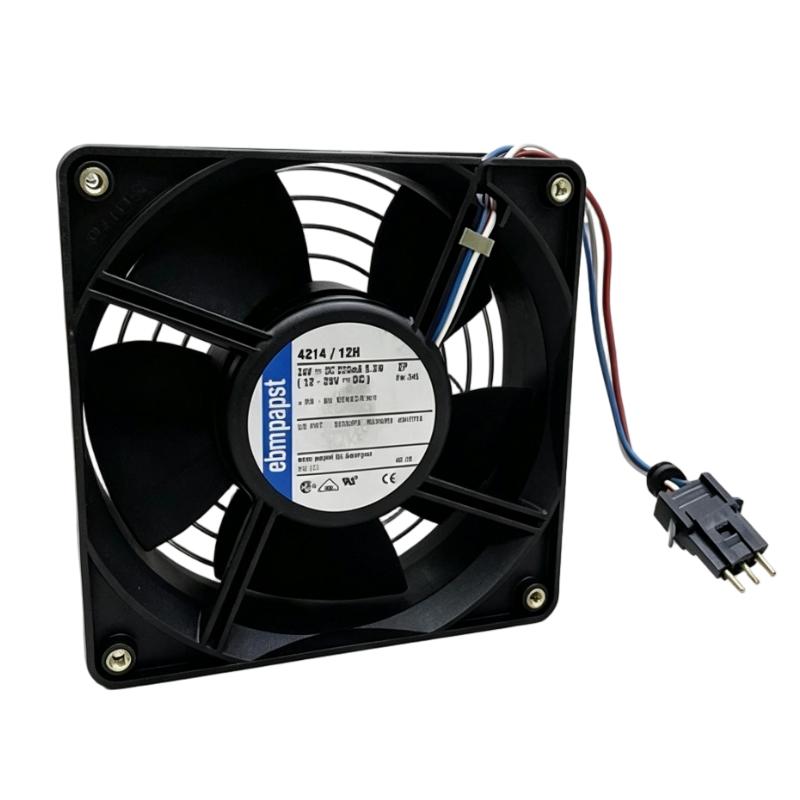
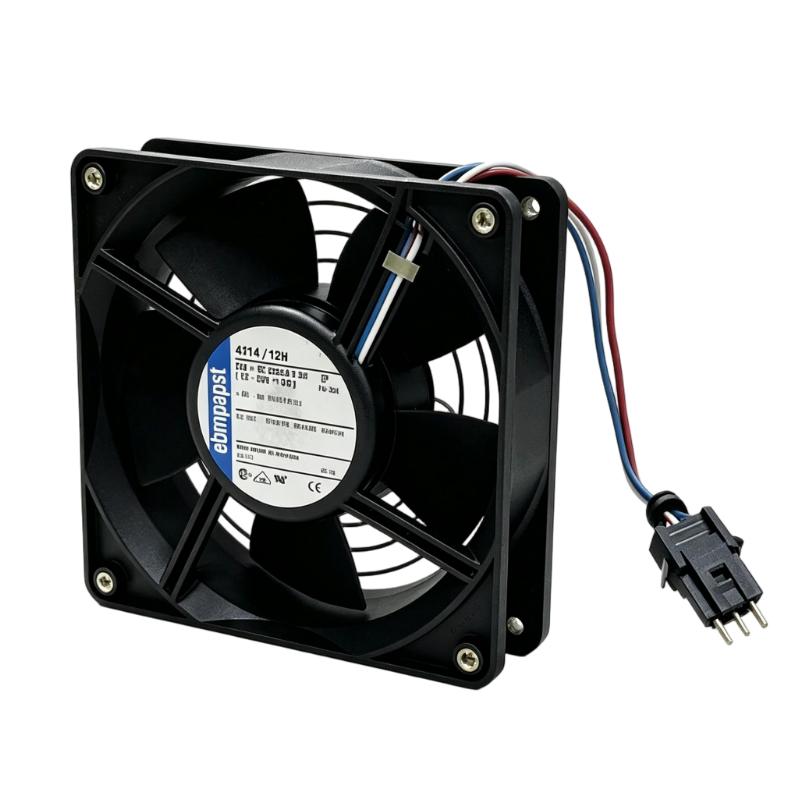
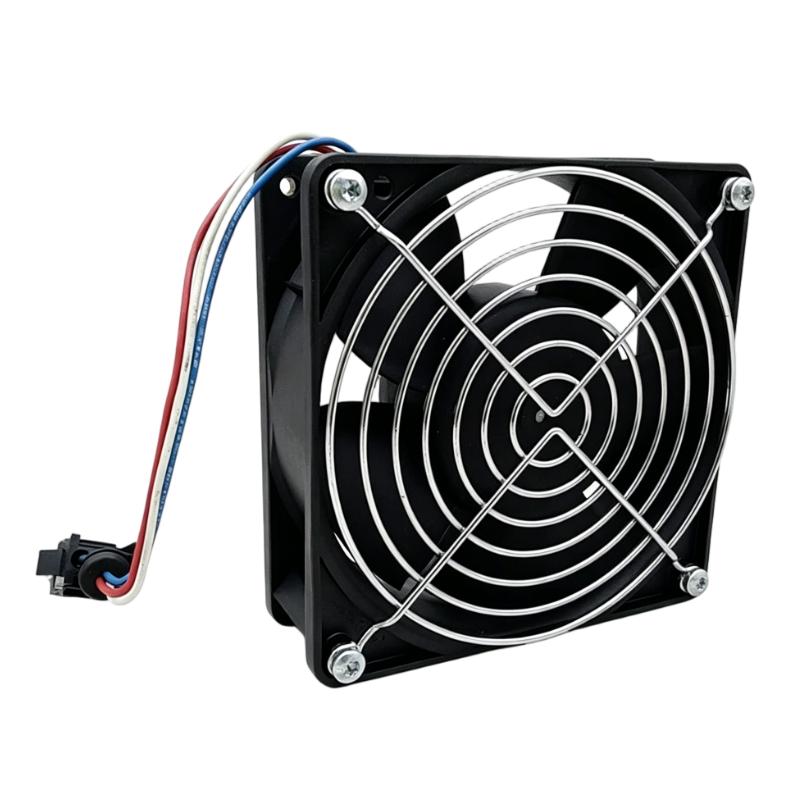
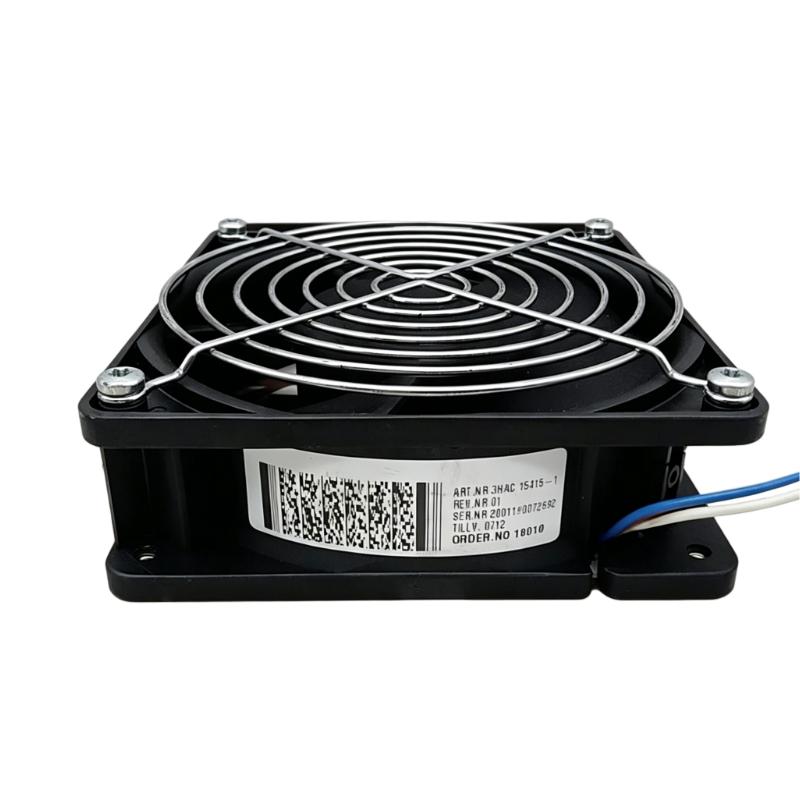
Brand:ABB PLC Item No.:3HAC15415-1 Product Origin:Sweden (SE) Product Dimensions:150 x 38 x 119 mm Product Weight:0.32 kg Payment:T/T, Western Union, Credit Card Goods_stock:15 Shipping Port:Xiamen, China Lead Time:1-3 Days Condition:Brand New And Original Warranty:1 Year Certificate:COO
The ABB 3HAC15415-1 Axial Fan is a dedicated cooling component for industrial automation equipment where continuous airflow is required to control operating temperatures. Although a fan is a relatively small component compared with a robot controller or automation cabinet, its condition can have a direct impact on system reliability.
Industrial robotic systems frequently operate for long production cycles, generating heat through power supplies, processors, drives, control electronics, and other electrical hardware. Without sufficient airflow, this heat can accumulate inside an enclosure and place additional thermal stress on sensitive components.
The 3HAC15415-1 addresses this requirement with an axial fan design intended for forced-air ventilation. Its compact dimensions make it suitable for confined equipment layouts, while its role as an active cooling component makes it an important consideration during preventive maintenance.
For service engineers and automation maintenance teams, the 3HAC15415-1 is especially useful as a replacement component when an existing fan exhibits increasing noise, vibration, inconsistent rotation, or declining airflow. Replacing a worn fan as part of planned maintenance can be significantly preferable to waiting for a complete cooling-system failure.
Technical Specifications
Specification
Details
Brand
ABB
Model
3HAC15415-1
Product Type
Axial Fan
Application
Industrial Robot and Automation Cooling
Cooling Method
Forced-Air Ventilation
Dimensions
150 × 38 × 119 mm
Length
150 mm
Width
38 mm
Height
119 mm
Weight
0.32 kg (0.71 lb)
Installation
Equipment-specific
Primary Function
Airflow and Thermal Management
Weight: 0.32 kg (0.71 lb)
The dimensions and weight above are based on the supplied product information. Electrical specifications, airflow direction, mounting details, and connector configuration should be verified against the applicable ABB equipment before replacement or commissioning.
Recommended Related Models
For ABB robot and automation maintenance projects, the following models can be considered as related spare-part references when building a broader maintenance inventory:
ABB 3HAC15416-1 – Related Cooling / Automation Component
ABB 3HAC15417-1 – Related Robot System Component
ABB 3HAC15418-1 – Related Automation Spare Component
ABB 3HAC025097-001 – ABB Industrial Robot System Component
ABB 3HAC028357-001 – ABB Automation System Spare Component
Compatibility should always be established from the complete equipment configuration and applicable ABB part number rather than from physical appearance alone.
Popular Related Models
For maintenance teams working with ABB robotic systems, commonly stocked spare components may include cooling devices, controller components, power-system parts, electronic modules, and other robot-system service items.
Related ABB references include:
ABB 3HAC021455-001 – Industrial Robot System Component
When purchasing or replacing the ABB 3HAC15415-1 Axial Fan, the complete part number should be used during component identification. Correct fan selection is important because airflow, electrical characteristics, mounting, and system configuration all influence the effectiveness of industrial equipment cooling.
Applications
The ABB 3HAC15415-1 Axial Fan is designed to provide forced-air cooling for industrial automation and robotic equipment. As part of an equipment cooling system, the fan helps move air through the enclosure or designated cooling path, allowing heat generated by electronic and electrical components to be carried away more effectively.
In ABB robotic installations, reliable airflow is particularly important when controllers and associated hardware operate continuously under production loads. The 3HAC15415-1 can therefore be used in maintenance and replacement applications where the original cooling fan has reached the end of its service life or no longer provides adequate airflow.
Typical applications include:
ABB industrial robot cooling systems
Robot controller ventilation
Electrical and automation cabinets
Industrial control equipment
Continuous-duty manufacturing systems
Automated assembly lines
Material handling equipment
Welding and robotic production cells
Preventive maintenance and spare-parts replacement
Its compact axial-fan configuration is well suited to equipment where controlled airflow is required without adding unnecessary complexity to the cooling arrangement.
Advantages
Reliable forced-air cooling
The 3HAC15415-1 provides active airflow to help remove heat from equipment and maintain a more stable internal operating environment.
Compact industrial design
With a 150 × 38 × 119 mm form factor, the fan is suitable for applications where available installation space is limited.
Supports controller reliability
Proper ventilation helps prevent excessive heat accumulation around electrical and electronic components, which can contribute to more consistent equipment operation.
Practical replacement solution
Using the correct ABB part number simplifies spare-parts identification and can make maintenance work more predictable.
Suitable for preventive maintenance
Cooling fans are mechanical components that operate continuously and can gradually accumulate wear. Keeping a replacement unit available can reduce downtime when fan performance deteriorates.
Easy integration into an existing cooling arrangement
The axial configuration is intended to move air through a defined cooling path, making it useful for equipment ventilation and thermal-management applications.
Helps protect production equipment
Stable airflow is an important part of maintaining suitable operating conditions for automation hardware, particularly in robot controllers running for extended production cycles.
Technical FAQs
1. What is the main function of the ABB 3HAC15415-1?
The 3HAC15415-1 is an axial fan used to provide forced airflow for cooling industrial automation or robotic equipment. It helps move heated air away from components and maintain appropriate operating conditions.
2. Why is an axial fan used in industrial automation equipment?
Axial fans move air along the axis of the fan rotor. This configuration provides a practical method of generating airflow through equipment enclosures, cooling channels, and ventilation paths.
3. What can happen if an industrial robot cooling fan stops working?
Insufficient airflow can cause internal temperatures to rise. Depending on the equipment design, excessive temperature may result in thermal alarms, reduced operating reliability, protective shutdowns, or accelerated aging of electronic components.
4. What symptoms indicate that an axial fan may need replacement?
Common warning signs include unusual bearing noise, vibration, intermittent starting, reduced airflow, abnormal fan speed, or complete failure to rotate. A fan that repeatedly starts and stops should also be investigated.
5. Should the fan be checked during robot controller maintenance?
Yes. Fan condition, airflow paths, filters, connectors, and surrounding components should be inspected as part of routine cooling-system maintenance.
6. Can dust affect the performance of the 3HAC15415-1?
Yes. Dust accumulation can restrict airflow and increase the mechanical load on the fan. Heavy contamination may also reduce the effectiveness of the overall cooling system.
7. What should be checked before installing a replacement fan?
Verify the complete ABB part number, mounting arrangement, electrical connection, airflow direction, and compatibility with the specific robot or controller configuration. Power should be isolated before performing the replacement.
8. How can fan failure affect industrial robot operation?
A failed cooling fan may cause elevated internal temperatures. Depending on the controller's protection strategy, this can result in warnings or shutdowns designed to protect the equipment from thermal stress.
9. Is replacing the fan enough to solve a cooling problem?
Not necessarily. If the equipment continues to run hot after fan replacement, technicians should inspect filters, ventilation openings, heat exchangers, temperature sensors, airflow restrictions, and other cooling components.
10. What is a good maintenance practice for industrial cooling fans?
Regularly inspect fan rotation, noise, vibration, airflow, contamination, and electrical connections. Replacing a degraded fan before complete failure can help prevent an unexpected production interruption.