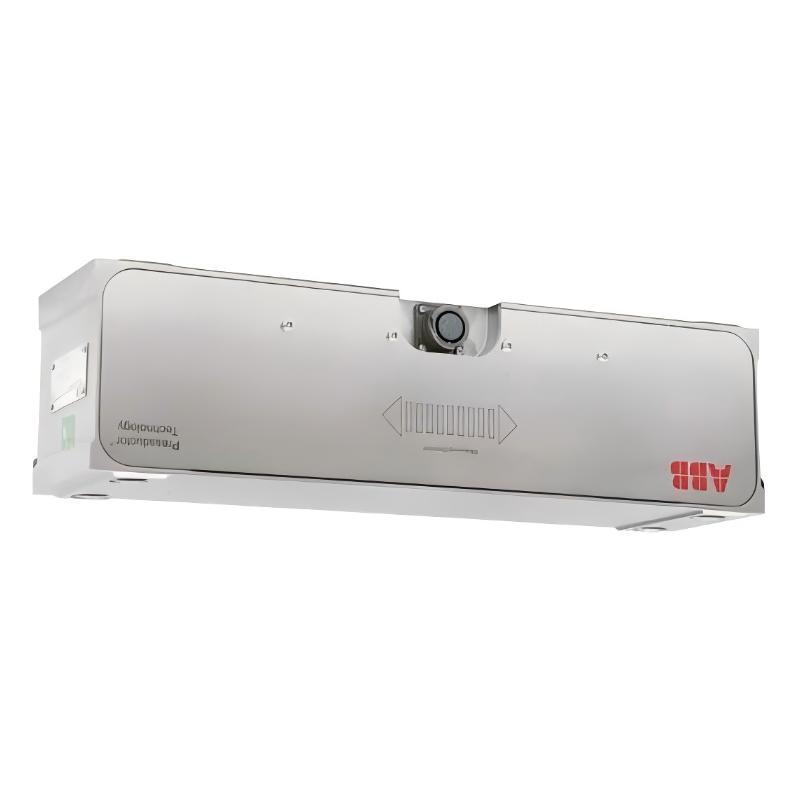
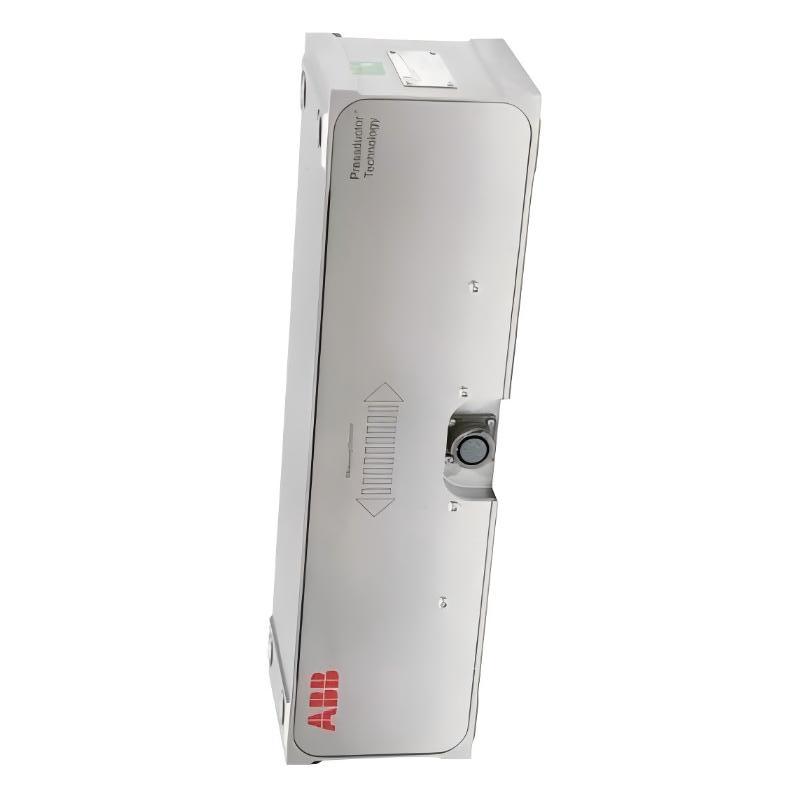
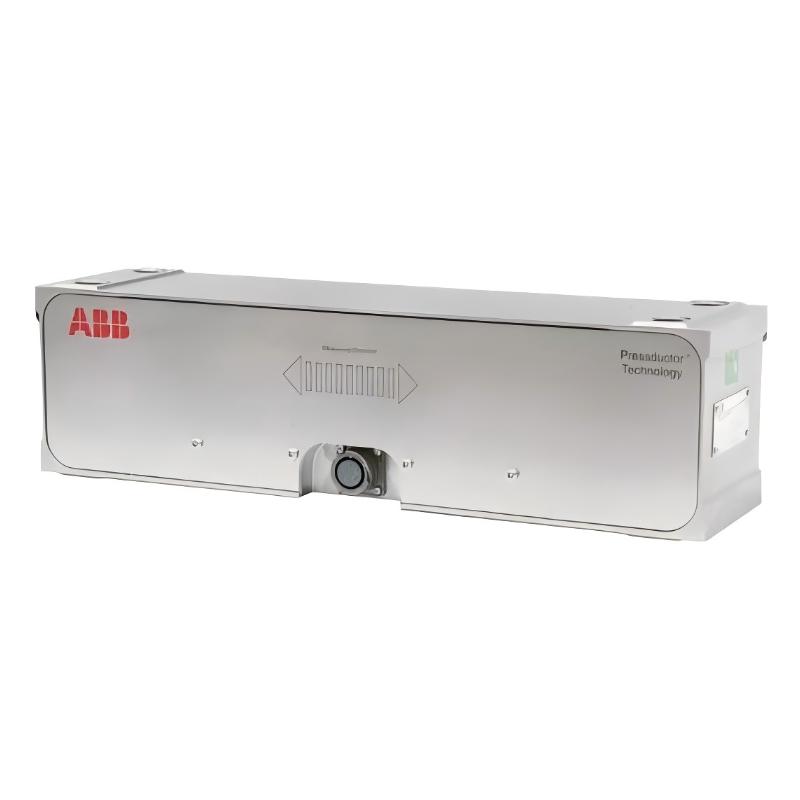
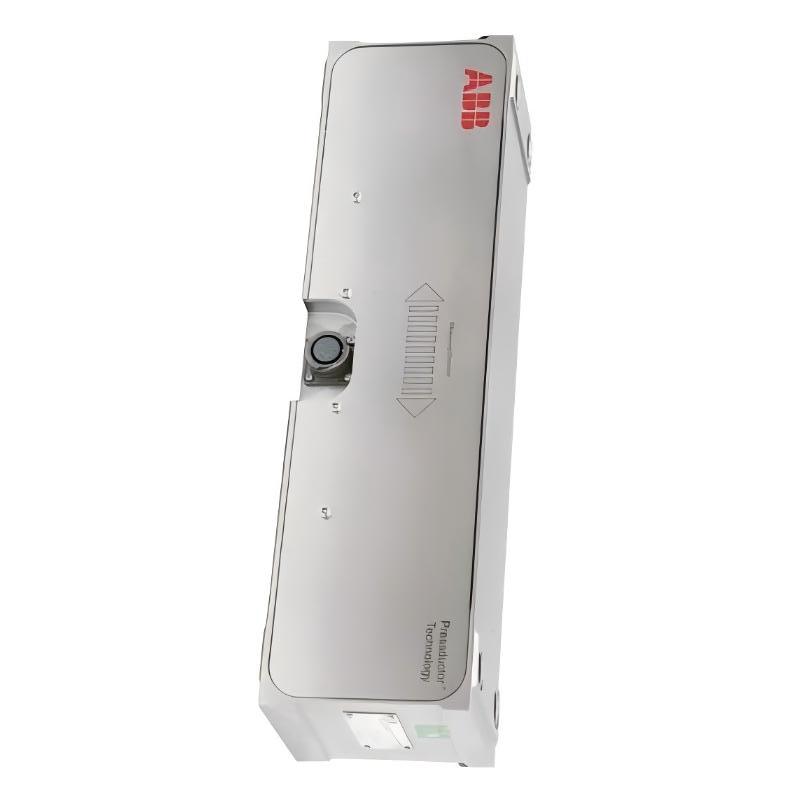
Brand:ABB PLC Item No.:PFTL 201C Product Origin:Sweden (SE) Product Dimensions:450 x 110 x 125 mm Product Weight:12 kg Payment:T/T, Western Union, Credit Card Goods_stock:15 Shipping Port:Xiamen, China Lead Time:1-3 Days Condition:Brand New And Original Warranty:1 Year Certificate:COO
The ABB PFTL 201C 3BSE007913R0050 / 3BSE007913R0010 Pillow-Type Load Cell is engineered for industrial tension measurement where mechanical strength and dependable force feedback are equally important.
The PFTL 201 family is designed around the principle of measuring the horizontal force component generated by strip tension. This makes it particularly useful in processing lines where rolls carry moving strip material and accurate tension control directly influences product quality.
A major advantage of this arrangement is that the load cell can measure the force associated with strip tension without making the roll's static weight the primary measurement variable. For large industrial rolls, this can be particularly beneficial because the tare weight may be considerably greater than the actual strip tension that the control system needs to monitor.
The PFTL 201C also uses a robust stainless-steel construction intended for industrial service. Its mechanical stiffness and overload tolerance are valuable characteristics in production machinery where vibration, shock loading, and changing process forces cannot always be completely eliminated.
The 3BSE007913R0010 and 3BSE007913R0050 references correspond to different PFTL 201C measurement-capacity versions. Consequently, engineers should not select a replacement based solely on the PFTL 201C designation. The complete part number and required load range should be compared with the original equipment documentation.
For steel, aluminum, paper, and other continuous strip-processing systems, the PFTL 201C can provide a strong foundation for accurate tension measurement and stable process control. It is also a valuable spare-part option for facilities maintaining existing ABB Pressductor-based tension systems.
Technical Specifications
Parameter
Description
Brand
ABB
Model
PFTL 201C
Part Number
3BSE007913R0050 / 3BSE007913R0010
Product Type
Pillow-Type Load Cell
Measurement Principle
Pressductor / Electromagnetic
Measurement Direction
Horizontal Force
Typical Application
Strip Tension Measurement
Product Family
Pressductor PillowBlock
Construction
Stainless Steel
Nominal Capacity Versions
10 kN / 20 kN / 50 kN
Accuracy Class
±0.5%
Repeatability Error
< ±0.05%
Operating Temperature
-10 to +90 °C
Dimensions
450 × 110 × 125 mm
Weight
12.00 kg (26.46 lb)
Recommended Related Models
Model
Product Type
ABB PFTL 201C-10.0 3BSE007913R0010
Pillow-Type Load Cell
ABB PFTL 201C-20.0 3BSE007913R0020
Pillow-Type Load Cell
ABB PFTL 201C-50.0 3BSE007913R0050
Pillow-Type Load Cell
ABB PFTL 201CE-10.0 3BSE007913R0011
Mill-Duty Pillow-Type Load Cell
ABB PFTL 201CE-20.0 3BSE007913R0021
Mill-Duty Pillow-Type Load Cell
Popular Related Models
Model
Product Type
ABB PFTL 201C-50.0 3BSE007913R0050
Pillow-Type Load Cell
ABB PFTL 201C-20.0 3BSE007913R0020
Pillow-Type Load Cell
ABB PFTL 201C-10.0 3BSE007913R0010
Pillow-Type Load Cell
ABB PFTL 201CE-50.0 3BSE007913R0051
Mill-Duty Pillow-Type Load Cell
ABB PFTL 201D-50.0 3BSE008922R0050
Pillow-Type Load Cell
Industrial Applications
The ABB PFTL 201C 3BSE007913R0050 / 3BSE007913R0010 Pillow-Type Load Cell is a dedicated industrial force-measurement component for horizontal tension measurement. It belongs to ABB’s Pressductor PillowBlock load-cell family and is particularly well suited to continuous strip and web-processing machinery where tension feedback is an important part of the production-control strategy.
In many industrial processes, the tension generated in a moving strip creates a horizontal force component at the processing roll. Measuring this horizontal component allows the control system to focus on the actual strip tension rather than unnecessarily including the roll's tare weight. This approach can provide a practical measurement solution for demanding continuous-production equipment.
Typical applications include:
Steel strip processing lines
Aluminum processing equipment
Annealing lines
Pickling lines
Galvanizing lines
Paper and web-processing machinery
Roll-to-roll production systems
Continuous tension-control equipment
Winding and unwinding systems
Industrial strip handling
Process-line tension monitoring
The PFTL 201C is especially attractive for applications where mechanical rigidity and resistance to overload are important. Its solid construction allows the load cell to become an integral part of the roll-support arrangement, providing force feedback to the associated measurement and automation system.
For replacement projects, the 3BSE007913R0050 and 3BSE007913R0010 identification references are important when matching the load cell to an existing ABB installation. Selecting the correct rated version is essential because PFTL 201C units are available in different measurement ranges.
Key Advantages
Optimized Horizontal Force Measurement
The PFTL 201C is designed specifically for horizontal force measurement. This makes it highly suitable for strip-tension applications where the horizontal force component can be used as the primary measurement variable.
Pressductor Technology
ABB’s Pressductor measurement principle provides a robust electromagnetic approach to force measurement, making the technology well suited to demanding industrial machinery.
High Mechanical Rigidity
The load cell is manufactured from a solid stainless-steel construction. This gives the sensing element a high spring constant and strong resistance to mechanical loading.
Excellent Overload Capability
The PFTL 201C family is designed to tolerate substantial loads beyond its nominal measuring range. This provides additional protection when industrial machinery experiences temporary load peaks.
Reduced Influence From Roll Weight
Because the horizontal force component can be measured independently from the roll's vertical tare load, the arrangement can provide an efficient way of measuring strip tension.
Suitable for Harsh Industrial Processes
The robust construction makes the PFTL 201C appropriate for demanding processing environments, including metal-strip production and other continuous manufacturing applications.
Easy Identification for Replacement
The complete ABB part numbers make procurement and maintenance easier when replacing an installed load cell or building a critical spare-parts inventory.
Technical FAQs
1. What is the main function of the ABB PFTL 201C?
The PFTL 201C is designed for horizontal force measurement and is commonly used to measure strip tension through the horizontal force component generated at a process roll.
2. Why is horizontal force measurement useful for strip tension control?
It allows the measurement system to focus primarily on strip tension rather than the static weight of the roll. This can simplify the measurement arrangement and improve the suitability of the system for continuous strip-processing applications.
3. What is the difference between the PFTL 201C-10.0 and PFTL 201C-50.0 versions?
The primary difference is the nominal measuring capacity. The PFTL 201C family is offered in several rated capacities, so the correct version must be selected according to the normal tension and force requirements of the machine.
4. Can the PFTL 201C measure forces outside its nominal direction?
The load cell is designed to be highly resistant to forces outside the primary measurement direction. However, the installation should still be engineered so that the intended force is applied correctly.
5. What happens if the process temporarily exceeds the nominal load?
The PFTL 201C has an extended load range that can accommodate higher temporary loads. However, operation above the nominal range may result in some reduction in measurement accuracy and should not be treated as the normal operating condition.
6. What could cause unstable tension feedback?
Possible causes include mechanical vibration, incorrect mounting, damaged connection cables, electrical interference, bearing problems, incorrect signal processing, or instability elsewhere in the tension-control system.
7. Does the mounting arrangement affect measurement accuracy?
Yes. Correct mechanical alignment is essential. Incorrect mounting, mechanical interference, friction, or unintended forces can introduce errors into the measured signal.
8. What should be checked when replacing a PFTL 201C?
Engineers should verify the complete ordering number, nominal load capacity, mounting arrangement, connector configuration, associated electronics, and control-system settings before commissioning the replacement.
9. Can the PFTL 201C be used in automatic tension control?
Yes. Its force measurement can be supplied to suitable signal-processing and automation equipment, allowing the measured tension to become feedback for an automatic control loop.
10. How should a newly installed PFTL 201C be commissioned?
After mechanical and electrical installation, the system should be checked under controlled conditions. Zero behavior, signal stability, mechanical loading, and response to known operating conditions should be verified before the machine is returned to full production.