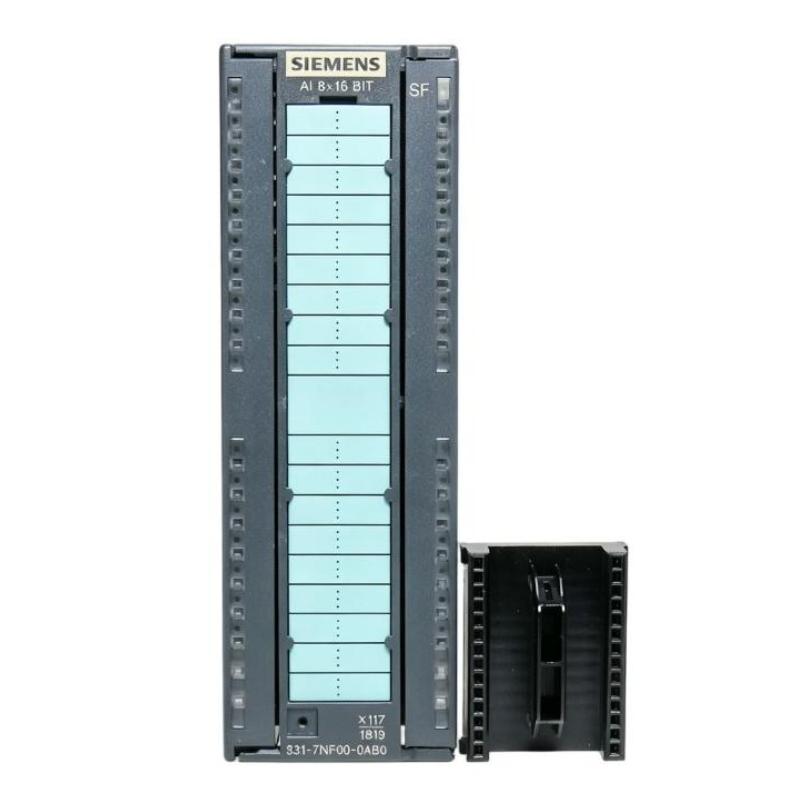
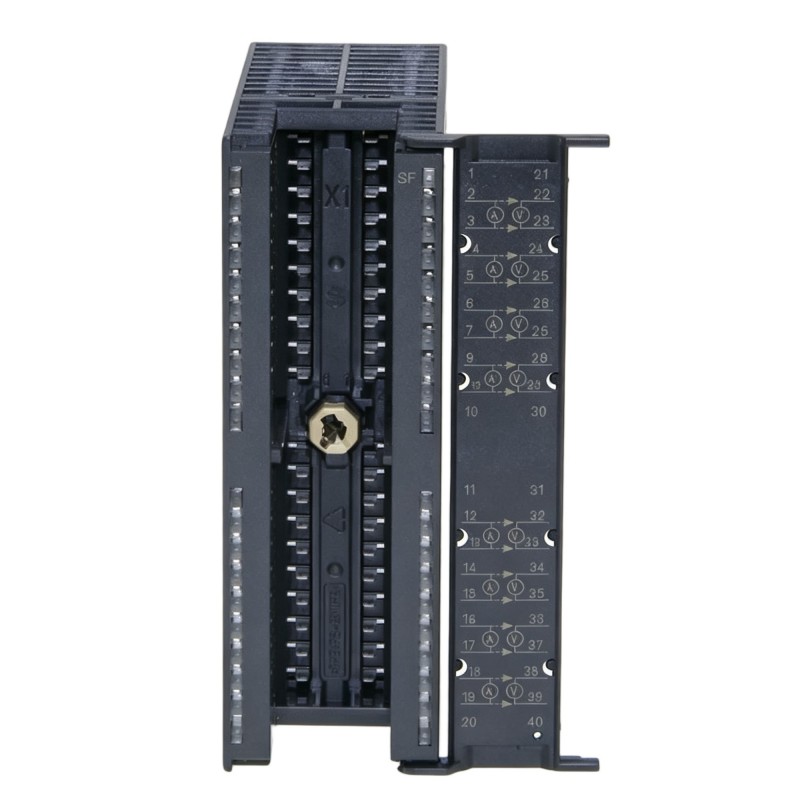
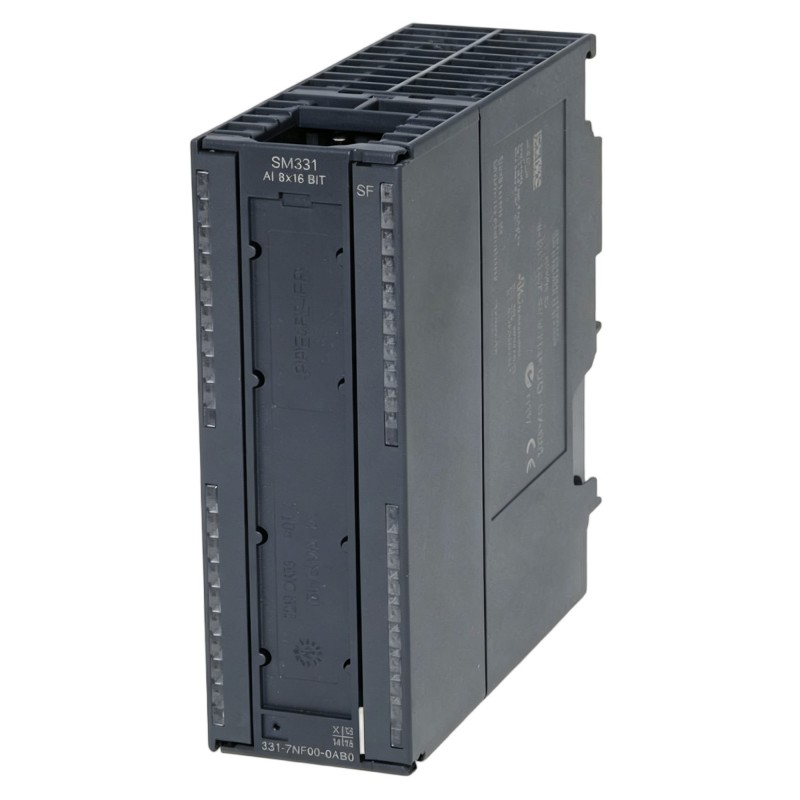
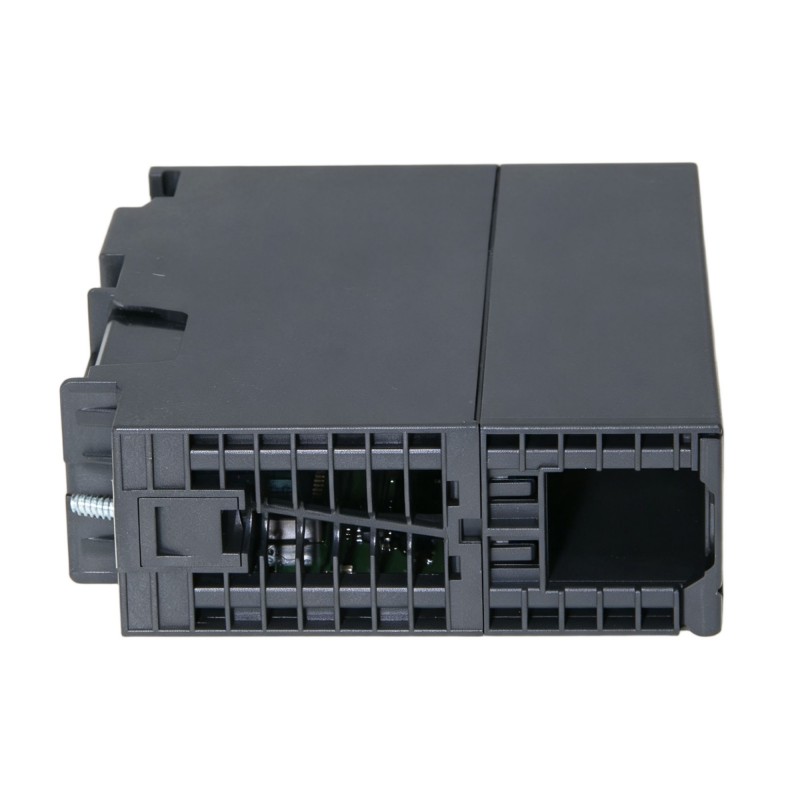
Brand:Siemens Item No.:6AG1331-7NF00-2AB0 Product Origin:Germany Product Dimensions:40 × 125 × 117 mm Product Weight:0.316 kg Payment:T/T, Western Union, Credit Card Goods_stock:15 Shipping Port:Xiamen, China Lead Time:1-3 Days Condition:Brand New And Original Warranty:1 Year Certificate:COO
The Siemens 6AG1331-7NF00-2AB0 Analog Input Module is an industrial I/O component intended to acquire analog process information and integrate that information into a compatible Siemens automation system. It serves as an important link between field instrumentation and the controller.
Industrial processes depend heavily on accurate measurement. Temperature, pressure, flow, level, and other variables continuously change during machine or process operation. By acquiring these measurements, the automation controller can evaluate current conditions and execute appropriate control, monitoring, and alarm functions.
The 6AG1331-7NF00-2AB0 is designed with a compact industrial form factor that can simplify cabinet planning. Its 40 mm width makes it well suited to installations where several automation modules need to be positioned efficiently within a restricted enclosure.
As part of the SIPLUS range, the module is aimed at applications where industrial equipment may encounter more demanding environmental conditions than those found in standard office or laboratory installations. This makes it an attractive option for manufacturers, system integrators, and maintenance specialists working with Siemens automation equipment.
For replacement and modernization work, correct technical matching remains essential. Engineers should confirm the system architecture, signal requirements, hardware configuration, and application conditions before integrating the module.
Technical Specifications
Specification
Details
Brand
Siemens
Model
6AG1331-7NF00-2AB0
Product Type
Analog Input Module
Product Family
SIPLUS
Module Function
Analog Signal Acquisition
Application
Industrial Automation and Process Control
Installation
Industrial I/O System
Dimensions
40 × 125 × 117 mm
Weight
0.32 kg (0.70 lb)
Recommended Related Models
Model
Product Type
Siemens 6AG1331-7KB02-2AB0
Analog Input Module
Siemens 6AG1331-7KF02-2AB0
Analog Input Module
Siemens 6AG1331-1KF02-7AB0
Analog Input Module
Siemens 6AG1134-6JD00-2CA1
Analog Input Module
Siemens 6AG1131-6BF00-7BA0
ET 200SP Analog Input Module
Popular Related Models
Model
Product Type
Siemens 6ES7331-7NF00-0AB0
SIMATIC S7-300 Analog Input Module
Siemens 6ES7331-7KF02-0AB0
SIMATIC S7-300 Analog Input Module
Siemens 6ES7331-7KB02-0AB0
SIMATIC S7-300 Analog Input Module
Siemens 6ES7134-6GF00-0AA1
ET 200SP Analog Input Module
Siemens 6ES7134-6GD01-0BA1
ET 200SP Analog Input Module
Industrial Applications and Signal Monitoring
The Siemens 6AG1331-7NF00-2AB0 Analog Input Module is designed for industrial automation systems that require reliable acquisition of analog process signals. It provides the connection between compatible field instrumentation and the control system, allowing continuously changing process values to be incorporated into PLC-based monitoring and control strategies.
Analog input modules are widely used in manufacturing equipment, process automation, machine control, energy systems, production lines, and industrial monitoring applications. Depending on the supported signal configuration, the module can be used as part of measurement systems for variables such as temperature, pressure, flow, level, and other process conditions.
For OEMs and system integrators, the module offers a compact approach to expanding analog measurement capability. Its relatively narrow installation width also helps maintain an efficient control cabinet layout when several I/O components are installed together.
Key Benefits in Automation Applications
The 6AG1331-7NF00-2AB0 combines Siemens industrial engineering with a compact form factor, making it a useful choice for automation projects where dependable signal acquisition and efficient installation are both important.
Consistent Analog Signal Acquisition
The module provides a structured interface for bringing compatible analog measurements into the automation controller, supporting process monitoring and control functions.
Compact Cabinet Footprint
With a 40 mm width, the module can help engineers optimize available cabinet space without compromising the organization of the I/O installation.
Designed for Industrial Environments
The SIPLUS product family is intended for demanding industrial applications where environmental conditions can require more robust automation hardware.
Improved Process Monitoring
Continuous measurement data gives the control system greater visibility into operating conditions and allows programmed logic to respond to changes in the process.
Useful for Modernization Projects
The module can be considered when expanding compatible Siemens installations or replacing existing analog I/O hardware as part of an equipment maintenance or modernization project.
Technical FAQs
1. What is the main function of the Siemens 6AG1331-7NF00-2AB0?
The module is used to acquire compatible analog signals from field devices and make the resulting process information available to the automation control system.
2. What is the difference between an analog input and a digital input?
A digital input normally identifies discrete conditions such as ON or OFF, while an analog input receives a continuously varying electrical signal representing a measured process value.
3. What types of applications can use this analog input module?
It can be used in automation systems that need to acquire compatible process measurements. Typical applications include machine monitoring, production automation, process control, instrumentation, and equipment condition monitoring.
4. What should be verified before connecting a field instrument?
Engineers should verify the instrument's output characteristics, the module's supported input configuration, wiring arrangement, polarity, grounding, shielding, and the corresponding hardware configuration.
5. What can cause an analog measurement to become unstable?
Potential causes include electromagnetic interference, incorrect grounding, inadequate shielding, loose terminals, damaged cables, unstable field instruments, or incorrect input configuration.
6. How should an engineer troubleshoot an incorrect analog reading?
First verify the actual output from the field instrument using appropriate test equipment. Then check the signal wiring, terminals, module configuration, scaling parameters, PLC diagnostics, and I/O channel status.
7. Why is proper cable routing important for analog signals?
Analog signals can be affected by electromagnetic interference. Separating signal cables from high-power conductors and applying suitable shielding and grounding practices can help improve measurement stability.
8. Can analog input data be used in automatic control loops?
Yes. Once the signal has been correctly acquired, configured, and scaled, the PLC can use the measurement as process feedback for suitable control algorithms and monitoring functions.
9. What should be checked if the PLC receives no valid analog signal?
Check the field device, sensor or transmitter power supply where applicable, wiring, terminal connections, channel configuration, PLC hardware configuration, and diagnostic information. Testing the signal directly at different points can help locate the fault.
10. How can maintenance teams reduce recurring analog input problems?
Regular inspection of field wiring, terminals, shielding, grounding, connected instruments, operating conditions, and diagnostic information can help prevent intermittent faults and identify deteriorating components before they affect production.