ABB B&R Identifies China as Its Fastest-Growing Market, Plans to Raise Localized Product Share
ABB B&R Accelerates Localization Strategy in China
October 8, 2026 — ABB’s Machine Automation division, B&R, is accelerating its localization strategy in China as the country becomes its fastest-growing market. The company plans to significantly increase the contribution of locally manufactured products to sales, while strengthening local R&D, supply-chain cooperation and product development for Chinese machine builders.
The latest strategy reflects a broader shift among international automation suppliers operating in China. Rather than relying primarily on products designed and manufactured in Europe and then imported into China, B&R is moving toward a “local for local” model that combines local production, engineering, innovation and customer support.
According to recent comments from ABB Machine Automation (B&R) management, the company aims to raise the share of sales contributed by locally manufactured products to more than 80% within two years. The company is also working to integrate local suppliers and develop products that are more closely aligned with the requirements of the Chinese automation market.
China Becomes a Key Growth Engine for B&R
B&R has operated in China for three decades and has developed a broad customer base among machine builders and industrial automation companies.
At a recent event marking 30 years of B&R in Greater China, ABB Machine Automation highlighted China as its second-largest national market and emphasized continued investment in local R&D, ecosystem development and talent. The event also included the launch of 13 automation and industrial AI products and solutions.
B&R Global CFO An Shen described China as the company's fastest-growing market, while acknowledging that competition is also particularly active. Cost has become an important consideration for customers, especially in the large middle segments of the Chinese automation market.
This combination of market scale, manufacturing capability and intense competition is changing the requirements for international automation suppliers.
Chinese machine builders increasingly expect suppliers to provide not only advanced technology, but also competitive pricing, shorter delivery times, faster technical response and long-term local service.
For B&R, localization is therefore becoming a strategic requirement rather than simply a manufacturing decision.
From European Production to a Local-for-Local Model
B&R's earlier business model in China was largely based on designing and manufacturing products in Europe before exporting them to the Chinese market.
According to B&R Greater China General Manager Li Xin, this approach has changed significantly over the past several years.
The company is now accelerating localization across multiple areas, including:
- Local manufacturing
- Local supply chains
- Product development
- Engineering
- Application support
- Customer service
- Industrial AI solutions
- Industry-specific automation technologies
The objective is to develop products and technologies that can respond more quickly to Chinese customer requirements while retaining access to ABB's global technology resources.
This is particularly important in machine automation, where equipment manufacturers often need highly customized solutions and fast engineering support.
A machine builder developing a new packaging machine, semiconductor production system or battery manufacturing line may need rapid changes to motion-control parameters, HMI functions, PLC configurations or software architecture.
Local engineering resources can reduce the time required to implement these changes.
B&R Targets More Than 80% Localized Product Sales
One of the most significant points in B&R's latest China strategy is the planned increase in locally manufactured products.
The company has stated a target of raising the contribution of local manufacturing to more than 80% of sales within two years. This target applies specifically to B&R's China business rather than ABB's entire global portfolio.
The strategy involves greater cooperation with Chinese suppliers and further development of localized product lines.
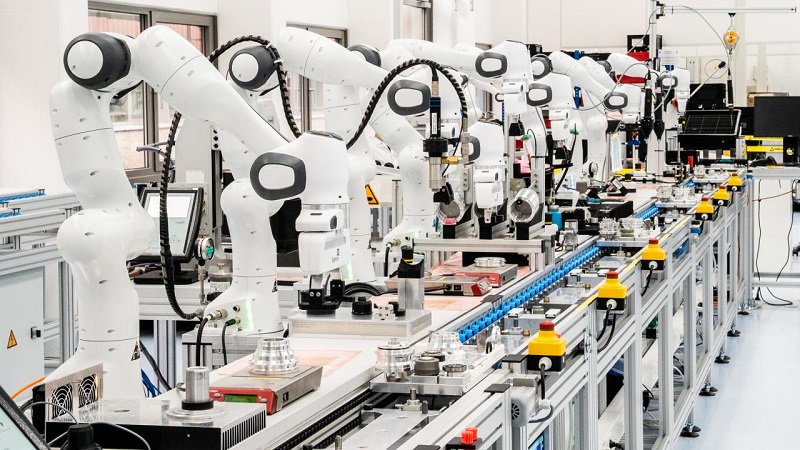
B&R is already working on locally oriented products in areas including motor control, motion control and human-machine interfaces (HMI).
This approach allows the company to address two different requirements at the same time.
The first is maintaining the performance and engineering standards associated with B&R's established automation technology.
The second is addressing the cost, delivery and customization requirements of China's highly competitive equipment-manufacturing market.
For international automation companies, balancing these two requirements is becoming increasingly important.
Why Localization Matters for Industrial Automation
Localization has a direct impact on several practical factors that influence automation purchasing decisions.
Cost
Producing products closer to the end market can reduce transportation and logistics costs and can also allow manufacturers to optimize the supply chain around local components.
Delivery Time
Local production can shorten supply cycles, particularly for frequently used automation products.
For machine builders working under strict project deadlines, delivery time can be almost as important as product specifications.
Engineering Response
Local technical teams can communicate directly with equipment manufacturers and respond to application-specific requirements more quickly.
Product Customization
Chinese equipment manufacturers often require customized hardware and software combinations.
Local development resources can make it easier to adapt products to these requirements.
After-Sales Service
Automation systems can operate for many years, making technical support and spare-parts availability important parts of the total cost of ownership.
Localization can therefore influence the complete lifecycle of an automation product, rather than only its initial purchase price.
B&R Focuses on M1, M2 and M3 Automation Markets
Another important factor behind the localization strategy is the changing structure of China's automation market.
B&R management describes the market using three broad customer segments:
- M1: Customers placing the greatest emphasis on performance, quality and reliability
- M2: Customers seeking a balance between performance, quality and cost
- M3: Customers placing greater emphasis on price
The M2 and M3 segments represent a particularly large part of China's automation market.
According to reporting based on B&R management's comments, M3 users account for more than 80% of the market, making cost competitiveness an important consideration for suppliers seeking broader market penetration.
B&R's localized M-series products are intended in part to address this market opportunity.
The strategy does not mean that B&R is abandoning high-end automation.
Instead, it indicates an effort to expand the company's addressable market by providing more product options for customers with different performance and cost requirements.
Motion Control and HMI Become Important Localization Areas
Motion control is one of B&R's core technical strengths.
Modern machine automation increasingly depends on precise synchronization between motors, servo drives, controllers and mechanical systems.
Applications such as packaging, printing, semiconductor manufacturing, battery production and high-speed material handling can require tightly coordinated motion.
Localizing motion-control products can therefore have a significant impact on machine builders.
B&R is also focusing on HMI products, another area where local requirements can vary considerably.
An HMI is not simply a display device. Modern HMI systems are increasingly used for machine diagnostics, production visualization, maintenance guidance, recipe management and interaction with higher-level software.
Developing these products closer to the Chinese market can help B&R respond to local application requirements while maintaining compatibility with its broader automation architecture.
Industrial AI Becomes Another Growth Opportunity
Localization is not the only change taking place within B&R's China strategy.
Artificial intelligence is also becoming an increasingly important part of the company's automation roadmap.
At its September 2026 Greater China anniversary event, B&R presented 13 automation and industrial AI products and solutions. The company positioned its industrial AI approach around the integration of machine perception, data analysis and process optimization.
B&R's global business is also developing AI applications for industrial motion control.
In May 2026, ABB's Machine Automation division announced a collaboration with Salzburg University of Applied Sciences focused on applying AI to improve energy efficiency in industrial automation and motion-control applications.
The development is relevant to Chinese manufacturers because AI adoption is increasingly moving from experimental projects toward practical applications.
For automation suppliers, the challenge is to integrate AI without compromising the deterministic behavior, reliability and safety requirements of industrial control systems.
B&R's Product Portfolio Supports Advanced Machine Automation
B&R has built its automation portfolio around an integrated architecture covering several major technology areas.
These include:
- PLC and industrial controllers
- Industrial PCs
- HMI systems
- Servo drives
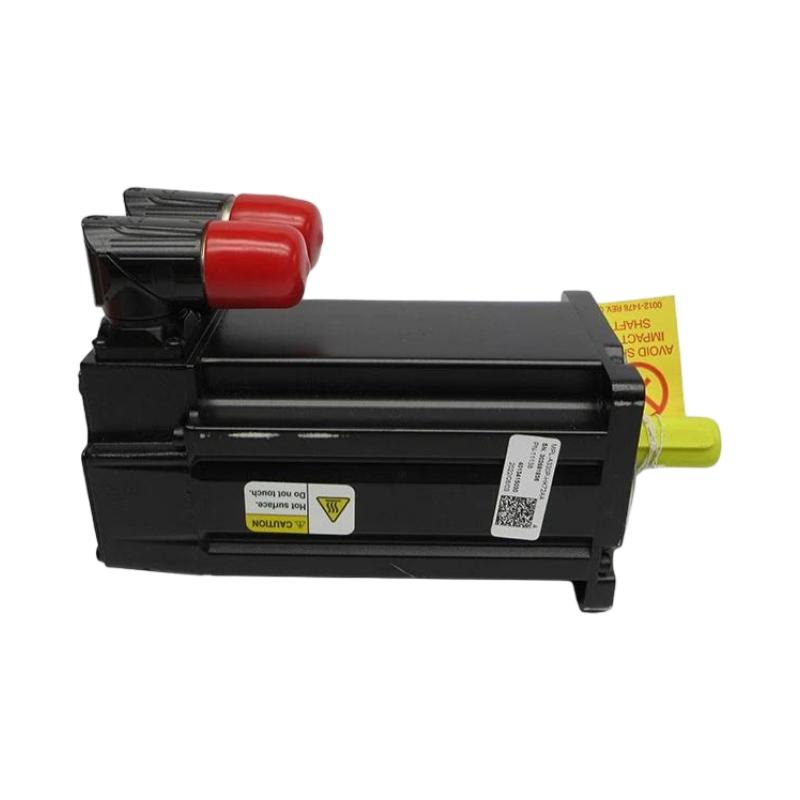
- Servo motors
- Motion control
- Industrial I/O
- Machine vision
- Robotics
- Industrial networking
- Automation software
- Flexible transport systems
The company's X20 controller platform, for example, provides modular PLC and I/O functionality for machine automation applications.
The B&R portfolio is particularly relevant to OEMs because multiple automation functions can be integrated into a common engineering environment.
This can simplify machine architecture and reduce the need to integrate unrelated control platforms from multiple vendors.
As localization progresses, the challenge for B&R will be to provide these capabilities with greater cost competitiveness and shorter supply cycles for Chinese customers.
China Offers Opportunities Beyond the Domestic Market
B&R's localization strategy may also have implications beyond China's domestic market.
According to recent reporting, B&R China is considering supplying locally manufactured products to nearby markets including India, Japan and South Korea.
If this strategy develops further, China could become not only a major sales market for B&R but also an important production and supply base for selected automation products.
This would represent a further evolution of the company's localization strategy.
Instead of a simple model of “manufacture in Europe and sell in China,” the structure could gradually become:
Global Technology + Chinese R&D + Chinese Manufacturing + Regional Supply
Such a model would be consistent with the wider regionalization trend affecting global industrial supply chains.
ABB's Broader China Strategy Supports Localization
B&R's localization strategy also fits into ABB's broader approach to China.
ABB has described China as one of its largest global markets and has continued to invest in local manufacturing, R&D and service capabilities.
In September 2026, ABB announced additional investment in China covering electrification, motion and automation businesses.
The company said it plans to expand manufacturing capacity, strengthen local R&D and upgrade service capabilities under its “In China, For China” strategy.
ABB reported that approximately 85% of products sold in China are locally manufactured, according to its China announcement. ABB's broader global reporting also gives an approximately 85% local-production figure for China.
B&R's plan to increase its own localized product contribution therefore fits into a much larger ABB strategy of developing products and technologies closer to major customer markets.
What This Means for Global Automation Equipment Buyers
The development is also relevant to international buyers of B&R automation equipment.
China is one of the world's largest manufacturing centers and has a large ecosystem of machine builders producing equipment for both domestic and export markets.
If B&R increases local manufacturing and supply-chain integration in China, international OEMs sourcing automation equipment from the region could potentially benefit from:
- Shorter regional supply chains
- Greater product availability
- More competitive product configurations
- Faster application support
- Local engineering resources
- Greater integration with Chinese machine builders
- Potential regional export capabilities
For foreign buyers, however, product selection should still be based on technical specifications, certification requirements, lifecycle support and application compatibility rather than simply the location of manufacture.
Competitive Pressure Is Driving Automation Localization
The B&R development illustrates a broader transformation in China's industrial automation market.
Chinese automation manufacturers have continued to improve their capabilities in PLCs, motion control, servo systems, industrial PCs, HMI and industrial software.
At the same time, international automation companies face increasing pressure to provide better price-performance ratios.
This creates a more competitive environment for established global suppliers.
Localization can help international companies address this challenge by reducing costs and increasing responsiveness without necessarily abandoning their global technology platforms.
For B&R, this is particularly important because its traditional strengths are concentrated in high-performance machine automation, while the Chinese market includes a very broad range of equipment manufacturers with different budgets and technical requirements.
New Opportunities in Semiconductor, Life Sciences and New Energy
B&R sees several emerging industries as potential growth areas in China.
These include:
- Semiconductor equipment
- Life sciences
- New energy
- Energy storage
- Ship electrification
- Robotics
- AI-enabled manufacturing
- Embodied intelligence
- Low-altitude economy applications
These markets require advanced automation technologies, but they also have very different technical requirements.
Semiconductor equipment may prioritize precision and synchronization.
Life-science equipment may place greater emphasis on traceability, process stability and regulatory requirements.
Battery and new-energy equipment can require high-speed motion control, machine vision and production data management.
Robotics and emerging intelligent-machine applications may require closer integration between motion control, AI and perception.
This diversity makes localized engineering increasingly important.
Localization Is Moving Beyond Manufacturing
The most significant aspect of B&R's strategy is that localization is no longer limited to assembling products in China.
The company's current direction involves a much broader definition of localization:
Local Manufacturing + Local Supply Chain + Local R&D + Local Engineering + Local Products + Local Service
This represents a deeper integration into the Chinese industrial ecosystem.
For customers, the value of this model lies in the ability to obtain technology that is adapted not only to local pricing conditions but also to local manufacturing practices and application requirements.
For B&R, the strategy could provide a stronger foundation for competing in China's increasingly sophisticated machine-aut