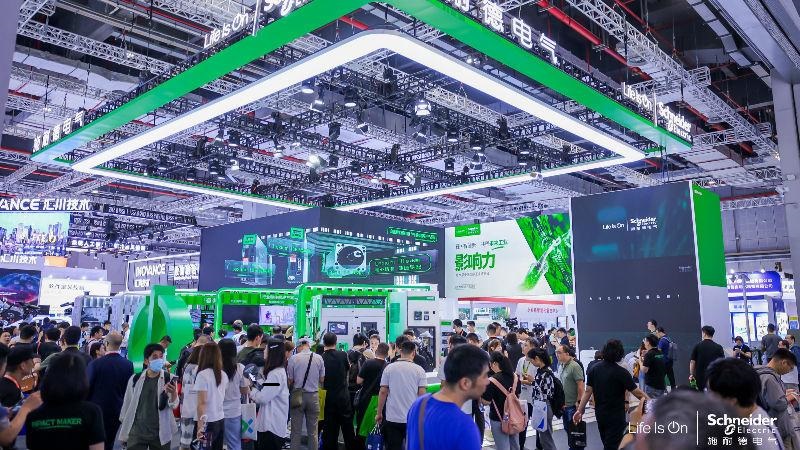
Schneider Electric Showcases AI and Software-Defined Automation at CIIF 2026
Shanghai, China — October 19, 2026 — Schneider Electric showcased its latest developments in open automation, industrial artificial intelligence (AI) and energy management at the 26th China International Industry Fair (CIIF 2026), held from October 12 to 16 at the National Exhibition and Convention Center in Shanghai.
Under the theme “Intelligence at Work,” the company presented industrial digitalization solutions designed to support more flexible production, smarter operations and improved energy efficiency. Its exhibition focused on four major application areas: process and hybrid industries, municipal infrastructure, data centers, and discrete manufacturing.
The showcase reflected a broader industrial trend toward integrating automation hardware, engineering software, operational data and AI technologies to improve the performance of industrial facilities throughout their life cycles.
EcoStruxure and Open Automation Form the Technology Foundation
A central feature of Schneider Electric's exhibition was its evolving EcoStruxure architecture, which connects field devices, control systems and operational optimization capabilities.
The company highlighted its EcoStruxure Automation Expert (EAE) open automation platform, which supports software-defined automation and a more flexible approach to industrial control system design.
Among the solutions presented were EcoStruxure Foxboro SDA, a software-defined automation system for process industries, and the new Modicon M590d digital process automation controller. The platform and controller are intended to support modern industrial architectures that combine control capabilities with computing performance and more adaptable engineering workflows.
For manufacturers and system integrators, open automation can help simplify system integration, support the evolution of control architectures and provide a foundation for incorporating digital technologies into existing production environments. Actual implementation benefits depend on system design, application requirements and compatibility with installed equipment.
Industrial AI Moves Closer to Engineering and Operations
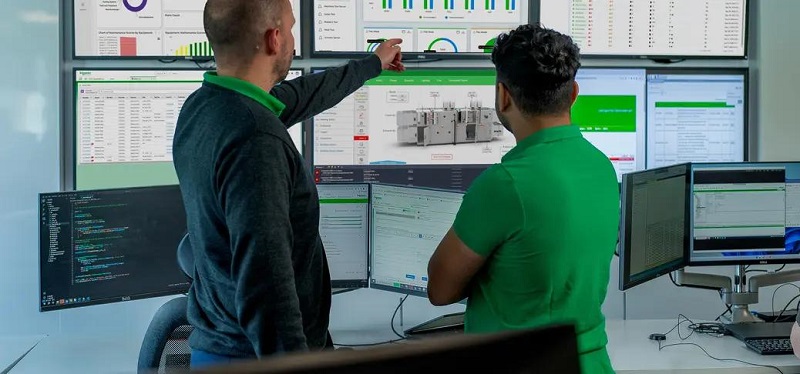
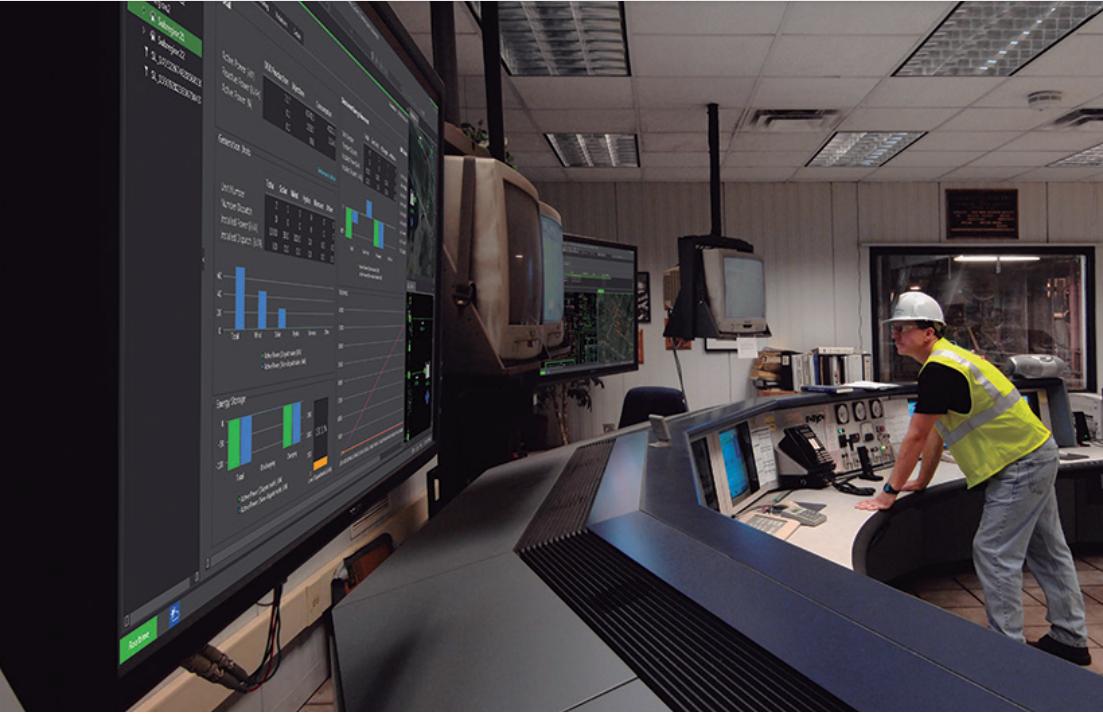
Schneider Electric also demonstrated how AI and industrial software can be applied to engineering, process control, alarm management and operational optimization.
The featured technologies included AVEVA Process Simulation for process modeling and validation, AI-assisted engineering design, BoroClaw process-control configuration and testing, intelligent alarm management, and advanced process control enhanced with AI-based optimization capabilities.
These applications address several practical challenges faced by industrial operators. Process simulation can help engineers evaluate designs before commissioning, while AI-assisted engineering may streamline selected design tasks. Intelligent alarm management can help operators focus on more relevant alerts, and advanced control strategies can support more consistent process performance.
The effectiveness of these applications depends on the quality and availability of industrial data, the reliability of the underlying control systems and the suitability of the AI models for each operating environment.
Rather than treating AI as a standalone technology, Schneider Electric's approach emphasizes integrating AI into existing automation and industrial software workflows.
New Automation Products Target Diverse Industrial Applications
The exhibition also featured several automation and drive products designed for different industrial requirements.
Modicon M590d dPAC Controller: A new digital process automation controller combining computing capabilities with industrial-grade reliability and an engineering-oriented design. It is intended to support industrial edge computing and the development of open automation architectures.
Altivar 610QC Variable Speed Drive: Introduced at the exhibition, this general-purpose drive was developed by Schneider Electric's Industrial Automation China Center. Its target applications include municipal water and wastewater systems, data centers, building HVAC and oil and gas facilities.
ATH600 Series Variable Speed Drives: Designed for HVAC applications, the series addresses the automation and operational requirements of buildings and critical infrastructure, including hospitals, airports and data centers.
Modicon M380 ePAC: Schneider Electric presented this next-generation compact Ethernet-based programmable controller as an upcoming product, with a global launch planned for November 2026. The planned controller is designed to incorporate core technologies from the Modicon M580 family while balancing performance, cost and cybersecurity requirements.
Product availability, release timing and technical specifications should be confirmed with Schneider Electric or an authorized distributor before procurement.
Demonstrations Connect AI with Real Industrial Applications
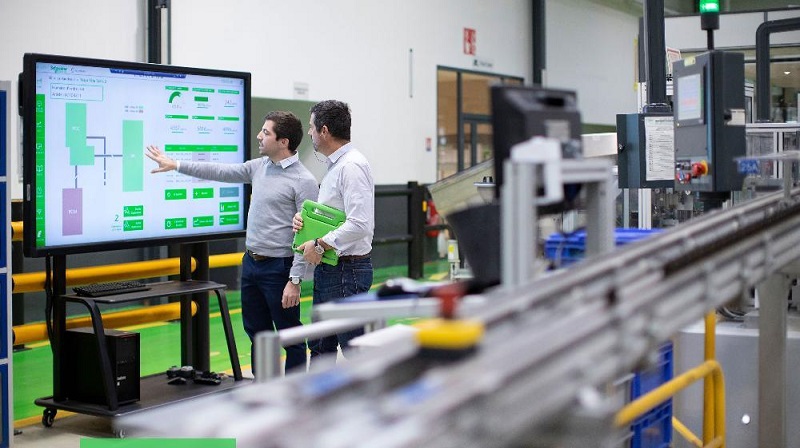
Schneider Electric's exhibition also featured interactive demonstrations designed to illustrate how AI can work with physical automation equipment.
Examples included an AI-enabled intangible cultural heritage sugar-painting demonstration using natural-language instructions to invoke PLC control functions, AI vision inspection combined with flexible collaborative robotics, and demonstrations of precision motion control and water-treatment automation.
These applications illustrate how AI can complement established industrial technologies such as programmable logic controllers (PLCs), machine vision, motion control and edge computing.
For manufacturers, the potential value lies in connecting intelligent software with deterministic control, real-time equipment feedback and established industrial safety and reliability practices. AI-enabled systems still require appropriate engineering validation, risk assessment and operational oversight.
Open Ecosystems Support Industrial Digitalization
Beyond product demonstrations, Schneider Electric announced new industry resources and cooperation initiatives during CIIF 2026.
The company introduced practical innovation collections covering software-defined automation and industrial AI, alongside a report on pathways toward a new model of industrial electrification in China. It also reported cooperation agreements with customers and ecosystem partners across manufacturing, chemicals, energy, intelligent equipment and other industrial sectors.
These initiatives reflect the growing importance of collaboration among automation suppliers, software developers, system integrators and industrial end users. As factories adopt more connected and data-driven operating models, interoperability and integration across different technology layers are becoming increasingly important.
Implications for Industrial Automation Buyers
Schneider Electric's CIIF 2026 showcase highlights several developments relevant to industrial equipment buyers and system integrators.
First, software-defined automation is creating new options for designing and upgrading industrial control systems. Second, AI applications are expanding beyond analytics into engineering assistance, process optimization, inspection and maintenance-related workflows. Third, the integration of automation and energy management is becoming increasingly relevant as industrial operators seek to improve operational efficiency and sustainability.
For procurement teams evaluating automation upgrades, the key considerations remain application compatibility, lifecycle support, cybersecurity, commissioning requirements and the availability of technical documentation.
Before replacing or expanding an installed control system, buyers should verify the exact model number, hardware and firmware compatibility, communication interfaces, product lifecycle status and regional availability with the manufacturer or an authorized supplier.
Conclusion
At CIIF 2026, Schneider Electric presented a combination of open automation, industrial AI, software capabilities and automation hardware aimed at supporting industrial digital transformation.
The company's showcase demonstrates how industrial AI is increasingly being integrated into engineering and operational workflows rather than deployed as an isolated tool. For manufacturers, the next step is to assess these technologies against specific production requirements, integration constraints and measurable operational objectives.
As industrial facilities continue to modernize, the combination of reliable control hardware, interoperable software and appropriately validated AI applications is likely to remain an important consideration for automation engineers, system integrators and industrial equipment buyers.