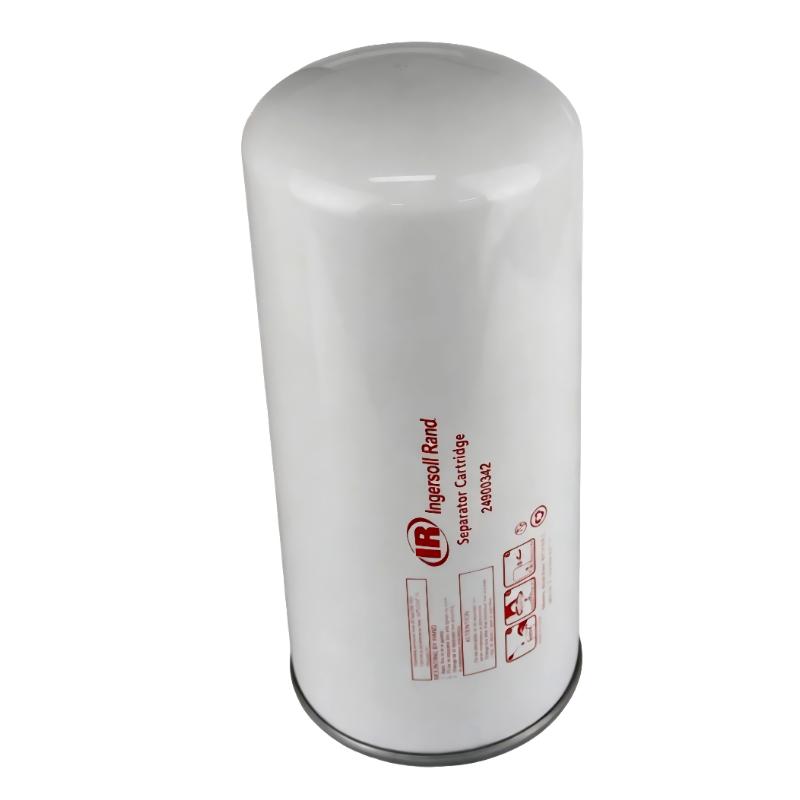
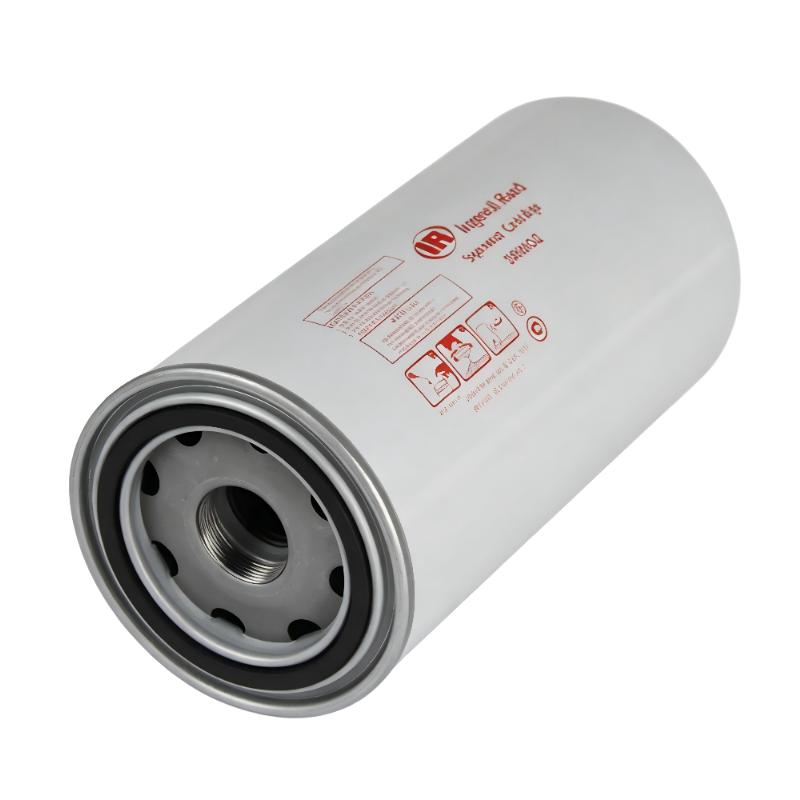
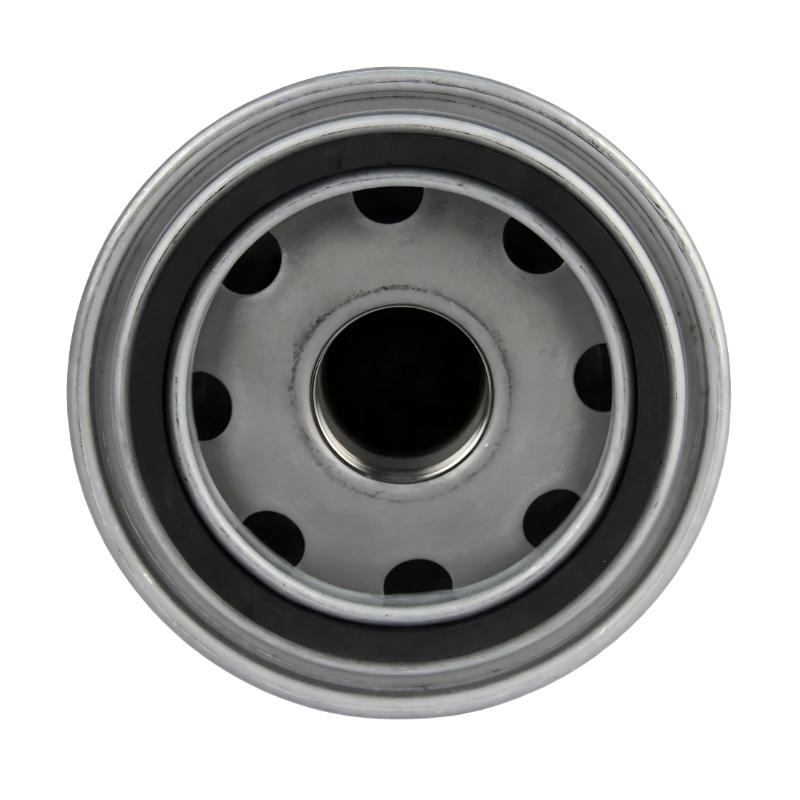
Brand:Ingersoll Rand Item No.:47588444001 Product Origin:USA Product Dimensions:302 × 45 × 136 mm Product Weight:0.91 kg Payment:T/T, Western Union, Credit Card Goods_stock:15 Shipping Port:Xiamen, China Lead Time:1-3 Days Condition:Brand New And Original Warranty:1 Year Certificate:COO
The Ingersoll Rand 47588444001 24900342 Air-Oil Separator is an industrial compressor spare part intended to support oil separation in compressed air systems. It plays an important role in controlling oil carryover and maintaining the operating condition of oil-injected compressors.
During normal compressor operation, lubricating oil circulates through the compression system to provide cooling, lubrication, and sealing. A portion of this oil becomes suspended in the compressed air as fine droplets. The air-oil separator captures these droplets and helps return the collected oil to the lubrication circuit.
A separator in good operating condition contributes to cleaner compressed air, more stable compressor performance, and reduced contamination of downstream equipment. Over time, however, separator media can become restricted or lose its effectiveness due to accumulated contaminants and normal operating wear.
Selecting the correct replacement is therefore an important part of compressor maintenance. The 47588444001 24900342 part number provides a clear identification reference for purchasing and inventory management.
For industrial users, maintenance contractors, and compressor spare parts distributors, sourcing the correct Ingersoll Rand component can help simplify servicing and support long-term equipment reliability.
Technical Specifications
Parameter
Specification
Brand
Ingersoll Rand
Part Number
47588444001
Additional Model Number
24900342
Product Name
Air-Oil Separator
Product Category
Compressor Spare Part
Application
Oil-Injected Compressed Air Systems
Dimensions
302 × 45 × 136 mm
Weight
0.91 kg
Weight (lb)
2.01 lb
Installation
Compressor-Specific
Function
Oil Mist Separation
Note: Confirm the compressor model and original part-number compatibility before ordering. Operating pressure, flow capacity, and service interval should be checked against the applicable compressor documentation.
Recommended Related Models
The following Ingersoll Rand component categories are worth considering when planning compressor maintenance and replacement parts procurement. Exact part-number compatibility should be verified before ordering.
Ingersoll Rand Air Filter Element
Ingersoll Rand Oil Filter
Ingersoll Rand Compressor Intake Filter
Ingersoll Rand Oil Return Line Assembly
Ingersoll Rand Compressor Maintenance Kit
Popular Ingersoll Rand Compressor Spare Parts
For customers maintaining industrial compressed air systems, the following product categories are also commonly considered alongside air-oil separators:
Ingersoll Rand 47588444001 Air-Oil Separator
Ingersoll Rand 24900342 Air-Oil Separator
Ingersoll Rand Compressor Oil Filter Assembly
Ingersoll Rand Compressor Air Filter Element
Ingersoll Rand Screw Compressor Service Components
Procurement Note: When purchasing the Ingersoll Rand 47588444001 24900342 Air-Oil Separator, confirm the complete part number, compressor compatibility, and product identification details. Choosing the correct replacement component helps minimize maintenance risks and supports reliable compressed air system operation.
Applications
The Ingersoll Rand 47588444001 24900342 Air-Oil Separator is designed for use in oil-injected compressed air systems, where effective oil separation is essential to maintaining air quality and compressor performance. It helps remove oil mist from compressed air before the air enters the downstream distribution system.
Typical applications include:
Industrial Air Compressors: Supports oil separation in rotary screw compressor systems.
Manufacturing Facilities: Helps maintain compressed air quality for production equipment and pneumatic tools.
Automotive Production: Supports reliable compressed air delivery for assembly lines and workshop equipment.
Food and Beverage Processing: Helps reduce oil carryover in compressed air systems, subject to the required downstream air treatment.
Chemical and Process Industries: Contributes to stable compressor operation in continuous industrial processes.
General Plant Utilities: Helps protect downstream air lines and pneumatic components from excessive oil contamination.
Key Performance Benefits and Advantages
1. Effective Oil Mist Separation
The separator is designed to capture oil droplets carried by compressed air, helping reduce oil content in the discharged air.
2. Protection for Downstream Equipment
By limiting oil carryover, it helps reduce contamination risks in air pipelines, pneumatic valves, tools, and other connected equipment.
3. Support for Compressor Efficiency
Proper oil separation helps maintain the intended operating conditions of an oil-injected compressor and supports consistent compressed air delivery.
4. Reliable Industrial Application
Designed for industrial compressor service, the component supports dependable operation when installed and maintained according to the applicable equipment requirements.
5. Maintenance-Friendly Replacement
Replacing a worn or clogged separator at the recommended service interval helps maintain compressor performance and reduces the risk of unexpected maintenance interruptions.
6. Practical Spare Parts Procurement
The Ingersoll Rand 47588444001 24900342 provides a specific part-number reference for maintenance teams sourcing replacement air-oil separator components.
Technical FAQs – Common Engineering and Maintenance Questions
Q1: What is the primary function of the Ingersoll Rand 47588444001 24900342 Air-Oil Separator?
A: Its primary function is to separate oil mist from compressed air in an oil-injected compressor system, helping reduce oil carryover into the compressed air outlet.
Q2: How does an air-oil separator work?
A: Compressed air containing suspended oil droplets passes through the separator media. The media captures and coalesces smaller oil droplets, allowing the collected oil to drain back into the compressor oil circuit where the system design permits.
Q3: What are the common symptoms of a failing air-oil separator?
A: Typical symptoms include increased oil consumption, excessive oil in the compressed air line, abnormal separator differential pressure, and reduced compressor performance.
Q4: Can a clogged separator affect compressor operation?
A: Yes. Excessive restriction across the separator can increase pressure differential, affect operating efficiency, and potentially trigger compressor alarms or protective shutdowns.
Q5: What causes excessive oil carryover in a screw compressor?
A: Possible causes include damaged separator media, incorrect oil level, unsuitable compressor lubricant, restricted oil return lines, or operating conditions outside the specified range.
Q6: How can maintenance personnel determine when the separator needs replacement?
A: Maintenance personnel should monitor separator differential pressure, inspect oil carryover, review compressor operating alarms, and follow the manufacturer's recommended maintenance schedule.
Q7: Is the air-oil separator interchangeable with other compressor separator models?
A: Not necessarily. Compatibility depends on the compressor model, separator design, sealing arrangement, flow requirements, and pressure specifications. The complete part number should be verified before replacement.
Q8: What happens if the oil return system becomes blocked?
A: A blocked oil return line can prevent separated oil from returning properly to the compressor lubrication circuit. This may contribute to increased oil consumption and oil carryover.
Q9: Should the compressor be stopped before replacing the separator?
A: Yes. The compressor must be shut down, isolated from its power source, and fully depressurized before maintenance begins. Personnel should follow the equipment-specific safety and service procedures.
Q10: Why is it important to use the correct replacement separator?
A: The correct separator helps maintain the intended filtration performance, airflow characteristics, sealing integrity, and operating pressure conditions. An unsuitable component may lead to excessive oil carryover or abnormal pressure drop.