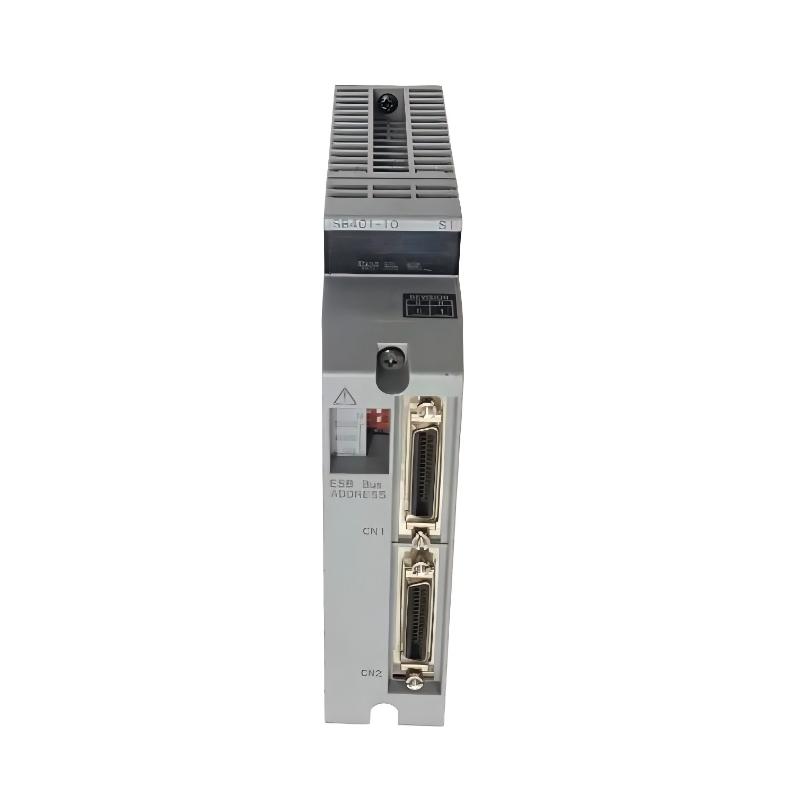
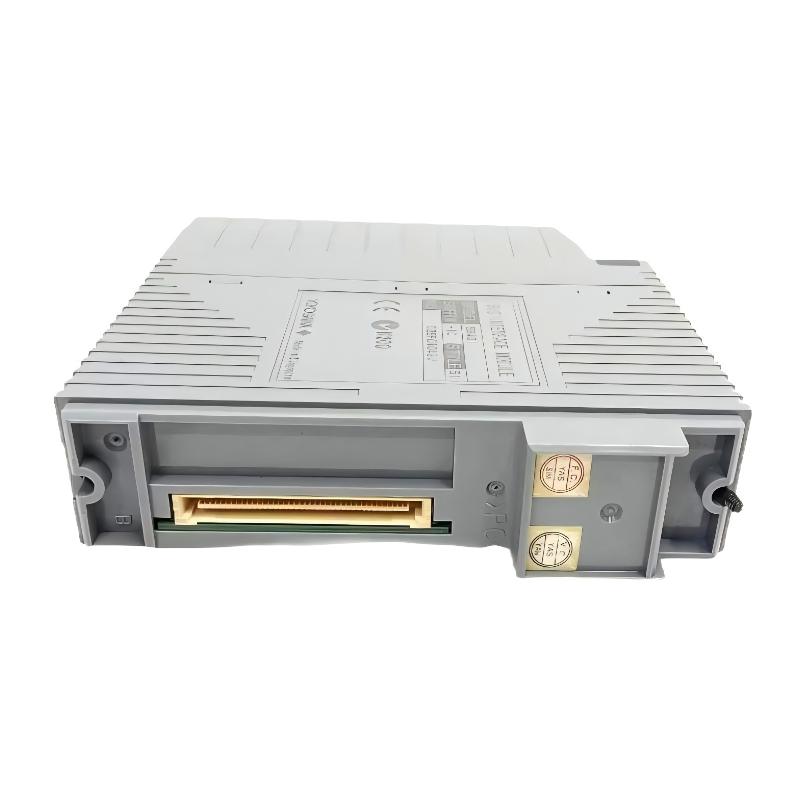
Brand:Yokogawa Electric Item No.:SB401-10 Product Origin:Japan Product Dimensions:130 x 142.5 x 32.8 mm Product Weight:0.45 kg Payment:T/T, Western Union, Credit Card Goods_stock:15 Shipping Port:Xiamen, China Lead Time:1-3 Days Condition:Brand New And Original Warranty:1 Year Certificate:COO
The Yokogawa SB401-10 Bus Interface Slave Module is a critical communication component in modern process automation systems. In distributed architectures, efficient and reliable data exchange is fundamental to maintaining operational accuracy and uptime.
Engineered to meet industrial performance standards, the SB401-10 ensures consistent connectivity between remote I/O modules and supervisory controllers. Its compact mechanical design and robust construction make it suitable for dense control cabinets where space optimization and reliability are equally important.
Technical Specifications
Parameter
Specification
Product Model
SB401-10
Product Type
Bus Interface Slave Module
Application
Distributed Control System Communication
Mounting Type
Rack Mounted
Dimensions
130 × 142.5 × 32.8 mm
Weight
0.45 kg
Installation Environment
Industrial Control Cabinet
Communication Role
Slave Interface Module
Recommended Related Models
Yokogawa SB301 Bus Interface Module
Yokogawa SB402 Bus Interface Slave Module
Yokogawa EB401 Bus Coupler Module
Yokogawa EC401 Communication Module
Popular Related Models
Yokogawa AAI143 Analog Input Module
Yokogawa AAI835 Analog I/O Module
Yokogawa ADV151 Digital Input Module
Yokogawa AIP601 Power Supply Module
Where It Is Deployed
The Yokogawa SB401-10 Bus Interface Slave Module is engineered to serve as a reliable communication bridge within distributed automation architectures. It is typically installed in:
Distributed Control System (DCS) nodes
Remote I/O stations
Process control cabinets
Industrial network expansion racks
Redundant communication topologies
Core Advantages
Stable Bus Communication – Ensures accurate and deterministic data transmission across the control network.
Industrial-Grade Design – Built to operate reliably in demanding plant environments.
Seamless System Integration – Designed for compatibility within Yokogawa automation platforms.
Compact Footprint – Optimized dimensions for efficient cabinet space utilization.
Long-Term Reliability – Suitable for continuous process operations requiring high availability.
Technical FAQs
1. What is the primary function of the SB401-10 module?
It acts as a bus interface slave, enabling communication between I/O modules and the central control system.
2. Is it designed for distributed control architectures?
Yes, it is specifically developed for integration within distributed I/O and DCS environments.
3. Does the module support redundant communication systems?
It can be implemented within redundant network configurations depending on system design.
4. What type of signals does it manage?
It manages communication signals rather than direct field input or output signals.
5. How does it contribute to system reliability?
By maintaining stable and synchronized data transmission, it reduces communication errors and system interruptions.
6. Is hot-swapping supported?
Hot-swap capability depends on the overall system configuration and rack design.
7. What industries commonly use this module?
Oil & gas, power generation, petrochemical, and large-scale manufacturing facilities rely on it for process automation.
8. Does it require specialized configuration?
Configuration is performed through the associated Yokogawa engineering tools within the control system platform.
9. What environmental conditions can it operate in?
It is designed for industrial cabinet installations with controlled temperature and humidity ranges.
10. Can it be used in system expansion projects?
Yes, it is frequently deployed when expanding distributed I/O capacity within existing automation systems.