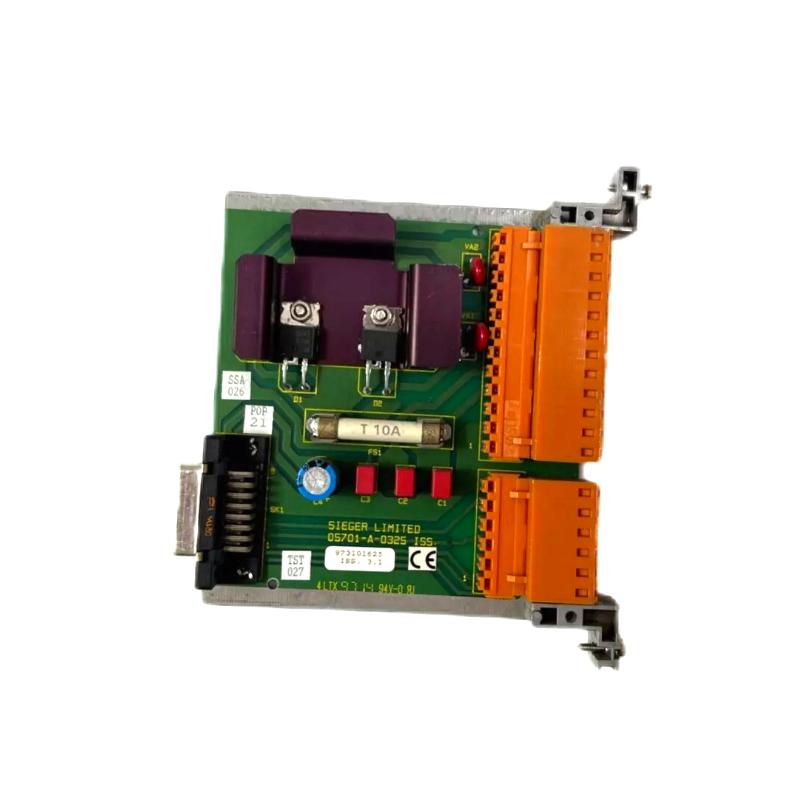
Honeywell 05701-A-0325 Control Card Fault Troubleshooting Guide (Loop Drift & False Alarm)
Honeywell 05701-A-0325 faults are often misdiagnosed as sensor or controller failures, but field experience shows most issues arise from backplane contact instability, DC power ripple, or EMI interference.
Honeywell 05701-A-0325 Fault Symptoms
- Intermittent PID loop oscillation
- False A1/A2/A3 alarms
- LED Fault/Inhibit without sensor change
- Delayed analog output response
- Communication errors with redundant controllers
In one petrochemical plant, false alarms recurred every 20 minutes. Manual measurement confirmed that sensors were stable; the root cause was card seating and power fluctuation.
Fault Diagnosis Logic
1. Analog Signal Verification
- Stable 4–20 mA: sensor healthy
- Fluctuating signal: check wiring or grounding
- Sudden drop to 0 mA: open loop or connector issue
2. Mechanical & Backplane Inspection
- Check card seating, tilt, and latch engagement
- Inspect backplane connectors for oxidation or wear
In a refinery, a 0.25 mm misalignment caused voltage spikes and intermittent alarms.
3. Power & EMI Analysis
- Nominal 24 V DC; ripple <100 mV
- Ripple >300 mV: indicates EMI or load instability
- Reroute analog cables away from high-power devices
Common Field Failure Patterns
- Loose Card Seating: causes intermittent alarms and loop instability
- EMI Interference: signal spikes when high-current devices operate
- Aged Backplane Contacts: gradual drift, fix with cleaning or maintenance
Field Recovery Case Study
Scenario: False A2 alarm on a single channel.
Symptoms: Repeated alarms every 25–30 minutes.
Diagnosis:
- Loop current stable at sensor
- Voltage fluctuation at card backplane
- Card slightly loose due to rack vibration
Corrective Action:
- Reinsert card and tighten screws
- Clean contacts
- Add vibration damping
Result: Signal stabilized, false alarms eliminated, ±2% variation maintained.