Schneider Electric Executive Qiao Zeng: Industrial AI Scaling Requires Co-Creation Across Real-World Application Scenarios
Meta Description (SEO):
Schneider Electric highlights that large-scale industrial AI adoption requires collaboration and scenario-based innovation, accelerating intelligent manufacturing and digital transformation.
Schneider Electric Emphasizes Scenario-Based Co-Creation as the Key to Scaling Industrial AI
**Schneider Electric has highlighted the importance of real-world application scenarios and industry collaboration in accelerating the large-scale adoption of Industrial AI.
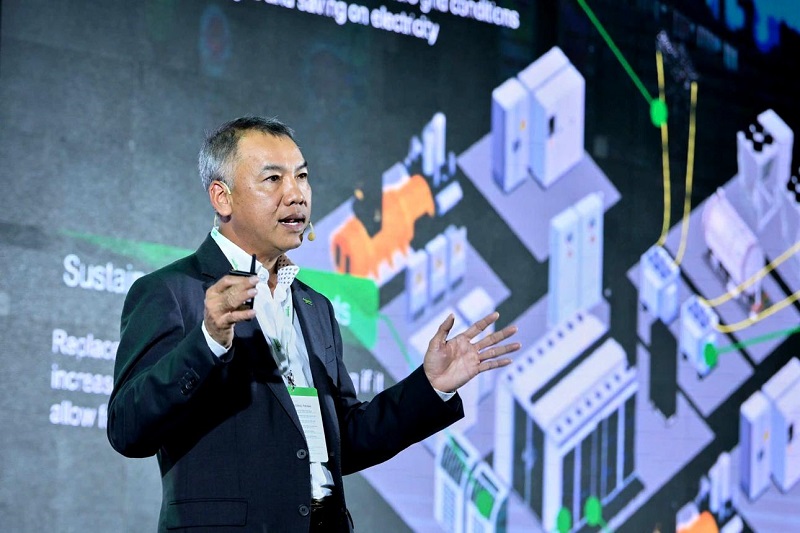
According to Qiao Zeng, an executive representative from Schneider Electric, the future development of industrial artificial intelligence requires moving beyond technology demonstrations and focusing on practical industrial needs through continuous co-creation with customers and ecosystem partners.
Industrial AI Moves from Concept Exploration to Practical Implementation
Artificial intelligence is becoming an important technology direction for industrial transformation.
However, successfully applying AI in industrial environments requires addressing complex challenges, including:
- Different production processes
- Diverse equipment environments
- Industry-specific requirements
- Data availability and quality
- Integration with existing automation systems
Industrial AI must be developed around real operational scenarios rather than only relying on technology capabilities.
Scenario-Based Co-Creation Drives AI Value Creation
Schneider Electric believes that collaboration between technology providers and industrial users is essential for successful AI deployment.
Through co-creation, enterprises can develop AI solutions that better match practical requirements, including:
- Energy optimization
- Production efficiency improvement
- Equipment health monitoring
- Predictive maintenance
- Operational decision support
This approach helps transform AI from an experimental technology into a valuable industrial tool.
Combining Industrial Expertise with Artificial Intelligence
Industrial AI requires a combination of multiple capabilities:
- Industrial automation knowledge
- Operational data analysis
- Digital platforms
- Artificial intelligence models
- Engineering experience
Companies need both AI technology and deep understanding of industrial processes to create effective solutions.
Schneider Electric has been integrating digital technologies, automation platforms, and energy management expertise to support customers in their digital transformation journeys.
AI Supports Smarter Energy and Manufacturing Management
Industrial AI applications are expanding across multiple areas, including:
Smart Energy Management
AI can help enterprises:
- Analyze energy consumption patterns
- Optimize energy usage
- Improve efficiency
- Support carbon reduction goals
Intelligent Manufacturing
AI technologies can support:
- Production optimization
- Quality improvement
- Automated decision-making
- Equipment performance analysis
Predictive Maintenance
AI-based analysis can help identify potential equipment issues before failures occur, improving reliability and reducing downtime.
Building an Industrial AI Ecosystem Through Collaboration
The development of Industrial AI requires cooperation among:
- Automation companies
- Industrial manufacturers
- Software developers
- Data technology providers
- Research institutions
A strong ecosystem can accelerate the transition from isolated AI projects to scalable industrial applications.
Industry Outlook: Industrial AI Will Become a Core Manufacturing Capability
As manufacturing industries continue digital transformation, AI is expected to become an important foundation for:
- Smart factories
- Intelligent energy systems
- Autonomous operations
- Data-driven management
- Sustainable industrial development
Schneider Electric’s focus on scenario-based co-creation reflects a broader industry trend: industrial AI success depends not only on advanced algorithms but also on practical implementation and continuous collaboration.