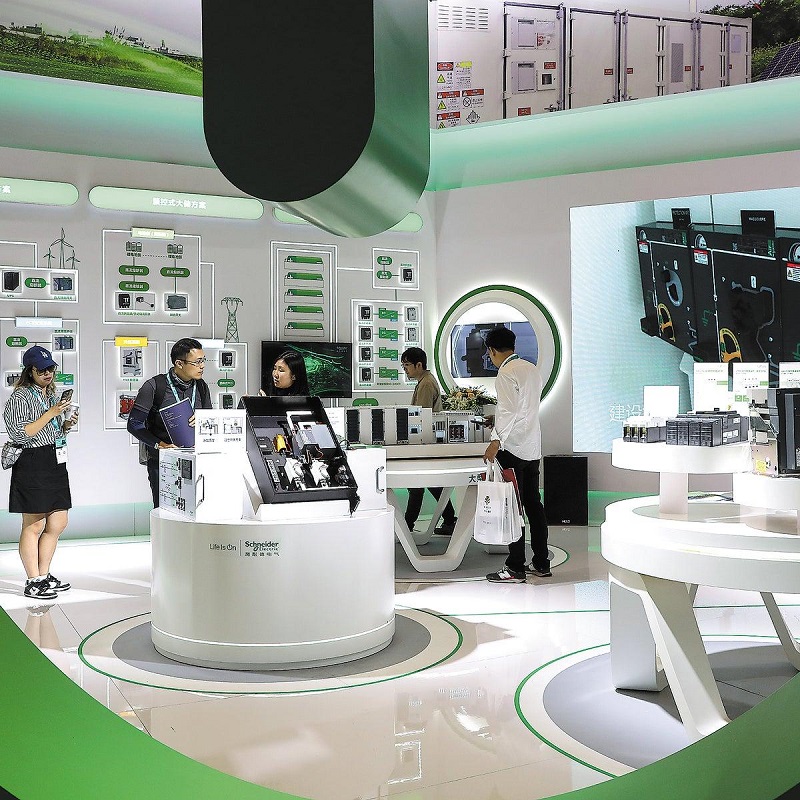
Schneider Electric Introduces Software-Defined DCS Technology for the Next Generation of Industrial Automation
The industrial automation industry is entering a new phase of transformation as manufacturers, energy companies, and process industries demand more flexible, intelligent, and sustainable control systems. Traditional automation architectures based on dedicated hardware platforms have supported industrial operations for decades, but increasing requirements for digitalization, cybersecurity, artificial intelligence integration, and operational flexibility are pushing companies toward a new generation of automation solutions.
In response to these market changes, Schneider Electric has introduced EcoStruxure Foxboro Software Defined Automation (SDA), an open software-defined Distributed Control System (DCS) designed to help industrial organizations modernize their control infrastructure while protecting existing investments. The new automation architecture represents a significant evolution in process control technology by separating automation software capabilities from traditional hardware limitations.
The launch reflects a broader industry trend where PLC, DCS, SCADA, edge computing, and industrial software platforms are becoming increasingly connected. Modern factories are no longer focused only on machine control and production efficiency; they are moving toward intelligent operations where real-time data, predictive analytics, and advanced automation strategies play a central role.
For companies operating chemical plants, oil and gas facilities, pharmaceutical production lines, power generation systems, and large manufacturing environments, the ability to upgrade automation systems without replacing complete infrastructures has become a critical competitive advantage.
The Evolution from Traditional DCS to Software-Defined Automation
Distributed Control Systems have traditionally been the foundation of continuous process industries. A DCS provides centralized monitoring and decentralized control capabilities, allowing operators to manage complex industrial processes with high reliability.
However, many existing DCS installations face challenges related to aging hardware, limited upgrade paths, rising maintenance costs, and difficulties integrating modern digital technologies.
Traditional automation modernization projects often require significant hardware replacement, long shutdown periods, and complex engineering efforts. These challenges can create operational risks for industries where production continuity is essential.
Schneider Electric’s EcoStruxure Foxboro SDA introduces a different approach by moving toward software-defined automation. Instead of depending entirely on specific hardware platforms, the system architecture allows automation functions to become more flexible, scalable, and adaptable.
This approach enables industrial companies to modernize automation systems gradually rather than replacing entire control infrastructures at once.
The software-defined concept is similar to transformation trends already seen in information technology, where cloud computing, virtualization, and software platforms have replaced many fixed hardware-dependent models.
For industrial environments, this means automation systems can become easier to maintain, easier to expand, and better prepared for future technologies.
Key Features of Schneider Electric EcoStruxure Foxboro SDA
One of the most important characteristics of the new DCS platform is its open architecture.
Unlike traditional closed automation systems, software-defined automation focuses on interoperability and flexibility. Industrial users can design automation environments that better match their operational requirements instead of being restricted by a single hardware ecosystem.
The major capabilities include:
1. Open and Flexible Automation Architecture
The software-defined design separates control software from hardware infrastructure. This allows organizations to deploy automation applications across different computing environments while maintaining consistent control strategies.
For industrial users, this creates several advantages:
- Easier system expansion
- Reduced dependence on specific hardware platforms
- Faster deployment of automation applications
- Improved lifecycle management
This flexibility is especially valuable for companies managing multiple production sites with different generations of automation equipment.
2. Improved Industrial Cybersecurity Protection
Cybersecurity has become one of the most important concerns in industrial automation.
As factories become more connected through Industrial Internet of Things (IIoT), cloud platforms, and remote monitoring systems, protecting operational technology environments has become essential.
EcoStruxure Foxboro SDA incorporates cybersecurity considerations into the automation architecture, supporting secure industrial operations and helping companies address modern cybersecurity requirements.
For industries such as energy, chemicals, and infrastructure, cybersecurity is no longer an optional feature. It has become a fundamental requirement for maintaining safe and reliable operations.
3. Supporting Artificial Intelligence and Advanced Analytics
Artificial intelligence is becoming increasingly important in industrial environments.
Modern automation systems are expected to provide more than basic control functions. Companies are looking for solutions that can analyze operational data, identify potential failures, optimize processes, and improve production efficiency.
Software-defined automation creates a foundation for integrating technologies such as:
- Artificial intelligence
- Machine learning
- Edge computing
- Predictive maintenance
- Digital twins
By connecting automation data with advanced analytics platforms, industrial companies can achieve deeper visibility into equipment performance and production processes.
Impact on PLC and DCS Automation Markets
The development of software-defined DCS technology also influences the relationship between PLC and DCS systems.
Historically, PLC systems have dominated discrete manufacturing applications, while DCS platforms have been widely used in continuous process industries.
However, the boundaries between PLC, DCS, SCADA, and industrial software are becoming less defined.
Modern automation projects increasingly require:
- High-speed machine control
- Process optimization
- Data integration
- Remote monitoring
- Intelligent decision-making
As a result, automation suppliers are developing platforms that combine traditional control capabilities with software-driven intelligence.
This transformation creates new opportunities for automation engineers, system integrators, and industrial equipment suppliers.
Companies involved in PLC modules, DCS components, communication modules, industrial controllers, and automation spare parts will increasingly need to understand how these technologies interact within future industrial architectures.
Why Software-Defined Automation Matters for Industrial Customers
For many factories, replacing an existing automation system is expensive and risky.
Production downtime can result in significant financial losses, especially in industries where processes operate continuously.
Software-defined automation provides an alternative modernization strategy:
Protect Existing Investments
Companies can continue using existing automation assets while gradually introducing new digital capabilities.
Reduce Modernization Risks
Incremental upgrades reduce the need for large-scale shutdowns and complicated migration projects.
Improve Operational Efficiency
Better access to industrial data enables improved maintenance planning, production optimization, and energy management.
Prepare for Future Technologies
A flexible automation architecture makes it easier to adopt future innovations such as AI-based control optimization and autonomous operations.
The Future Direction of Industrial Automation
The launch of EcoStruxure Foxboro SDA represents a larger movement across the automation industry.
Major automation manufacturers are investing heavily in:
- Open automation platforms
- Cloud-connected industrial systems
- Artificial intelligence applications
- Digital twins
- Smart manufacturing solutions
- Energy-efficient production technologies
Future factories will likely rely on highly connected automation ecosystems where controllers, sensors, robots, industrial networks, and software platforms work together seamlessly.
For industrial companies, the competitive advantage will come from the ability to collect data, analyze information, and make faster operational decisions.
Automation systems will no longer be viewed only as control tools. They will become intelligent platforms supporting productivity, sustainability, and business growth.