Mitsubishi Electric Integrates Pump Control, PLC Automation and SCADA Visualization for Water Utilities
Water and wastewater infrastructure is undergoing a major digital transformation as utilities face increasing pressure to improve reliability, reduce energy consumption, and operate large distributed networks with limited resources.
Mitsubishi Electric is promoting an integrated automation approach that combines pump control, industrial automation, and digital visualization for water and wastewater applications.
The solution brings together Mitsubishi Electric's automation and drive technologies with visualization and digital software from Mitsubishi Electric Iconics Digital Solutions.
The approach is designed to help utilities gain better visibility into distributed pumping infrastructure while reducing operational complexity.
The announcement is particularly relevant to PLC, VFD, SCADA, and industrial networking professionals because it demonstrates how these technologies are increasingly being integrated into a single water-management architecture.
Water Infrastructure Is Becoming More Automated
Water and wastewater facilities contain many distributed assets.
These can include:
- Pump stations
- Water treatment systems
- Wastewater treatment plants
- Reservoirs
- Booster stations
- Filtration equipment
- Chemical dosing systems
- Valves
- Flowmeters
- Pressure sensors
- Level instruments
Historically, these assets were often managed through separate control systems.
Different facilities could use different PLC platforms, local HMIs, variable frequency drives, and supervisory systems.
This can make it difficult for operators to obtain a complete picture of network performance.
Modern digital automation is changing that architecture.
Pump Control Is at the Center of Water Automation
Pumps are among the most important energy-consuming assets in water infrastructure.
They move water through treatment plants, distribution networks, sewage systems, and industrial water facilities.
Pump efficiency therefore has a direct impact on operating costs.
Variable frequency drives can help control pump speed according to demand.
Instead of operating a pump continuously at full speed, the drive can adjust motor speed based on process requirements.
This can reduce unnecessary energy consumption while improving system control.
Mitsubishi Electric's water automation approach incorporates pump control technology together with automation and digital visualization.
The Role of the FR-F800 Drive
Mitsubishi Electric's FR-F800 variable frequency drive is designed specifically for fan and pump applications.
The drive includes functions relevant to water systems such as multi-pump control, pump cleaning functions, and features intended to help manage operating conditions such as cavitation.
For water utilities, these functions can be important because pump systems often operate under changing demand.
A single pump may not be sufficient during peak demand.
Multiple pumps may need to operate together.
During lower-demand periods, fewer pumps may be required.
A coordinated drive and control system can adjust the operating configuration according to system conditions.
PLCs Provide the Control Logic
While the VFD manages motor speed, PLCs remain important for overall system coordination.
A PLC can monitor:
- Tank levels
- Flow rates
- Pressure
- Pump status
- Valve position
- Motor condition
- Alarm signals
- Water-quality parameters
The controller can then determine which pumps should operate and at what conditions.
This is a classic PLC application.
However, modern water automation adds another layer.
The data collected by PLCs can be transmitted to supervisory software for visualization and analysis.
This allows operators to see not only whether a pump is running, but also how the entire water system is performing.
SCADA Creates Operational Visibility
Mitsubishi Electric Iconics Digital Solutions provides digital visualization capabilities designed to help utilities monitor distributed assets.
SCADA systems are particularly valuable for water infrastructure because equipment can be geographically dispersed.
A utility may operate dozens or hundreds of remote facilities.
Operators cannot physically inspect every site continuously.
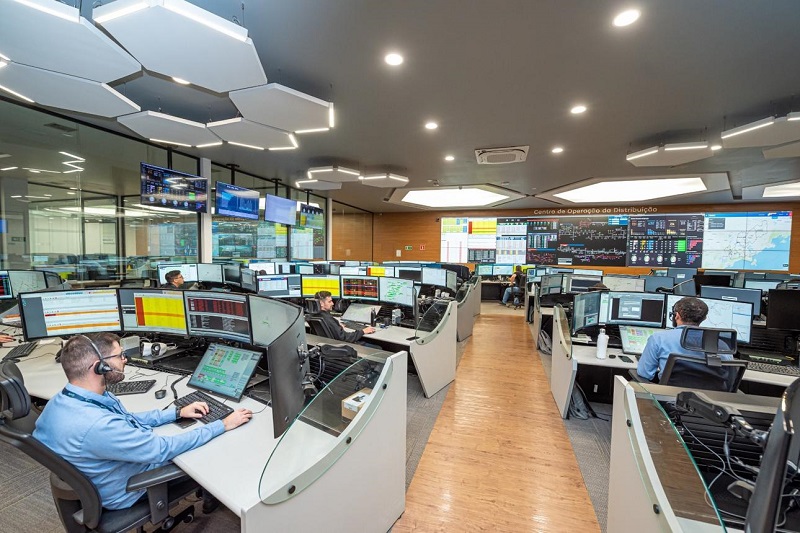
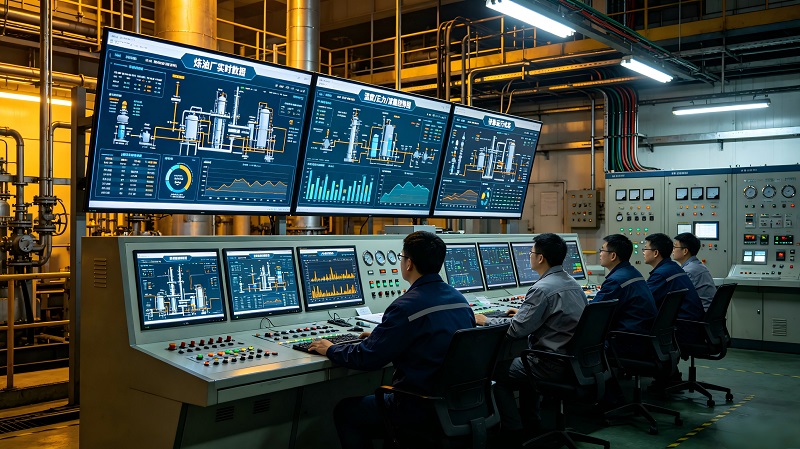
A centralized SCADA platform allows important information to be viewed from a control center.
Operators can monitor alarms, trends, equipment status, energy use, and process variables.
This can significantly improve response time.
Moving From Local Control to Network-Wide Management
The larger trend is the transition from local automation toward network-wide management.
A traditional pump station might have a PLC and local HMI.
A modern system can connect the station to a central SCADA platform.
Multiple stations can then be monitored through a common interface.
Historical data can be collected.
Performance can be compared between facilities.
Operators can identify abnormal conditions.
Maintenance teams can receive information before equipment failure becomes critical.
This is where industrial connectivity becomes particularly valuable.
Why Real-Time Data Matters
Water utilities operate dynamic systems.
Demand changes throughout the day.
Weather conditions can affect water usage.
Pump efficiency can change over time.
Filters can become blocked.
Pipelines can develop abnormal conditions.
Equipment can deteriorate.
Without real-time information, operators may only discover these issues after they become serious.
Real-time operational data allows earlier intervention.
For example, a pump that suddenly consumes more power than normal may indicate a mechanical or hydraulic problem.
A pressure change may indicate a leak or blockage.
An abnormal vibration signal may indicate equipment deterioration.
SCADA and automation systems provide the infrastructure required to collect and interpret these signals.
Energy Efficiency Is a Major Driver
Energy consumption is one of the most important operating costs in water and wastewater systems.
Pumping water requires substantial electrical power.
Improving pump efficiency can therefore provide significant economic benefits.
The combination of efficient motors, VFD control, optimized pump sequencing, and supervisory analytics can help utilities reduce unnecessary energy consumption.
However, energy optimization must be balanced against service requirements.
A water distribution system cannot simply reduce pump speed to save electricity if pressure requirements are not met.
The automation system must therefore optimize within defined operating constraints.
This is another reason why PLC control remains important.
Automation and Digitalization Work Together
The Mitsubishi Electric approach illustrates the difference between automation and digitalization.
Automation controls the physical process.
Digitalization makes the resulting information more accessible and useful.
A PLC can start a pump.
A VFD can regulate its speed.
A SCADA system can show that the pump is running.
An analytics platform can potentially determine whether the pump is operating efficiently.
When these layers work together, the utility gains a more complete operational picture.
Water Systems Need Flexible Architectures
Not every water utility has the same requirements.
Some systems contain modern PLCs and Ethernet networks.
Others contain legacy controllers and older communication technologies.
Some facilities are highly centralized.
Others are geographically distributed.
Therefore, flexible architecture is important.
Automation systems need to support different types of equipment while providing a consistent supervisory environment.
This is one reason industrial networking and communication gateways are becoming increasingly important.
Cybersecurity Is Also Becoming More Important
Water infrastructure is considered critical infrastructure in many countries.
As water systems become more connected, cybersecurity becomes increasingly important.
A pump station connected to a wider network creates additional communication pathways.
Utilities therefore need to consider authentication, network segmentation, secure remote access, monitoring, software updates, and backup procedures.
The objective is not simply to connect every device.
The objective is to create a connected system that remains reliable and secure.
Supporting Smaller Operations Teams
Many water utilities also face workforce challenges.
Experienced engineers and technicians are retiring.
At the same time, utilities may need to operate more equipment without significantly increasing staffing.
Automation can help address this challenge.
Centralized visualization allows fewer operators to monitor more assets.
Automated alarms can draw attention to abnormal conditions.
Remote diagnostics can reduce unnecessary site visits.
Historical data can help maintenance teams understand equipment behavior.
This can improve operational efficiency while allowing personnel to focus on higher-value activities.
Predictive Maintenance Opportunities
Once operational data is available, utilities can begin exploring predictive maintenance.
For example, pump performance can be monitored over time.
Changes in power consumption, flow, pressure, or vibration may indicate equipment deterioration.
Instead of maintaining every pump according to a fixed schedule, utilities may eventually use condition-based strategies.
This can reduce unnecessary maintenance while also reducing the risk of unexpected failures.
The quality of the underlying data remains critical.
Reliable sensors, PLCs, VFDs, and communication networks are therefore essential.
Why This Matters for PLC Suppliers
The growth of smart water infrastructure creates opportunities for suppliers of industrial control equipment.
Utilities need:
- PLCs
- PACs
- Remote I/O
- HMIs
- VFDs
- Industrial Ethernet switches
- Flowmeters
- Pressure transmitters
- Level sensors
- SCADA software
- Edge computers
- Communication gateways
The demand is not simply for individual products.
Increasingly, customers want integrated solutions.
This means interoperability and lifecycle support are becoming important competitive factors.
The Future of Water Automation
Water and wastewater infrastructure will likely become increasingly connected.
Future systems will combine local PLC control with centralized SCADA, cloud or edge analytics, intelligent drives, smart sensors, and advanced maintenance applications.
The basic engineering principles will remain the same.
Water still needs to be pumped.
Valves still need to open and close.
Sensors still need to measure physical variables.
Motors still need reliable control.
But the amount of information available to operators will increase dramatically.