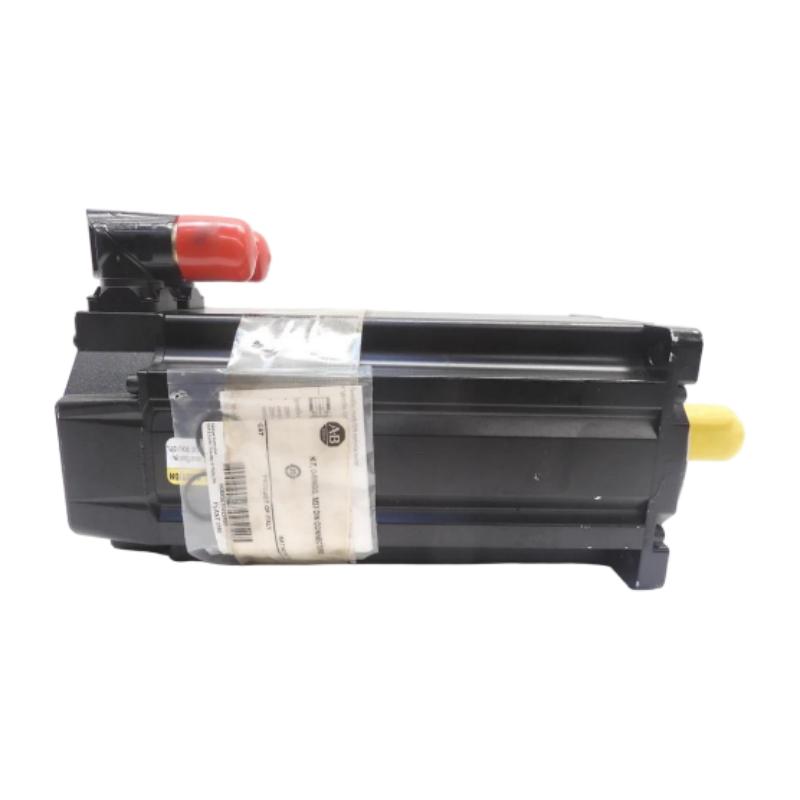
Allen Bradley MPL-B4560F-MK72AA Servo Motor Installation Guide (Setup & Commissioning)
Allen Bradley MPL-B4560F-MK72AA Servo Motor Installation Guide for Motion Control Systems
Allen Bradley MPL-B4560F-MK72AA Servo Motor installation requires correct mechanical alignment, feedback wiring, drive configuration, and commissioning verification to achieve stable motion performance. In industrial applications, servo motor startup issues are often caused by incorrect motor parameters, encoder feedback problems, coupling alignment errors, or cable installation mistakes rather than motor hardware failure.
The Allen Bradley MPL-B4560F-MK72AA is a brushless AC servo motor designed for high-performance motion control applications. It is commonly integrated with Allen Bradley Kinetix servo drives and industrial automation systems requiring accurate positioning, speed control, and repeatable motion performance.
A successful installation process must consider the complete motion system:
Controller → Servo Drive → Motor Cable → Feedback Device → Mechanical Load
This Installation Guide explains practical engineering procedures for mounting, wiring, configuring, and commissioning the Allen Bradley MPL-B4560F-MK72AA Servo Motor in real automation environments.
Allen Bradley MPL-B4560F-MK72AA Servo Motor Installation Preparation and System Planning
Before installing the Allen Bradley MPL-B4560F-MK72AA Servo Motor, engineers should confirm that the motor matches the mechanical and electrical requirements of the application.
Important preparation checks include:
- Servo drive compatibility
- Motor voltage and current requirements
- Load inertia calculation
- Required speed range
- Mechanical mounting dimensions
- Feedback system compatibility
- Cable selection
A servo motor should not be selected only based on physical size. The relationship between motor torque, acceleration requirement, load inertia, and duty cycle directly affects motion performance.
A typical engineering checklist includes:
| Check Item | Purpose |
|---|---|
| Motor model | Confirm correct servo specification |
| Drive model | Verify compatibility |
| Load inertia | Prevent tuning problems |
| Coupling design | Ensure accurate transmission |
| Feedback connection | Maintain positioning accuracy |
During one machine upgrade project, an MPL servo motor was installed successfully but the axis produced vibration during acceleration. The motor was not defective. Investigation showed that the mechanical load inertia was higher than expected, causing poor servo tuning performance. After adjusting the motion parameters and improving mechanical balancing, the axis operated smoothly.
Allen Bradley MPL-B4560F-MK72AA Servo Motor Mechanical Installation Guide
Mechanical installation is a critical part of Allen Bradley MPL-B4560F-MK72AA Setup.
Before mounting the motor, inspect:
- Mounting surface condition
- Shaft alignment
- Coupling position
- Fastener condition
- Mechanical clearance
- Load connection
The servo motor shaft must be aligned correctly with the driven mechanism. Misalignment can create:
- Excessive vibration
- Bearing stress
- Increased current demand
- Reduced positioning accuracy
A practical installation sequence:
Inspect Mounting Surface
        ↓
Install Servo Motor
        ↓
Align Coupling
        ↓
Secure Mechanical Connection
        ↓
Check Shaft Movement
During commissioning, engineers should rotate the mechanical system manually before enabling the servo drive. This confirms that no mechanical obstruction exists.
A field example involved a positioning axis that generated an overcurrent alarm immediately after startup. Electrical testing showed the motor wiring was correct. Manual inspection revealed that the mechanical coupling was installed with excessive preload, increasing motor torque demand. After correcting the alignment, the alarm disappeared.
Allen Bradley MPL-B4560F-MK72AA Servo Motor Power and Feedback Wiring Setup
Correct wiring is essential for Allen Bradley MPL-B4560F-MK72AA Servo Motor commissioning.
The motor installation normally requires:
- Motor power connection
- Feedback cable connection
- Grounding connection
- Brake wiring if applicable
Before connecting cables, technicians should verify:
- Correct cable part numbers
- Connector condition
- Shielding arrangement
- Ground continuity
- Cable routing
Servo feedback wiring is especially important because the drive depends on accurate position information.
Incorrect feedback connection may result in:
- Position errors
- Feedback faults
- Unexpected motor movement
- Servo enable failure
A common field mistake is routing motor power cables together with feedback cables over long distances. Electrical noise from power switching can affect feedback signals.
A recommended routing practice:
- Separate motor power cables from feedback cables.
- Avoid unnecessary cable loops.
- Maintain proper grounding.
- Protect connectors from mechanical stress.
Allen Bradley MPL-B4560F-MK72AA Servo Motor Drive Configuration and System Setup
After mechanical and electrical installation, the Allen Bradley MPL-B4560F-MK72AA Servo Motor requires correct drive configuration.
The commissioning engineer should configure:
- Motor identification parameters
- Feedback settings
- Direction of rotation
- Current limits
- Velocity limits
- Acceleration and deceleration values
- Motion control parameters
The configuration process should follow:
Motor Identification
        ↓
Drive Parameter Setup
        ↓
Feedback Verification
        ↓
Low-Speed Test Motion
        ↓
Servo Tuning
        ↓
Full-Speed Operation
Before running automatic motion, perform a low-speed jog test.
During this test verify:
- Correct rotation direction
- Smooth acceleration
- Correct feedback response
- No abnormal noise
- Stable current consumption
Allen Bradley MPL-B4560F-MK72AA Servo Motor Commissioning Procedure
The Allen Bradley MPL-B4560F-MK72AA Commissioning process should gradually increase operating conditions.
A practical commissioning sequence:
Static Verification
Check:
- Wiring
- Grounding
- Mechanical installation
- Drive alarms
Manual Motion Test
Verify:
- Forward and reverse movement
- Encoder feedback
- Mechanical travel
Automatic Operation Test
Verify:
- Position accuracy
- Repeatability
- Cycle performance
In one packaging machine commissioning case, engineers performed a controlled startup test.
Initial measurement:
- Position deviation: 0.35 mm
- Motor current fluctuation: unstable during acceleration
After servo tuning:
- Position deviation: below 0.05 mm
- Current response became stable
The improvement was achieved through system tuning rather than replacing the servo motor.
Allen Bradley MPL-B4560F-MK72AA Servo Motor Performance Validation
A complete commissioning process should include operational validation.
Recommended checks:
Motion Accuracy
Verify:
- Position repeatability
- Following error
- Mechanical response
Electrical Performance
Monitor:
- Motor current
- Drive temperature
- Alarm history
Mechanical Performance
Inspect:
- Vibration
- Noise
- Coupling condition
For production machines, engineers often perform extended cycle testing to ensure the servo system remains stable under continuous operation.
Allen Bradley MPL-B4560F-MK72AA Servo Motor Installation Best Practices
Long-term reliability depends on proper maintenance.
Recommended practices:
- Keep motor and drive parameters backed up
- Inspect feedback connectors regularly
- Check mechanical alignment
- Monitor abnormal vibration
- Maintain clean installation conditions
The Allen Bradley MPL-B4560F-MK72AA Servo Motor should always be commissioned as part of a complete motion system. Correct Installation Guide procedures, accurate Setup, and systematic Commissioning ensure reliable positioning performance in industrial automation applications.