Siemens Industrial Edge Technology Accelerates PLC Automation and Smart Factory Digital Transformation
Siemens Expands Industrial Edge Computing Solutions to Connect PLC Systems, IIoT and Intelligent Manufacturing
Siemens is continuing to expand its industrial edge computing technologies as manufacturers worldwide accelerate the transition toward smart factories, intelligent automation and data-driven production.
Modern manufacturing environments are becoming increasingly complex.
Factories now contain thousands of connected devices, including:
- PLC controllers
- Industrial sensors
- Robots
- Drives
- Vision systems
- Production equipment
- Energy monitoring devices
These systems generate enormous amounts of operational data every second.
However, collecting data alone does not create business value.
Manufacturers need faster ways to analyze information and make decisions directly near production equipment.
Industrial Edge computing is becoming an important solution because it allows data processing closer to machines while maintaining integration with higher-level digital platforms.
Siemens is developing Industrial Edge technologies that combine automation reliability with modern computing capabilities.
This approach represents a major evolution in industrial control architecture.
The Growing Role of Edge Computing in Industrial Automation
Traditional industrial automation systems were designed mainly for real-time control.
A PLC executes logic programs.
Sensors provide feedback.
Actuators perform physical actions.
This architecture remains essential because production equipment requires reliable and deterministic operation.
However, modern factories require additional capabilities.
Manufacturers increasingly need:
- Real-time data analysis
- Machine condition monitoring
- Production optimization
- Artificial intelligence applications
- Remote diagnostics
Sending all industrial data directly to centralized cloud systems may create challenges.
These challenges include:
- Network delays
- Large amounts of data transmission
- Security concerns
- Dependence on external connectivity
Edge computing provides another approach.
Instead of sending all information to remote platforms, industrial edge devices process data locally near production equipment.
Industrial Edge and PLC Systems Work Together
PLC systems remain the foundation of factory automation.
Siemens SIMATIC PLC platforms are widely used for controlling industrial machines and production processes.
Industrial Edge does not replace PLC technology.
Instead, it extends PLC capabilities by adding additional computing power around automation systems.
A modern architecture may include:
PLC Layer
Responsible for:
- Machine control
- Sequence execution
- Real-time operation
Edge Computing Layer
Responsible for:
- Data processing
- Analytics
- AI applications
- Local decision support
Cloud and Enterprise Layer
Responsible for:
- Global analysis
- Business intelligence
- Production management
This layered approach allows manufacturers to combine reliable control with advanced digital capabilities.
Real-Time Data Processing Improves Factory Performance
One of the biggest advantages of Industrial Edge technology is faster data processing.
Manufacturing equipment often requires immediate responses.
For example:
A vision system inspecting products on a production line may need to identify defects instantly.
A machine monitoring system may need to detect abnormal conditions before equipment damage occurs.
A production optimization application may need to adjust parameters quickly.
Processing information locally reduces communication delays.
This allows manufacturers to react faster.
Industrial AI Applications at the Edge
Artificial intelligence is becoming increasingly important in manufacturing.
However, many AI applications require fast access to production data.
Industrial Edge computing provides a suitable environment for deploying AI closer to machines.
Applications include:
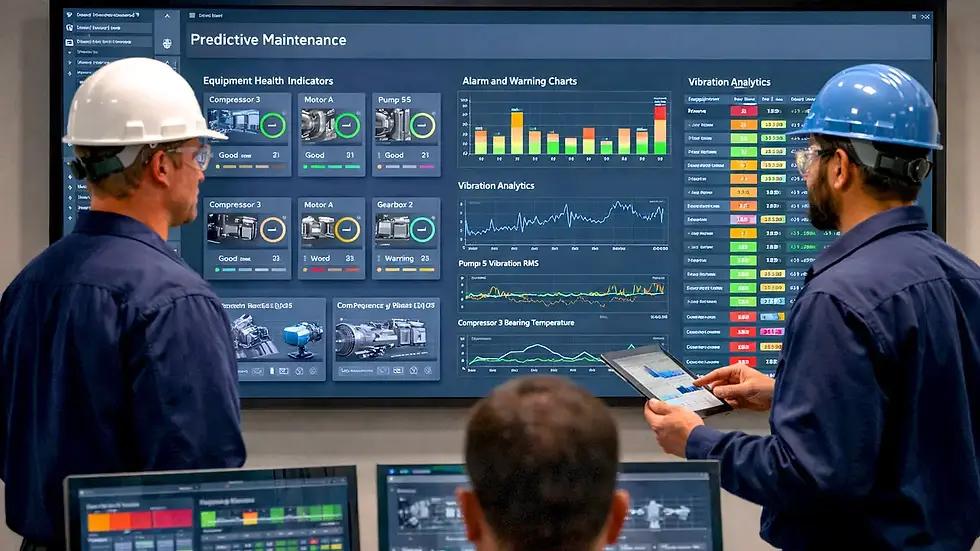
Predictive Maintenance
AI models analyze equipment data to identify early warning signs.
Examples include:
- Motor vibration changes
- Temperature variations
- Abnormal operating patterns
Quality Inspection
AI-based vision systems can detect product defects during manufacturing.
Process Optimization
AI algorithms can analyze production conditions and suggest improvements.
By running AI applications closer to equipment, manufacturers can achieve faster responses.
Improving Machine Monitoring and Diagnostics
Maintenance is one of the most important areas where edge technology creates value.
Traditional troubleshooting often requires engineers to investigate equipment after problems occur.
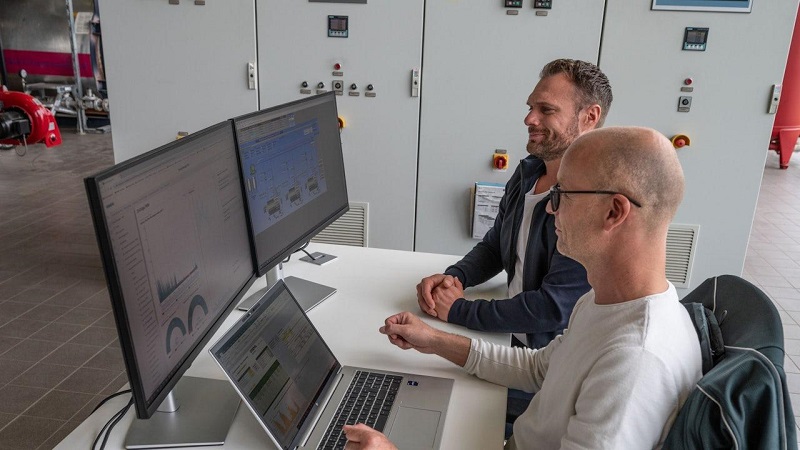
Modern automation systems can provide continuous monitoring.
Industrial Edge applications can analyze:
- Machine operating status
- Production cycles
- Alarm information
- Sensor data
- Equipment performance
This helps maintenance teams understand equipment conditions more accurately.
Instead of relying only on scheduled maintenance, companies can move toward condition-based strategies.
Supporting Smart Manufacturing Data Integration
Smart factories require communication between many different systems.
A production environment may include:
- PLC automation systems
- Robot controllers
- MES software
- ERP platforms
- Industrial databases
- Cloud applications
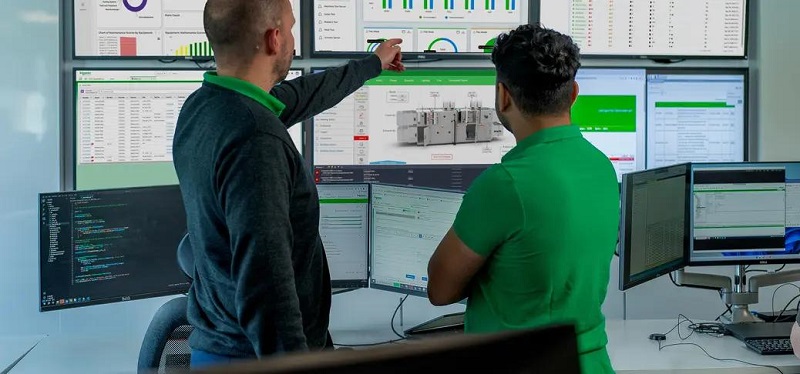
Industrial Edge technology acts as an important connection point.
It can collect information from machines and transform it into useful data for higher-level systems.
This improves visibility across production operations.
Manufacturers can better understand:
- Production efficiency
- Equipment utilization
- Energy consumption
- Quality performance
Reducing Dependence on Cloud Connectivity
Cloud platforms provide powerful computing capabilities.
However, industrial production cannot always depend entirely on external networks.
Many factories require continuous operation even when communication conditions change.
Edge computing provides local intelligence.
Important operations can continue near the production equipment.
This is especially valuable for:
- Remote manufacturing facilities
- Critical infrastructure
- High-speed production lines
- Safety-related applications
Cybersecurity in Industrial Edge Systems
As industrial systems become more connected, cybersecurity becomes increasingly important.
Edge devices create additional communication points within factory networks.
Manufacturers need to protect:
- Automation applications
- Machine data
- Industrial networks
- User access
Security considerations include:
- Authentication
- Data encryption
- Network segmentation
- Software management
Cybersecurity must be considered during system design rather than added later.
Industrial Edge Supports Flexible Production
Modern manufacturers require more flexibility.
Product variations are increasing.
Production cycles are becoming shorter.
Factories need to adjust quickly.
Industrial Edge technology supports flexible manufacturing by allowing applications to be deployed and updated more easily.
For example:
A manufacturer can introduce a new analytics application without completely changing the existing PLC control system.
This reduces engineering effort and improves adaptability.
Energy Management Applications
Industrial Edge technology is also valuable for energy optimization.
Factories consume energy through:
- Motors
- Heating systems
- Production equipment
- Compressed air systems
- HVAC systems
Edge applications can analyze energy information in real time.
Manufacturers can identify:
- Energy waste
- Inefficient operation
- Equipment problems
Improved energy visibility supports sustainability goals.
Impact on Automation Engineers
Industrial Edge technology is changing the skills required for automation professionals.
Traditional skills remain essential:
- PLC programming
- Control engineering
- Industrial networking
However, engineers increasingly need knowledge of:
- Data processing
- Industrial software
- Edge computing
- Cybersecurity
- Digital applications
The future automation engineer will work across both operational technology and information technology.
The Future of Edge-Based Industrial Automation
Industrial automation is moving toward a more intelligent architecture.
Future factories will combine:
- PLC control
- Industrial Edge computing
- Artificial intelligence
- Digital twins
- Industrial cloud platforms
- Advanced analytics
The objective is to create manufacturing systems that are more efficient, flexible and responsive.