ABB Ability Digital Platform Advances Industrial Asset Management and Predictive Maintenance Solutions
ABB Strengthens Industrial Digitalization With Connected Automation, Asset Monitoring and Data-Driven Maintenance Technologies
ABB is continuing to expand its industrial digitalization technologies as manufacturers and process industries increase investment in connected automation, asset performance management and predictive maintenance solutions.
Industrial companies today face increasingly complex operational challenges.
Production systems must achieve higher efficiency while maintaining reliability, safety and sustainability.
In many industries, equipment downtime can create significant production losses.
Manufacturers therefore require better methods to monitor equipment conditions, identify potential problems and optimize asset performance.
Traditional maintenance strategies often rely on fixed schedules.
However, equipment conditions can change depending on operating environment, production load and usage patterns.
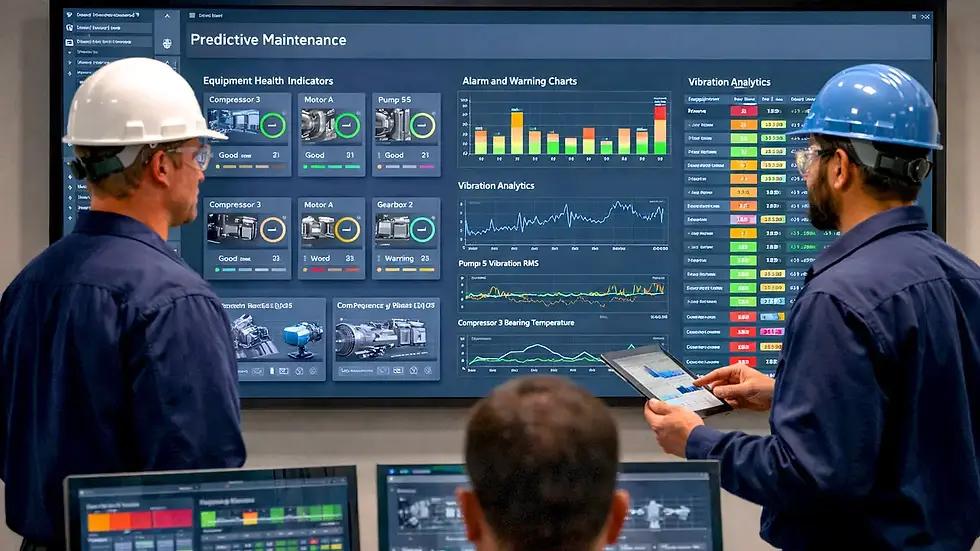
Digital technologies are creating new opportunities by allowing companies to move from reactive maintenance toward predictive and condition-based maintenance strategies.
ABB’s digital automation ecosystem focuses on connecting industrial equipment, automation systems and data analytics technologies to improve operational visibility.
The Evolution of Industrial Asset Management
Industrial assets represent some of the most valuable investments within manufacturing facilities.
These assets include:
- Motors
- Pumps
- Compressors
- Drives
- Robots
- Electrical systems
- Process equipment
- Automation controllers
Maintaining these assets efficiently is essential for stable production.
Traditional maintenance approaches generally include:
Reactive Maintenance
Equipment is repaired after failure occurs.
This method can lead to unexpected downtime.
Preventive Maintenance
Equipment is inspected according to a planned schedule.
This reduces some risks but may result in unnecessary maintenance.
Predictive Maintenance
Equipment conditions are continuously monitored to identify potential problems before failure.
Digital industrial platforms are helping companies move toward predictive maintenance models.
Digital Platforms Connect Industrial Data With Business Decisions
Modern factories generate large amounts of operational information.
Automation systems collect data from:
- Sensors
- PLC systems
- DCS platforms
- Drives
- Motors
- Electrical equipment
However, data becomes valuable only when it can support decisions.
Industrial digital platforms help transform raw equipment information into useful insights.
These systems can help engineers understand:
- Equipment health
- Production performance
- Maintenance requirements
- Energy consumption
- Operational trends
This creates a stronger connection between factory operations and management decisions.
The Role of Automation Systems in Asset Monitoring
Automation systems remain the foundation of industrial monitoring.
PLC and DCS systems continuously collect information from production equipment.
Typical monitoring parameters include:
- Temperature
- Pressure
- Current
- Speed
- Vibration
- Operating hours
- Alarm conditions
This information provides a detailed picture of equipment performance.
When combined with advanced analytics, manufacturers can identify unusual operating patterns.
For example:
A motor may show increasing vibration levels.
A pump may require more energy to achieve the same output.
A production machine may experience increasing cycle time.
These changes can indicate potential equipment issues.
Predictive Maintenance Reduces Unexpected Downtime
Unexpected equipment failures are one of the biggest challenges in industrial production.
A sudden failure may cause:
- Production interruption
- Increased maintenance costs
- Delayed deliveries
- Reduced equipment availability
Predictive maintenance helps companies identify problems earlier.
By analyzing equipment data, engineers can schedule maintenance before serious failure occurs.
Benefits include:
- Improved equipment reliability
- Better maintenance planning
- Reduced emergency repairs
- Increased production stability
This approach is becoming increasingly important in industries where continuous operation is critical.
Artificial Intelligence Improves Industrial Analytics
Artificial intelligence is becoming an important technology in industrial asset management.
Traditional monitoring systems often rely on predefined alarms.
AI-based analytics can analyze more complex relationships between different operating conditions.
Applications include:
Equipment Health Analysis
AI can evaluate multiple signals to determine equipment condition.
Failure Prediction
Machine learning models can identify patterns associated with possible failures.
Performance Optimization
AI can suggest improvements to equipment operation.
The goal is not to replace engineers.
Instead, AI provides additional information that helps engineers make better decisions.
Integration With PLC, SCADA and DCS Systems
Modern industrial digital solutions must integrate with existing automation infrastructure.
Factories typically contain multiple control layers:
Field Level
Includes:
- Sensors
- Actuators
- Instruments
Control Level
Includes:
- PLC systems
- DCS controllers
- Industrial drives
Supervisory Level
Includes:
- SCADA systems
- Operator stations
- Manufacturing software
Enterprise Level
Includes:
- Business systems
- Data platforms
- Management applications
Digital platforms connect these different levels to provide a complete view of industrial operations.
Improving Energy Efficiency Through Asset Data
Energy management has become a major priority for industrial companies.
Equipment performance directly affects energy consumption.
For example:
- Inefficient motors consume more electricity.
- Poorly maintained systems require additional power.
- Incorrect operating parameters increase waste.
Digital monitoring allows manufacturers to identify energy improvement opportunities.
Applications include:
- Motor efficiency analysis
- Production energy tracking
- Load optimization
- Equipment performance comparison
Energy efficiency improvements can reduce operating costs while supporting sustainability objectives.
Supporting Remote Monitoring and Industrial Operations
Modern industries increasingly require remote access to equipment information.
Digital platforms allow engineers and managers to monitor asset conditions without being physically located near equipment.
Remote monitoring can support:
- Multiple production sites
- Global manufacturing networks
- Service teams
- Maintenance departments
This capability became especially valuable as industries increased their need for flexible operational management.
Digital Transformation in Process Industries
Process industries rely heavily on reliable equipment operation.
Examples include:
- Chemical plants
- Oil and gas facilities
- Power generation
- Water treatment
- Pharmaceutical manufacturing
In these environments, equipment reliability directly affects production safety and efficiency.
Digital asset management helps operators gain better understanding of plant conditions.
It supports:
- Equipment optimization
- Maintenance planning
- Production improvement
Industrial Cybersecurity Requirements
Connected industrial systems create new cybersecurity considerations.
As equipment becomes connected through digital platforms, companies must protect:
- Equipment data
- Control systems
- Industrial networks
- User access
Important security measures include:
- Authentication control
- Secure communication
- Network protection
- System monitoring
Cybersecurity is now a fundamental part of industrial digital transformation.
Supporting Brownfield Factory Modernization
Many factories operate equipment installed years ago.
Replacing complete automation systems can be expensive and disruptive.
Digital technologies provide opportunities for gradual modernization.
Manufacturers can add monitoring and analytics capabilities while maintaining existing automation infrastructure.
This approach helps companies improve operational intelligence without completely rebuilding production systems.
The Changing Role of Industrial Engineers
Digital transformation is changing the responsibilities of automation professionals.
Traditional skills remain essential:
- PLC programming
- DCS engineering
- Instrumentation
- Electrical systems
- Industrial communication
New skills are becoming increasingly important:
- Data analysis
- Digital platforms
- Industrial networking
- Cybersecurity
- Predictive maintenance technologies
Future engineers will combine traditional automation expertise with digital capabilities.
Future Trends in Industrial Asset Management
The future of industrial asset management will continue moving toward intelligent and connected solutions.
Important trends include:
- Artificial intelligence-based analytics
- Digital twins
- Edge computing
- Cloud-connected automation
- Advanced condition monitoring
- Autonomous maintenance recommendations
These technologies will help manufacturers improve reliability and efficiency.
Benefits of Digital Asset Management for Manufacturers
Companies adopting intelligent asset management solutions can achieve several advantages.
Reduced Downtime
Problems can be identified before major failures occur.
Improved Maintenance Efficiency
Maintenance activities become more targeted.
Better Equipment Performance
Operational data supports optimization.
Lower Operating Costs
Efficient equipment reduces resource waste.
Improved Production Visibility Managers gain better understanding of factory performance.
Managers gain better understanding of factory performance.