Schneider Electric Expands EcoStruxure Smart Factory Solutions With Intelligent Automation and Energy Management Technologies
Schneider Electric Advances Industrial Digital Transformation Through PLC Automation, IIoT Connectivity and Sustainable Manufacturing
Schneider Electric is continuing to strengthen its smart manufacturing strategy by integrating industrial automation, digital platforms, energy management technologies and Internet of Things solutions to help manufacturers build more efficient and sustainable factories.
The global manufacturing industry is undergoing significant transformation.
Companies are facing increasing challenges, including:
- Rising energy costs
- Higher production requirements
- Growing demand for sustainability
- The need for flexible manufacturing
- Increasing complexity of industrial systems
Traditional automation technologies remain essential for industrial production.
PLC controllers, industrial networks, drives and control systems continue to provide the foundation for reliable machine operation.
However, modern factories require more than automatic control.
Manufacturers increasingly need real-time information, intelligent analysis and improved energy visibility.
Schneider Electric’s EcoStruxure architecture represents the industry trend toward connected and intelligent automation systems.
By combining automation hardware, software platforms and digital technologies, manufacturers can improve operational efficiency while supporting sustainable production goals.
The Development of Smart Manufacturing and Connected Automation
Industrial automation has evolved significantly over the past decades.
Early automation systems focused mainly on replacing manual operations.
Modern automation systems focus on creating intelligent production environments.
A smart factory typically includes:
- PLC controllers
- Industrial sensors
- Variable speed drives
- Servo systems
- Robots
- SCADA platforms
- Manufacturing software
- Energy monitoring systems
These components generate valuable operational data.
The challenge for manufacturers is transforming this data into actionable information.
Digital platforms help connect different parts of the factory and provide a clearer understanding of production performance.
PLC Systems Remain the Core of Industrial Automation
Programmable logic controllers continue to play a critical role in factory automation.
Schneider Electric Modicon PLC systems are widely used in industrial applications requiring reliable control.
PLC systems manage important production functions, including:
- Machine sequences
- Digital input and output control
- Motion coordination
- Communication with field devices
- Equipment protection
Although modern factories use cloud computing and artificial intelligence, PLC technology remains essential because industrial equipment requires real-time and dependable control.
The future of automation will not replace PLC systems.
Instead, PLCs will become increasingly connected with digital technologies.
EcoStruxure Connects Industrial Systems and Data
Modern factories often contain many independent systems.
For example:
- Production equipment
- Electrical systems
- Automation controllers
- Energy monitoring devices
- Enterprise software
Without integration, valuable information remains isolated.
Digital platforms help connect these systems.
EcoStruxure-based architectures are designed around three important concepts:
Connected Products
Industrial devices collect operational information.
Examples include:
- Sensors
- Smart meters
- Drives
- Controllers
Edge Control
Local automation systems process information and manage real-time operations.
Digital Applications and Services
Software tools analyze information and support optimization.
This structure creates a complete digital ecosystem for modern manufacturing.
Energy Management Becomes a Key Industrial Priority
Energy efficiency is becoming one of the most important topics in manufacturing.
Industrial facilities consume significant amounts of energy through:
- Motors
- Heating equipment
- Cooling systems
- Compressed air systems
- Production machinery
Improving energy management can reduce operating costs and support sustainability objectives.
Automation technologies provide better visibility into energy consumption.
Manufacturers can analyze:
- Which equipment consumes the most energy
- When energy usage increases
- Where energy waste occurs
- How production changes affect consumption
Better information allows companies to make more effective improvement decisions.
Industrial IoT Improves Factory Visibility
Industrial Internet of Things technology is changing the way manufacturers monitor operations.
Traditional factories often relied on operators checking equipment conditions manually.
Connected factories can collect information automatically.
Industrial IoT applications include:
- Equipment monitoring
- Production tracking
- Energy analysis
- Remote diagnostics
- Maintenance optimization
Connected devices provide continuous information about factory performance.
This allows manufacturers to identify problems faster and improve operational control.
Smart Energy Solutions Support Sustainable Manufacturing
Sustainability has become an important consideration for industrial companies.
Manufacturers are working to reduce:
- Energy consumption
- Carbon emissions
- Production waste
- Resource usage
Automation and digital technologies can support these objectives.
Examples include:
Intelligent Motor Management
Optimizing motor operation can improve energy efficiency.
Production Energy Analysis
Manufacturers can compare energy consumption across different processes.
Automated Energy Control
Systems can adjust operation according to production requirements.
These approaches help companies create more efficient manufacturing environments.
Edge Computing Enables Faster Industrial Decisions
Modern factories require fast responses.
A production system cannot always wait for information to travel to a remote data center.
Edge computing processes data closer to the equipment.
Benefits include:
- Faster response
- Reduced network load
- Improved reliability
- Better local control
For example, an industrial machine monitoring system can analyze operating conditions locally and identify abnormal situations quickly.
Edge computing is becoming an important technology for intelligent factories.
Digital Twin Technology Supports Factory Optimization
Digital twins are becoming increasingly important in industrial engineering.
A digital twin creates a virtual representation of physical equipment or production systems.
Engineers can use digital twins for:
- Equipment simulation
- Production planning
- Virtual commissioning
- Process optimization
Before modifying a production line, engineers can evaluate possible results digitally.
This reduces engineering risks and improves project efficiency.
Industrial Automation and Cybersecurity
Connected factories require stronger cybersecurity strategies.
Modern automation systems communicate with:
- Industrial networks
- Software platforms
- Remote monitoring systems
- Enterprise applications
This connectivity creates additional security requirements.
Manufacturers need to protect:
- PLC programs
- Production information
- Industrial networks
- Access permissions
Cybersecurity should be considered during automation system design.
As factories become more digital, security becomes a fundamental part of industrial engineering.
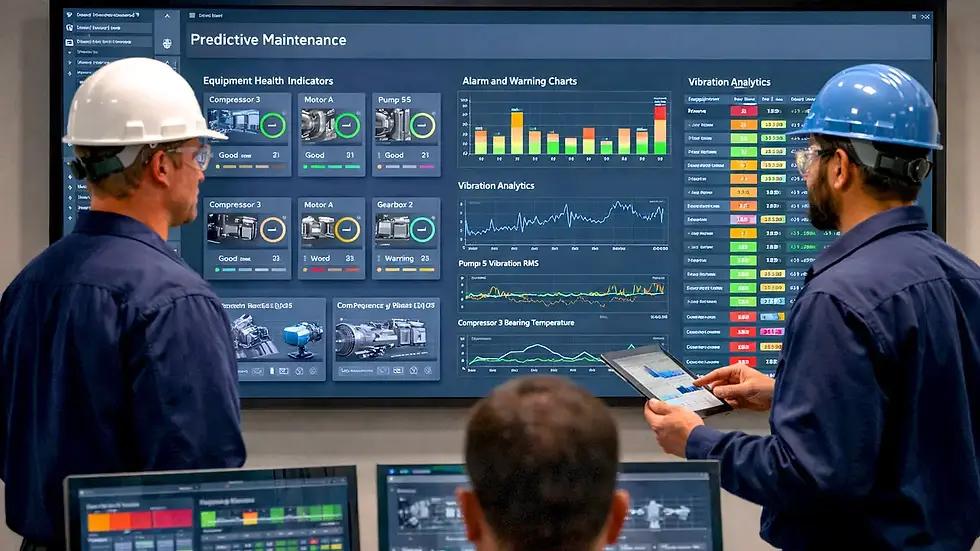
Improving Maintenance Through Digital Monitoring
Maintenance is another important application of smart manufacturing technologies.
Traditional maintenance methods may not always reflect actual equipment conditions.
Digital monitoring allows companies to understand equipment performance continuously.
Systems can monitor:
- Motor conditions
- Equipment operation
- Energy consumption
- Production performance
This supports condition-based maintenance strategies.
Benefits include:
- Reduced unexpected failures
- Better maintenance scheduling
- Increased equipment availability
Supporting Flexible Manufacturing Requirements
Modern customers increasingly demand customized products.
Manufacturers therefore need flexible production systems.
Automation technologies support flexibility through:
- Programmable controllers
- Modular equipment design
- Digital production management
- Advanced robotics
Factories can adjust production processes faster.
This helps companies respond to market changes more effectively.
The Role of Automation Engineers in Smart Factories
Smart manufacturing is changing the responsibilities of industrial engineers.
Traditional skills remain important:
- PLC programming
- Electrical engineering
- Industrial communication
- Machine control
However, new knowledge areas are becoming increasingly valuable:
- Industrial software
- Data analysis
- Energy management
- Cybersecurity
- Digital transformation technologies
Future automation engineers will need to understand both physical systems and digital solutions.
Applications Across Global Industries
Smart automation technologies are used in many industries.
Automotive Manufacturing
Used for production lines, robotics and energy optimization.
Food and Beverage
Used for processing, packaging and quality management.
Water Treatment
Used for monitoring and process control.
Pharmaceutical Manufacturing
Used for precise production environments.
Electronics Manufacturing
Used for high-accuracy production processes.
Different industries have different requirements, but all benefit from improved automation and digital integration.
Future Trends in Industrial Automation
The future of smart manufacturing will continue moving toward:
- Intelligent PLC systems
- Industrial AI
- Digital twins
- Energy optimization
- Connected equipment
- Advanced analytics
Factories will become more adaptive and data-driven.
Manufacturers will increasingly rely on automation systems that combine reliability with intelligence.