Bently Nevada Condition Monitoring and Predictive Maintenance Technologies Transform Industrial Equipment Reliability
Bently Nevada Advances Condition Monitoring Solutions for the Future of Predictive Maintenance
Industrial companies worldwide are facing increasing pressure to improve equipment reliability, reduce unexpected downtime, and optimize maintenance costs. In industries such as power generation, oil and gas, petrochemical, mining, marine, and heavy manufacturing, rotating machinery plays a critical role in continuous production.
Equipment such as turbines, compressors, pumps, motors, and generators must operate safely and efficiently for long periods. Even a small mechanical issue can lead to production interruptions, expensive repairs, and potential safety risks.
To address these challenges, advanced condition monitoring and predictive maintenance technologies have become essential parts of modern industrial automation strategies.
Bently Nevada, a well-known name in machinery protection and condition monitoring, continues to develop solutions that help industrial operators understand equipment health, detect abnormal conditions, and make better maintenance decisions.
The evolution of predictive maintenance technology represents a major change in industrial asset management. Instead of waiting for equipment failures or following fixed maintenance schedules, companies can now monitor real-time equipment conditions and take preventive actions before problems become serious.
The Growing Importance of Predictive Maintenance in Industrial Automation
Traditional maintenance strategies generally follow two common approaches:
Reactive Maintenance
Reactive maintenance means repairing equipment after a failure occurs.
Although simple, this approach can create major problems:
- Unexpected production downtime
- Emergency repair costs
- Secondary equipment damage
- Reduced operational efficiency
For industries with continuous production requirements, reactive maintenance is often too risky.
Preventive Maintenance
Preventive maintenance uses scheduled inspections and component replacement based on operating time.
This method improves reliability compared with reactive maintenance, but it also has limitations.
Equipment conditions may vary depending on:
- Operating environment
- Load changes
- Temperature conditions
- Operating hours
- Process requirements
Replacing components too early may increase costs, while waiting too long may increase failure risks.
Predictive Maintenance
Predictive maintenance uses real-time equipment data to understand actual operating conditions.
By analyzing information from sensors and monitoring systems, companies can identify early warning signals and schedule maintenance when needed.
Benefits include:
- Reduced unexpected failures
- Improved equipment availability
- Lower maintenance expenses
- Longer equipment lifetime
This approach has become a key development direction in modern industrial automation.
Bently Nevada’s Role in Machinery Condition Monitoring
Bently Nevada has built a strong reputation in industrial machinery protection and monitoring.
Its solutions are widely used for critical rotating equipment applications.
The core purpose of machinery condition monitoring is to continuously collect and analyze equipment performance information.
Important monitoring parameters include:
- Vibration levels
- Shaft displacement
- Temperature
- Speed
- Position measurements
- Machine operating conditions
By continuously analyzing these signals, engineers can identify abnormal equipment behavior before major failures occur.
Vibration Monitoring: A Key Technology for Equipment Protection
Vibration analysis is one of the most important methods used in predictive maintenance.
Rotating equipment naturally produces vibration during operation. However, changes in vibration patterns can indicate developing mechanical problems.
Potential issues detected through vibration monitoring include:
- Bearing wear
- Rotor imbalance
- Shaft misalignment
- Mechanical looseness
- Gear problems
- Lubrication issues
Bently Nevada vibration monitoring systems use advanced sensors and monitoring technologies to capture these changes.
Engineers can analyze vibration trends and determine whether equipment requires inspection or maintenance.
The Importance of Sensors in Condition Monitoring Systems
Sensors are the foundation of industrial equipment monitoring.
Bently Nevada monitoring systems commonly work with specialized measurement technologies designed for critical machinery applications.
Typical monitoring components include:
- Eddy current proximity sensors
- Vibration sensors
- Temperature measurement devices
- Signal processing modules
- Monitoring hardware
These components provide accurate information about machine conditions.
For large industrial equipment, reliable measurement is essential because small mechanical changes can develop into significant failures over time.
Integration With Industrial Automation and Control Systems
Modern condition monitoring systems are increasingly integrated with industrial automation environments.
A typical industrial monitoring architecture may include:
- Machine sensors
- Monitoring modules
- PLC systems
- DCS platforms
- SCADA systems
- Asset management software
This integration allows operators to view equipment health information together with production data.
For example:
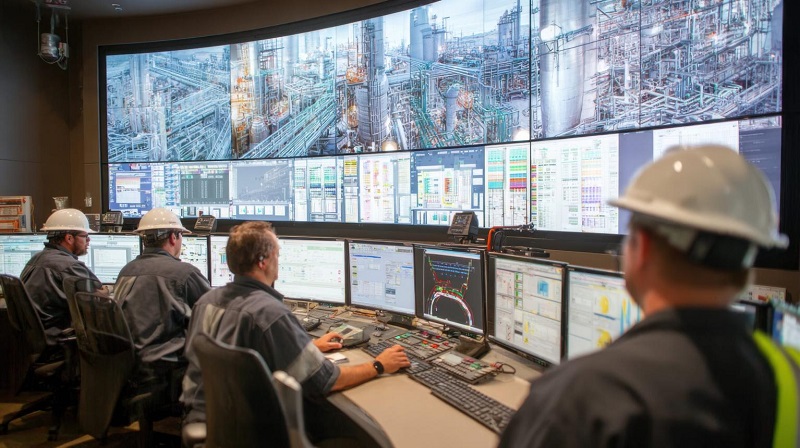
A power plant operator can monitor turbine operating conditions while also observing vibration trends and maintenance alerts.
This creates better visibility across the entire production process.
Digital Transformation and Smart Maintenance
The development of Industrial Internet of Things (IIoT) technologies has accelerated the adoption of predictive maintenance.
Modern factories generate large amounts of equipment data every day.
The challenge is transforming this data into useful operational information.
Digital maintenance platforms can help companies:
- Collect equipment data
- Analyze machine performance
- Identify abnormal conditions
- Improve maintenance planning
Artificial intelligence and advanced analytics are also becoming increasingly important.
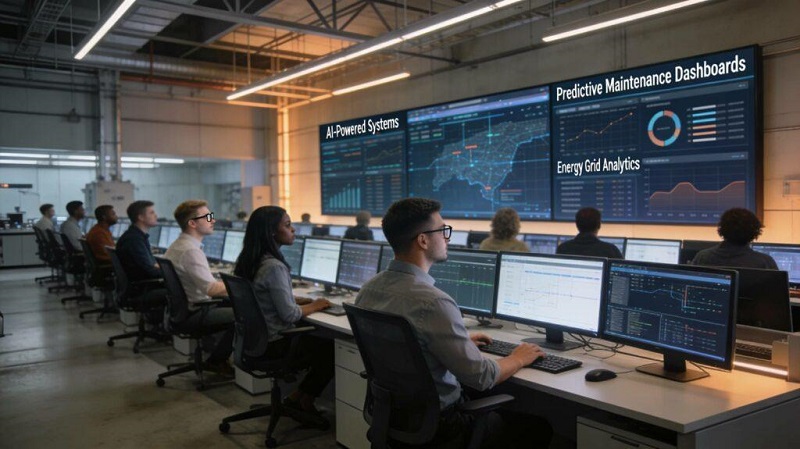
AI-based systems can recognize patterns from historical equipment data and provide insights into possible future problems.
Applications Across Major Industrial Sectors
Bently Nevada condition monitoring technologies support many industries where equipment reliability is critical.
Power Generation Industry
Power plants depend on turbines, generators, and other rotating equipment.
Unexpected equipment failure can affect electricity production and require expensive repairs.
Condition monitoring helps operators:
- Protect critical machinery
- Improve maintenance planning
- Reduce unplanned shutdowns
Oil and Gas Industry
Oil and gas facilities operate complex equipment under demanding conditions.
Compressors, turbines, and pumps require continuous monitoring.
Predictive maintenance helps improve:
- Production reliability
- Equipment safety
- Operational efficiency
Petrochemical Industry
Chemical processing plants require stable operation because production processes are highly interconnected.
Equipment monitoring supports:
- Early fault detection
- Process reliability
- Maintenance optimization
Mining Industry
Mining operations rely on large rotating machines and heavy equipment.
Condition monitoring helps reduce downtime and improve asset performance in challenging environments.
Future Trends of Predictive Maintenance Technology
The predictive maintenance market is continuing to develop as industries adopt smarter automation solutions.
Several trends are shaping the future:
Artificial Intelligence-Based Equipment Analysis
AI technologies will increasingly help engineers analyze complex equipment data.
Future systems will provide:
- Automated fault detection
- Intelligent recommendations
- Improved failure prediction
Cloud and Edge Monitoring
Industrial companies are adopting edge and cloud technologies to improve data processing.
Edge computing allows faster analysis near equipment, while cloud platforms provide broader data management capabilities.
Digital Twin Applications
Digital twin technology creates virtual models of industrial assets.
By combining real equipment data with digital models, engineers can better understand equipment behavior and optimize maintenance strategies.
Impact on Industrial Automation Equipment Markets
The growth of predictive maintenance is creating new demand throughout the industrial automation industry.
Companies require:
- Condition monitoring modules
- Vibration sensors
- PLC communication interfaces
- Industrial computers
- Control system components
- Replacement parts
- Technical maintenance services
For industrial automation suppliers and global equipment distributors, predictive maintenance represents an important business opportunity.
Customers increasingly need not only hardware products but also solutions that improve equipment lifecycle management.
Bently Nevada and the Future of Industrial Reliability
The future of industrial operations will depend on the ability to monitor, analyze, and optimize critical assets.
Condition monitoring technologies provide companies with valuable information about equipment health and operational performance.
By combining sensors, industrial automation systems, data analytics, and predictive maintenance strategies, manufacturers can achieve safer and more efficient operations.
Bently Nevada’s continued development in machinery monitoring reflects the broader industry movement toward intelligent maintenance and digital asset management.
Conclusion
Bently Nevada condition monitoring and predictive maintenance technologies are becoming increasingly important in modern industrial automation.
As industries demand higher reliability and lower operational costs, real-time equipment monitoring will continue to play a central role in maintenance strategies.
For professionals working in PLC, automation, and DCS industries, understanding predictive maintenance technology is essential.
The future industrial facility will not simply repair equipment after failures occur. Instead, intelligent monitoring systems will help companies predict problems, optimize performance, and maximize asset value.