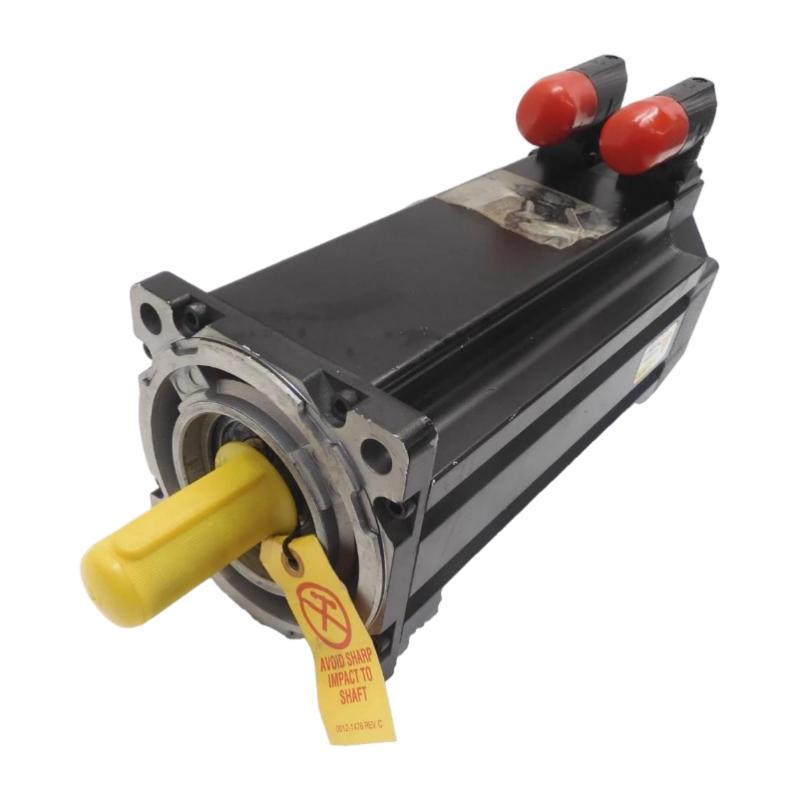
Allen Bradley MPL-B4560F-MK72AA Servo Motor Troubleshooting Guide (Fault Diagnosis & Repair)
Allen Bradley MPL-B4560F-MK72AA Servo Motor Troubleshooting for Motion Fault Diagnosis
Allen Bradley MPL-B4560F-MK72AA Servo Motor troubleshooting requires analyzing the entire motion system rather than replacing the motor immediately. Servo faults are frequently caused by mechanical loading problems, feedback errors, incorrect tuning parameters, wiring issues, or drive configuration mistakes.
In a servo application, the motor is only one part of the control loop:
Controller → Drive → Servo Motor → Feedback → Mechanical Load
A proper Fault Diagnosis process identifies which part of this loop creates the abnormal behavior.
Allen Bradley MPL-B4560F-MK72AA Servo Motor Fault Symptoms and Diagnostic Approach
Common Allen Bradley MPL-B4560F-MK72AA Servo Motor fault symptoms include:
- Motor does not enable
- Position error alarm
- Overcurrent fault
- Excessive vibration
- Unexpected direction movement
- Following error increase
- Servo drive shutdown
The first diagnostic question should be:
Is the motor receiving the correct command and responding correctly?
Engineers usually separate faults into categories:
Command Problem
       ↓
Drive Problem
       ↓
Feedback Problem
       ↓
Motor Problem
       ↓
Mechanical Problem
This prevents incorrect conclusions based only on alarm messages.
Allen Bradley MPL-B4560F-MK72AA Servo Motor Overcurrent Fault Diagnosis
One common troubleshooting situation is an overcurrent alarm during acceleration.
Possible causes include:
- Mechanical obstruction
- Excessive load inertia
- Incorrect acceleration setting
- Motor cable problem
- Drive parameter error
A practical field case involved an Allen Bradley servo axis that generated an overcurrent alarm immediately after startup.
The diagnostic process showed:
Initial observations:
- Servo drive powered normally
- Feedback signal was present
- Motor current increased rapidly during acceleration
Measurement results:
Before correction:
- Acceleration current peak: 180% of rated value
- Mechanical movement: abnormal resistance
The engineer inspected the mechanical system and found that the linear guide had insufficient lubrication.
After correcting the mechanical issue:
- Current peak reduced significantly
- Servo acceleration became stable
- No further overcurrent alarms occurred
The root cause was mechanical resistance, not motor failure.
Allen Bradley MPL-B4560F-MK72AA Servo Motor Feedback Fault Troubleshooting
Feedback problems are among the most common causes of servo instability.
Typical symptoms:
- Encoder alarm
- Position drift
- Following error
- Motor vibration
- Unexpected stop
The troubleshooting process should check:
- Feedback connector condition
- Cable damage
- Shield grounding
- Encoder signal stability
- Drive feedback parameters
A field diagnosis example:
The machine stopped randomly during high-speed operation.
Inspection results:
- Motor power wiring: Normal
- Drive parameters: Correct
- Feedback connector: Loose
After securing the feedback connection:
- Position feedback became stable
- Following error disappeared
- Production operation returned to normal
The servo motor itself was functioning correctly.
Allen Bradley MPL-B4560F-MK72AA Servo Motor Following Error Troubleshooting
Following error occurs when the actual motor position cannot keep up with the commanded position.
Possible reasons:
- Incorrect servo tuning
- Excessive acceleration
- Load inertia mismatch
- Mechanical friction
- Incorrect gain settings
Engineers should analyze motion behavior rather than simply increasing gain values.
A practical diagnostic approach:
Observe Following Error
        ↓
Check Load Condition
        ↓
Review Motion Profile
        ↓
Adjust Tuning Parameters
        ↓
Validate Repeatability
In one commissioning case, a servo axis showed:
Before tuning:
- Following error: 1.8 mm
- Acceleration vibration: noticeable
After optimization:
- Following error: below 0.2 mm
- Motion became stable
The correction involved adjusting the servo system response rather than replacing hardware.
Allen Bradley MPL-B4560F-MK72AA Servo Motor Vibration Fault Analysis
Servo vibration can result from both electrical and mechanical causes.
Common sources:
- Incorrect tuning
- Shaft misalignment
- Coupling looseness
- Resonance
- Excessive load inertia
Engineers should determine whether vibration occurs:
- At startup
- During constant speed
- During deceleration
- At specific positions
For example, if vibration only occurs at a specific machine position, mechanical resonance may be more likely than a motor problem.
A vibration measurement in one application showed:
Before adjustment:
- Vibration level: 6.5 mm/s
After mechanical alignment and tuning:
- Vibration level: 1.8 mm/s
The improved performance confirmed that the original issue was system adjustment related.
Allen Bradley MPL-B4560F-MK72AA Servo Motor Cable and Connection Fault Diagnosis
Cable problems can create intermittent servo faults.
Inspect:
- Motor power cable
- Feedback cable
- Connector locking
- Shield connection
- Cable bending areas
A damaged feedback cable may produce symptoms similar to encoder failure.
Diagnostic comparison:
| Test | Result |
|---|---|
| Drive power | Normal |
| Motor resistance | Normal |
| Feedback signal | Intermittent |
| Cable inspection | Damage found |
Replacing the damaged cable restored normal operation.
This demonstrates why cable inspection should be completed before replacing expensive servo components.
Allen Bradley MPL-B4560F-MK72AA Servo Motor Replacement Decision Process
Before replacing the MPL-B4560F-MK72AA Servo Motor, engineers should confirm:
- Motor winding condition
- Insulation condition
- Feedback operation
- Mechanical condition
- Drive compatibility
A motor replacement should be based on evidence, not only on the presence of a servo alarm.
A controlled test with verified wiring and known-good parameters provides stronger confirmation.
Allen Bradley MPL-B4560F-MK72AA Servo Motor Repair Verification
After troubleshooting and repair, validate the servo system under realistic operating conditions.
Verification should include:
- Multiple motion cycles
- Maximum operating speed test
- Position accuracy check
- Alarm monitoring
- Temperature observation
For example, after correcting a feedback cable problem, engineers completed more than 1,000 positioning cycles without another alarm.
This confirmed that the actual fault source had been removed.
Allen Bradley MPL-B4560F-MK72AA Servo Motor Fault Diagnosis Conclusion
Allen Bradley MPL-B4560F-MK72AA Servo Motor Troubleshooting requires a complete system analysis. Servo problems may originate from the motor, drive, feedback system, mechanical load, or configuration parameters.
A professional Fault Diagnosis method uses alarm analysis, electrical measurements, motion observation, and mechanical inspection to identify the real cause.
By following a structured troubleshooting process, engineers can reduce downtime, avoid unnecessary servo motor replacement, and maintain reliable motion performance in industrial automation systems.