ABB Robotics Advances Industrial Automation with Physical AI, Digital Twins and Intelligent Robot Systems
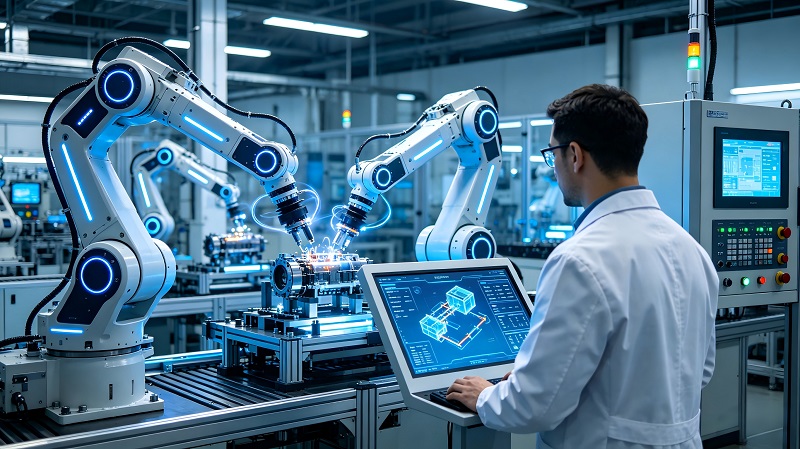
Industrial automation is entering a new generation where robots are no longer limited to repetitive programmed movements. The combination of artificial intelligence, digital twins, simulation technology, machine vision, and advanced robotics is creating a new era of intelligent manufacturing.
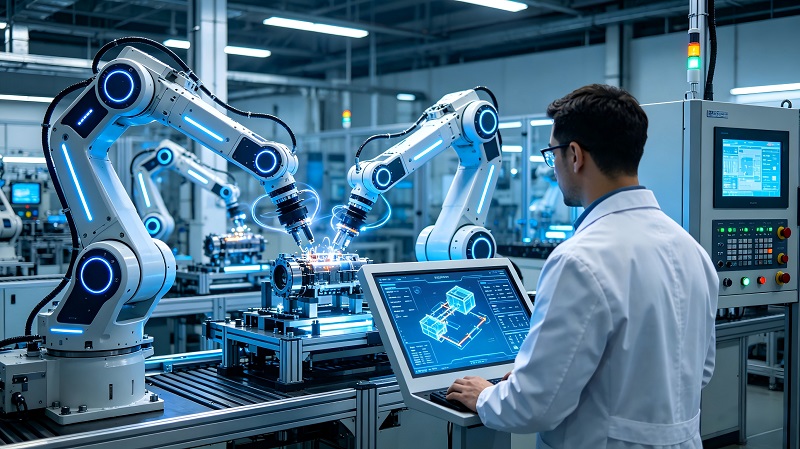
ABB Robotics is accelerating this transformation by developing physical AI solutions that connect virtual simulation environments with real industrial robot applications. The company's latest automation strategy focuses on helping manufacturers deploy smarter, more flexible, and more autonomous robotic systems across different industries.
As manufacturers worldwide face challenges including labor shortages, increasing production complexity, shorter product lifecycles, and higher quality requirements, intelligent robotics has become a key technology for future factories.
ABB Robotics Moves Toward Physical AI in Manufacturing
Traditional industrial robots operate according to predefined programs.
A robot receives instructions:
- Move to position A
- Pick up component
- Move to position B
- Complete assembly operation
- Repeat the cycle
This approach has been highly successful for automotive manufacturing and large-scale production.
However, modern factories require greater flexibility.
Products are becoming more customized.
Production volumes are changing faster.
Manufacturers need robots that can adapt to different conditions.
This is where physical AI becomes important.
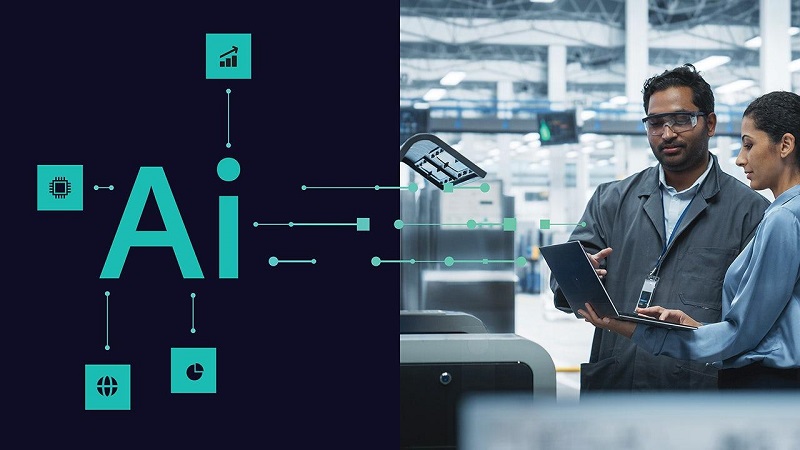
Physical AI combines artificial intelligence with machines that interact with the real world.
Instead of simply following programmed movements, intelligent robots can use:
- Simulation data
- Computer vision
- Machine learning
- Sensor feedback
- Real-time analysis
to improve their ability to operate in dynamic environments.
ABB Robotics has identified physical AI as an important direction for the next generation of industrial automation.
ABB and NVIDIA Partnership Brings AI Simulation to Industrial Robots
One of the major recent developments in ABB Robotics is its collaboration with NVIDIA to integrate NVIDIA Omniverse technologies into ABB RobotStudio.
The goal is to improve the connection between virtual robot simulation and real-world industrial deployment.
For decades, simulation has been an important tool for automation engineers.
Before installing a robotic production line, engineers can create a virtual model to test:
- Robot movements
- Cycle times
- Production layouts
- Collision risks
- Equipment interaction
However, traditional simulation still faces a challenge.
The virtual environment does not always perfectly represent real-world conditions.
Small differences in:
- Component positioning
- Material behavior
- Robot interaction
- Environmental conditions
can affect actual production performance.
ABB's development with NVIDIA focuses on improving this "sim-to-real" connection.
By using advanced simulation technologies and synthetic data generation, manufacturers can train and optimize robotic systems before physical deployment.
RobotStudio Becomes a Key Platform for Digital Manufacturing
ABB RobotStudio has been one of the industry's well-known robot simulation platforms.
The software allows engineers to design and validate robotic applications digitally before installing equipment on the factory floor.
Modern RobotStudio applications can support:
- Robot programming
- Production simulation
- Layout optimization
- Offline programming
- Virtual commissioning
- Performance analysis
For automation engineers, this creates significant advantages.
A production line can be tested virtually before expensive hardware installation begins.
Potential problems can be discovered earlier.
Engineering teams can reduce commissioning time.
Manufacturers can improve production planning.
The combination of digital twins and AI makes simulation even more powerful.
A digital twin is not simply a 3D model.
It is a virtual representation that can include:
- Mechanical information
- Robot programs
- Production data
- Sensor information
- Operating conditions
This allows engineers to understand how a system behaves before making physical changes.
AI-Powered Robotics for Flexible Manufacturing
Manufacturing requirements are changing rapidly.
In the past, factories often focused on producing very large quantities of identical products.
Today, many industries require flexible production.
Examples include:
- Electric vehicle manufacturing
- Battery production
- Electronics assembly
- Semiconductor equipment
- Consumer products
- Medical devices
Robotic systems need to adapt more quickly.
AI can help robots handle greater variation.
For example, a robot equipped with advanced vision and AI algorithms may identify different components without requiring extensive manual reprogramming.
This can reduce changeover time and improve production flexibility.
Intelligent Robots and Machine Vision Integration
Machine vision is becoming one of the most important technologies in industrial robotics.
A traditional robot knows where an object should be.
An intelligent robot can understand where the object actually is.
Vision systems can help robots:
- Locate components
- Detect defects
- Identify product variations
- Adjust positioning
- Verify assembly results
This is particularly valuable in industries where components may not always arrive in exactly the same position.
AI-based vision systems can analyze complex images and make decisions in real time.
When combined with robot controllers, vision technology creates a more adaptive automation system.
ABB Robotics Supports Autonomous Manufacturing Development
The future direction of robotics is moving beyond fixed automation.
Autonomous manufacturing systems aim to allow machines to make more decisions independently.
This does not mean factories will operate without engineers.
Instead, automation systems will provide more intelligent assistance.
Future robotic systems may:
- Detect production problems automatically
- Optimize movement paths
- Adjust processes based on data
- Predict maintenance requirements
- Improve energy efficiency
Engineers will increasingly focus on system design, optimization, and supervision.
Robotics Applications Across Industries
ABB industrial robots are used across many manufacturing sectors.
Automotive Manufacturing
Automotive production has historically been one of the largest users of industrial robots.
Applications include:
- Welding
- Painting
- Assembly
- Material handling
- Inspection
The transition toward electric vehicles is creating new automation requirements.
Battery production, lightweight materials, and flexible vehicle platforms require advanced robotic solutions.
Electronics Manufacturing
Electronics production requires extremely high precision.
Robots are used for:
- Component assembly
- Testing
- Packaging
- Handling sensitive parts
AI-based robotics can help manage increasingly complex product variations.
Logistics and Warehouse Automation
Modern logistics operations require faster material movement.
Robotic systems can support:
- Picking
- Sorting
- Packaging
- Transportation
Integration between robots, software systems, and warehouse management platforms is becoming increasingly important.
The Role of Robotics Software in Industry 4.0
Hardware alone is no longer enough.
The future of industrial robotics depends heavily on software.
Important software capabilities include:
- Simulation
- Data analytics
- AI models
- Cloud connectivity
- Digital twins
- Remote monitoring
This reflects a broader Industry 4.0 trend.
Factories are becoming software-driven environments where machines, production systems, and business platforms exchange information continuously.
Robotics and Predictive Maintenance
Intelligent robots can also contribute to predictive maintenance strategies.
A robot generates large amounts of operational data, including:
- Motor performance
- Temperature
- Cycle count
- Vibration
- Error history
- Movement accuracy
By analyzing this information, manufacturers can identify early signs of equipment degradation.
Instead of waiting for unexpected failures, maintenance teams can schedule service based on actual machine conditions.
This improves equipment availability and reduces production interruptions.
Challenges of AI-Based Industrial Automation
Although AI robotics provides significant opportunities, manufacturers must also consider several challenges.
Data Quality
AI systems require reliable data.
Poor-quality data can reduce system performance.
Cybersecurity
Connected robots and industrial networks require strong security protection.
Important measures include:
- Network segmentation
- User authentication
- Secure communication
- Software updates
Engineering Skills
Automation engineers increasingly need knowledge of:
- Robotics programming
- Industrial networks
- AI applications
- Simulation tools
- Data analysis
The role of the automation engineer is expanding beyond traditional PLC programming.
ABB Robotics and the Future Factory
The future factory will combine multiple technologies:
- Industrial robots
- PLC systems
- AI software
- Digital twins
- Machine vision
- Industrial networks
- Cloud and edge computing
ABB Robotics is positioning its technology development around this integrated automation model.
The objective is not simply to create faster robots.
The objective is to create intelligent production systems that can adapt, learn, and operate more efficiently.