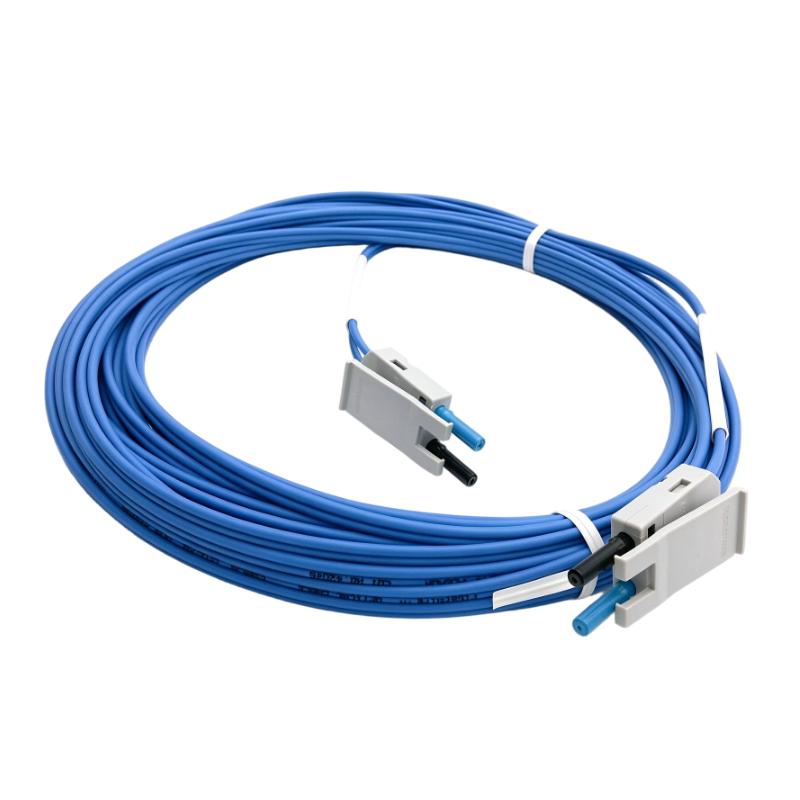
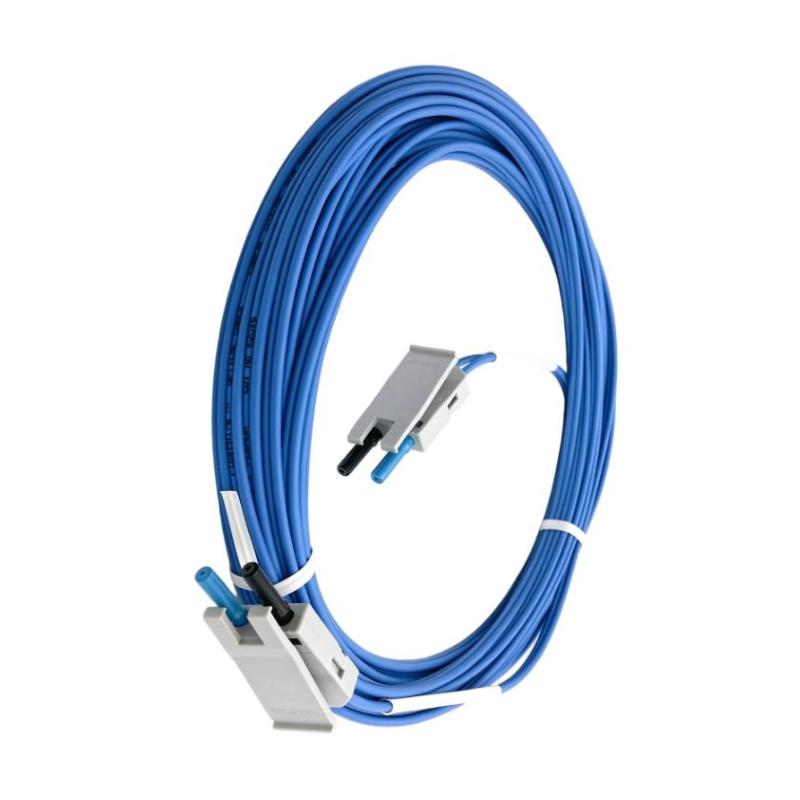
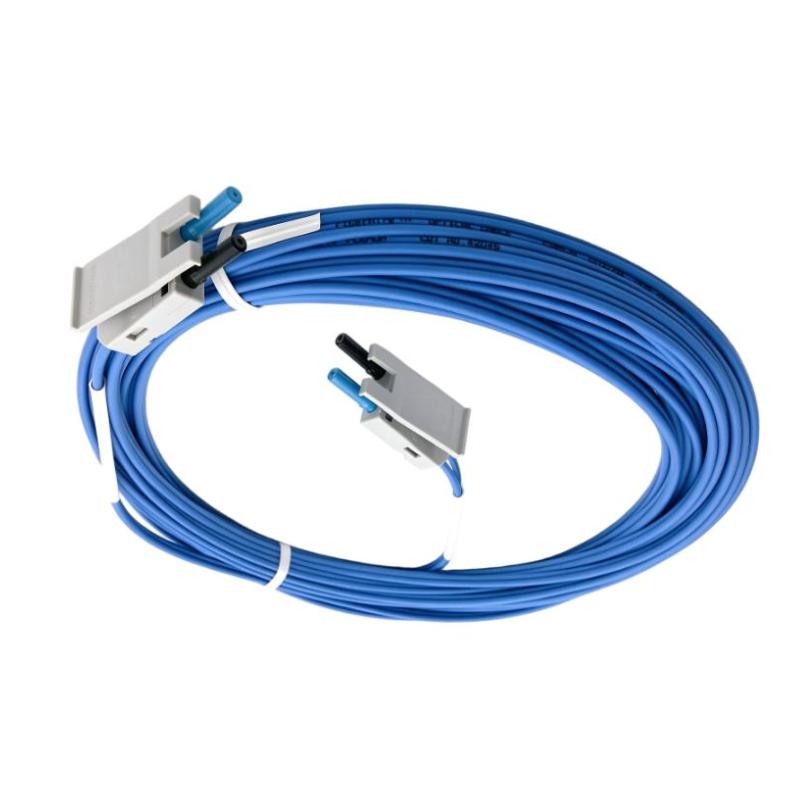
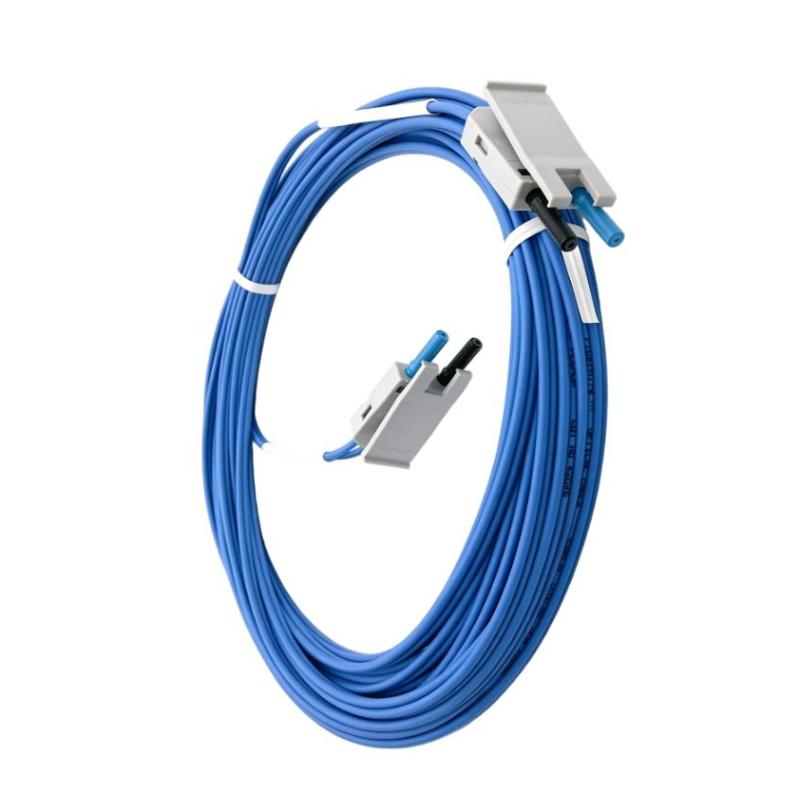
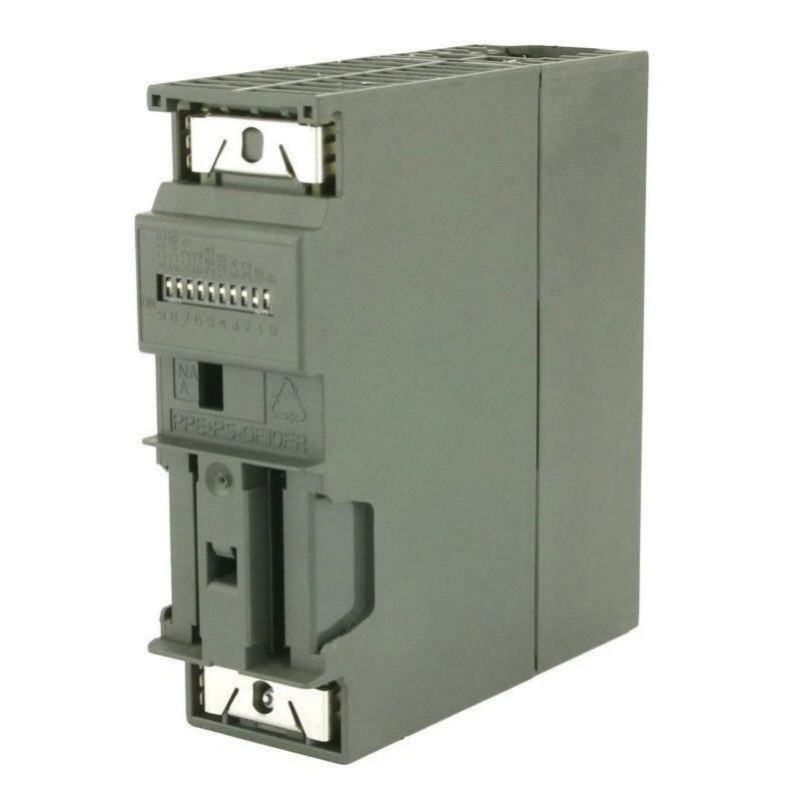
Allen Bradley 1786-FS100 ControlNet Fiber Optic Cable Assemblies
Allen Bradley 1786-FS100 ControlNet Fiber Optic Cable Assemblies
0.0
Points
Brand:Allen Bradley PLC Item No.:1786-FS100 Product Origin:USA Product Dimensions:Cable Length: 100 meters Product Weight:Shipping Weight: 3 kg Payment:T/T, Western Union, Credit Card Goods_stock:15 Shipping Port:Xiamen, China Lead Time:1-3 Days Condition:Brand New And Original Warranty:1 Year Certificate:COO
The Allen Bradley 1786-FS100 ControlNet Fiber Optic Cable Assembly is a specialized connectivity component for compatible industrial communication networks. Its specified 100-meter cable length makes it relevant to installations where connection points are separated by a longer cable route and the network architecture supports fiber-optic communication.
In industrial automation, cable selection affects installation planning, equipment compatibility, and long-term maintenance. Fiber-optic connections offer particular benefits in electrically noisy environments because the optical transmission path is not susceptible to electromagnetic interference in the same way as copper cabling.
The 1786-FS100 may be considered by industrial distributors, system integrators, and maintenance teams sourcing a specified ControlNet cable assembly. Before purchasing, engineers should verify the required optical interface, cable characteristics, and permitted link distance for the connected hardware.
For replacement projects, matching the existing catalog number and connection configuration helps reduce unnecessary installation changes. Careful specification checks also support more efficient procurement and help maintain the integrity of established industrial communication infrastructure.
Technical Specifications
Parameter
Specification
Brand
Allen Bradley
Model
1786-FS100
Product Type
ControlNet Fiber Optic Cable Assembly
Network Application
ControlNet
Cable Type
Fiber-optic cable assembly
Cable Length
100 m / 328.08 ft
Shipping Weight
3.00 kg / 6.61 lb
Product Category
Industrial Communication Accessories
Typical Application
Fiber-optic connectivity in compatible ControlNet installations
Note: The listed weight is the supplied shipping weight, not a confirmed net cable weight. Verify the fiber type, connector arrangement, and optical interface requirements before ordering.
Recommended Related Models
The following Allen Bradley products are associated with ControlNet connectivity and network infrastructure. Their functions differ, so compatibility should be assessed according to the intended installation.
Model
Product Type
Application
1786-FS10
ControlNet Fiber Optic Cable Assembly
Fiber-optic connectivity for compatible installations
1786-RPFM
ControlNet Fiber Repeater Module
Fiber-optic extension in supported ControlNet networks
1786-RPA
ControlNet Repeater Adapter
Integration with compatible repeater configurations
1756-CNB
ControlLogix ControlNet Bridge Module
ControlNet communication in supported ControlLogix systems
1756-CNBR
ControlLogix Redundant ControlNet Bridge Module
Redundant ControlNet communication in supported systems
Popular Related Models
For broader ControlNet maintenance and spare-parts planning, the following products may also be relevant to network connection, access, and infrastructure requirements.
Model
Product Type
Application
1786-CP
ControlNet Network Access Programming Cable
Supported programming and network access tasks
1786-BNC2TNC
ControlNet Coaxial Adapter
Compatible coaxial connection arrangements
1786-BNCJ
ControlNet BNC Coaxial Connector
Coaxial connector requirements in compatible installations
1786-TPR
ControlNet Coaxial Tap
Connection point in supported coaxial network topologies
1786-TPS
ControlNet Coaxial Tap
Coaxial access in compatible ControlNet installations
1786-TPYS
ControlNet Y-Tap
Branch connection for supported ControlNet cabling arrangements
The Allen Bradley 1786-FS100 ControlNet Fiber Optic Cable Assembly is a model-specific option for compatible optical network connections requiring a 100-meter cable. Confirming the optical specifications, connector configuration, and supported interface distance before purchasing helps ensure that the selected assembly meets the requirements of the intended industrial application.
Applications
The Allen Bradley 1786-FS100 ControlNet Fiber Optic Cable Assembly is intended for compatible fiber-optic connectivity in industrial ControlNet installations. With a supplied cable length of 100 meters, it is relevant to applications that require longer cable runs between compatible optical interfaces within an established automation network.
Industrial Network Connectivity: Supports fiber-optic connection requirements in compatible ControlNet communication systems.
Distributed Automation Equipment: Can be considered for connecting separated equipment areas where the network architecture supports fiber-optic communication.
Manufacturing Facilities: Suitable for evaluating cable requirements in production environments with distributed control equipment.
Electrically Noisy Areas: Fiber-optic transmission offers immunity to electromagnetic interference along the optical path, making it useful around electrically noisy industrial equipment.
ControlNet Maintenance: Provides a model-specific sourcing option when replacing an existing fiber-optic cable assembly.
Plant Network Installation: Supports cable planning for compatible installations requiring a longer optical connection.
For maintenance engineers and system integrators, selecting the correct cable length and optical interface helps simplify installation planning and supports reliable integration with the existing communication infrastructure.
Advantages
Extended Cable Reach
The specified 100-meter cable length provides greater routing flexibility than shorter assemblies. It can be considered for installations where the distance between compatible connection points requires a longer cable run.
Resistance to Electromagnetic Interference
Fiber-optic transmission uses light rather than electrical signals along the cable, making the optical path resistant to electromagnetic interference. This is beneficial in industrial facilities containing motors, drives, and switching equipment.
Electrical Isolation Between Interfaces
Fiber-optic links can provide electrical isolation between connected network interfaces. This helps prevent the optical cable itself from creating a conductive path between equipment locations.
Supports Existing ControlNet Infrastructure
Facilities operating established ControlNet networks may need compatible cable assemblies to maintain or replace existing connections. Matching the original catalog number helps reduce the risk of selecting an unsuitable component.
Practical for Maintenance and Procurement
A clearly identified model and cable length simplify purchasing, inventory planning, and replacement preparation. Maintenance teams can assess the cable requirements before beginning installation work.
Suitable for Industrial Integration Projects
For system integrators, a defined cable length supports routing and installation planning. Confirming the cable's optical specifications and connector configuration helps ensure compatibility with the intended network hardware.
Technical FAQs
Q1: What is the primary function of the Allen Bradley 1786-FS100?
The 1786-FS100 is identified as a ControlNet fiber-optic cable assembly. It is intended for compatible optical connections within supported ControlNet installations.
Q2: How does fiber-optic communication differ from coaxial communication?
Fiber-optic communication transmits information through light, while coaxial communication uses electrical signals. Fiber-optic cabling provides electrical isolation and is inherently resistant to electromagnetic interference along the optical path.
Q3: Can the 1786-FS100 connect directly to any ControlNet device?
No. Compatibility depends on the optical interfaces, connector arrangement, fiber type, and network architecture. Both ends of the connection must be supported by the intended equipment.
Q4: Does the cable convert electrical signals into optical signals?
A passive fiber-optic cable assembly does not perform electrical-to-optical conversion on its own. Compatible active interface hardware is required where signal conversion is necessary.
Q5: Is the 1786-FS100 suitable for long-distance industrial communication?
Its specified 100-meter length provides a longer physical cable run than shorter assemblies. The maximum supported optical link distance depends on the fiber specification, interface hardware, connector losses, and network requirements.
Q6: Can this cable be used to expand an existing ControlNet network?
It may be suitable when the network design supports the required fiber-optic connection. The cable alone does not add network nodes or provide repeater functionality.
Q7: What should technicians check if the optical link fails?
Inspect the cable for damage, verify connector compatibility, check the condition of the optical interfaces, and review diagnostic indicators on the connected equipment. Optical connectors should be cleaned using approved procedures.
Q8: What precautions are necessary when routing a 100-meter fiber-optic cable?
Avoid excessive pulling force, crushing, sharp bends, and routing practices that violate the specified minimum bend radius. Appropriate cable protection and routing are particularly important in industrial environments.
Q9: Does the cable assembly require an independent power supply?
The passive cable assembly itself does not require a separate power supply. Any active communication or optical interface equipment connected to it must be powered according to its own specifications.
Q10: What should buyers verify before ordering the 1786-FS100?
Confirm the complete catalog number, cable length, fiber type, connector configuration, and compatibility with the installed ControlNet interfaces. These checks help avoid purchasing an assembly that cannot be used in the intended system.