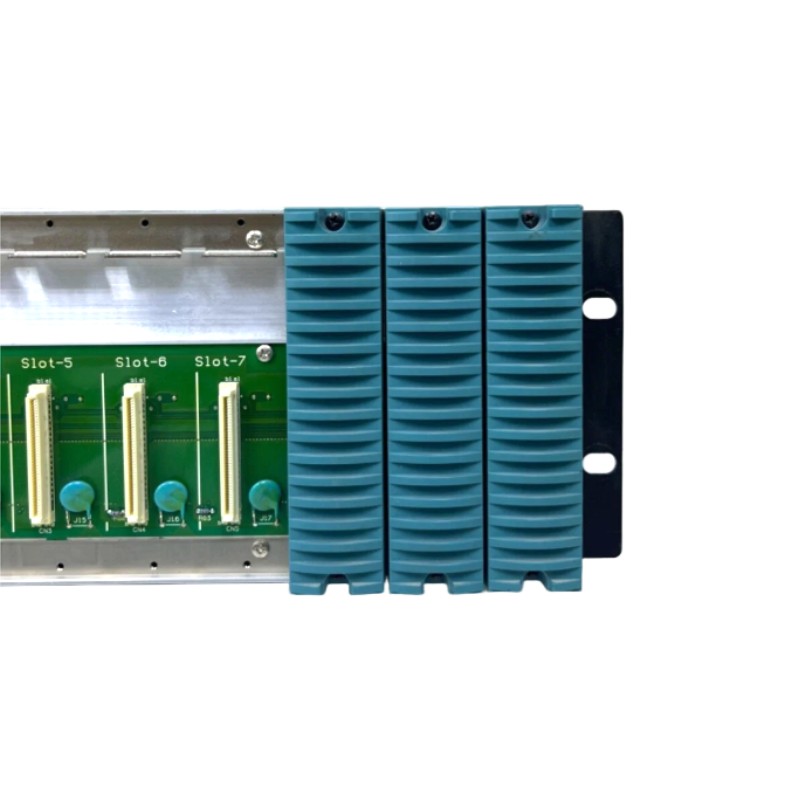
Brand:Yokogawa Electric Item No.:NFBU200-S01 Product Origin:Japan Product Dimensions:482 x 132.5 x 40.5 mm Product Weight:1.9 kg Payment:T/T, Western Union, Credit Card Goods_stock:15 Shipping Port:Xiamen, China Lead Time:1-3 Days Condition:Brand New And Original Warranty:1 Year Certificate:COO
The Yokogawa NFBU200-S01 Controller Basic Module provides the structural foundation for integrating controller components within Yokogawa automation systems. Designed for reliability and system organization, the module supports the installation and operation of controllers and related system hardware inside industrial control cabinets.
Engineered for demanding industrial applications, the NFBU200-S01 helps maintain stable automation architecture across complex control environments. Its durable construction and optimized design allow engineers to build scalable control systems that can adapt to evolving operational requirements.
Technical Specifications
Parameter
Specification
Manufacturer
Yokogawa
Model
NFBU200-S01
Product Type
Controller Basic Module
Installation
Control cabinet / system rack
Application
Industrial control system infrastructure
Dimensions
482 × 132.5 × 40.5 mm
Weight
1.9 kg
Recommended Related Models
Model
Description
NFBU200-015
Basic Module
NFBU200-010
System Base Module
NFCP100-S00
Control Processor Module
NFPW442-50
Power Supply Module
NFAI143-H00
Analog Input Module
Popular Related Models
Model
Description
NFDV551-P00
Digital Output Module
NFDV161-P00
Digital Input Module
NFCP502-W00
Control Processor
NFAI135-S00
Analog Input Module
NFAO041-S00
Analog Output Module
NFPW444-50
Power Supply Module
Common Industrial Deployment Scenarios
Serves as a foundational controller module within Yokogawa automation platforms
Installed in distributed control systems supporting complex industrial processes
Used in large-scale manufacturing environments requiring stable control architecture
Deployed in power generation facilities for centralized system control infrastructure
Applied in oil & gas processing plants where reliable controller frameworks are essential
Integrated into chemical and pharmaceutical process automation systems
Utilized in water treatment plants for coordinated monitoring and process control
Performance and Integration Advantages
Robust System Backbone – Provides a reliable base for controller installation and system organization.
Stable Industrial Operation – Built to maintain consistent performance in demanding process environments.
Efficient System Integration – Designed to integrate smoothly with Yokogawa control processors and I/O modules.
Optimized Cabinet Installation – Structured design fits efficiently into standard industrial control cabinets.
Scalable Automation Architecture – Supports system expansion as operational requirements increase.
High Reliability for Continuous Operations – Ideal for facilities where uninterrupted control system performance is critical.
Technical FAQs
1. What role does the NFBU200-S01 play in a Yokogawa control system?
The module acts as a controller base unit that supports the installation and organization of control system components within the automation architecture.
2. Why is a controller basic module important in industrial automation systems?
It provides the physical and functional foundation needed for mounting and integrating controller hardware within the control infrastructure.
3. What types of industries typically deploy this module?
Industries such as energy, chemical processing, oil and gas, water treatment, and advanced manufacturing commonly use this module.
4. How does this module contribute to system reliability?
By providing a stable structural platform for controllers and associated modules, it helps maintain consistent system performance and operational stability.
5. Is the module suitable for large-scale automation environments?
Yes, it is designed for use in complex control systems where multiple modules must be organized and integrated efficiently.
6. Can this module support system upgrades or expansions?
Yes, its modular design allows additional control components to be added as system requirements evolve.
7. Does the module help simplify maintenance tasks?
Yes, structured module installation allows engineers to access, replace, or upgrade components more efficiently.
8. How does the module improve control cabinet organization?
It provides a defined structure for controller installation, helping maintain a clean and manageable system layout.
9. Is the module designed for continuous operation?
Yes, it is built for industrial environments where control systems operate continuously over long periods.
10. Can the module support distributed control architectures?
Yes, it is commonly used as part of distributed automation systems where multiple control modules work together.