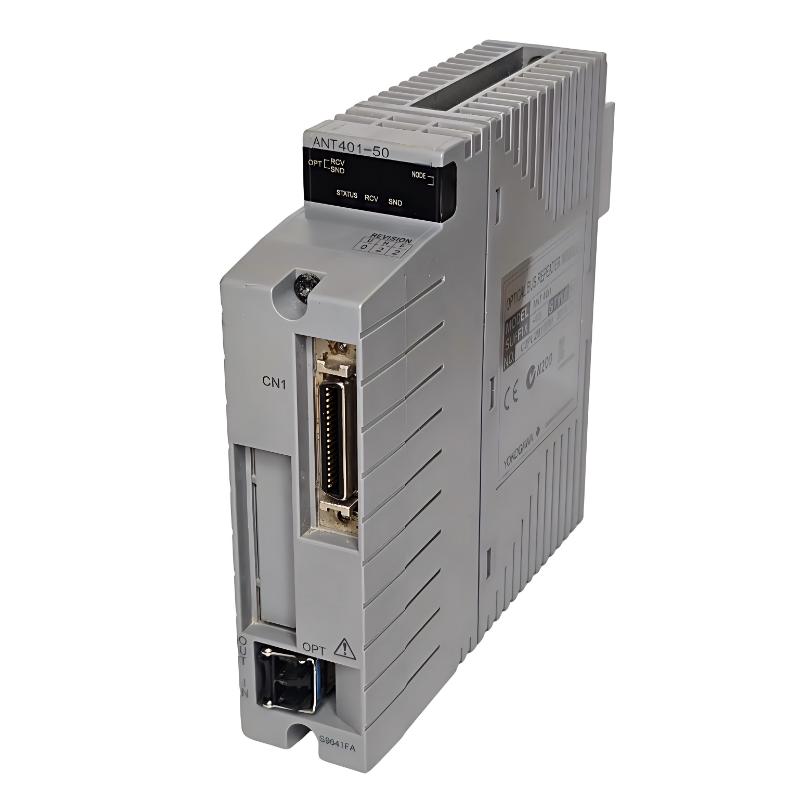
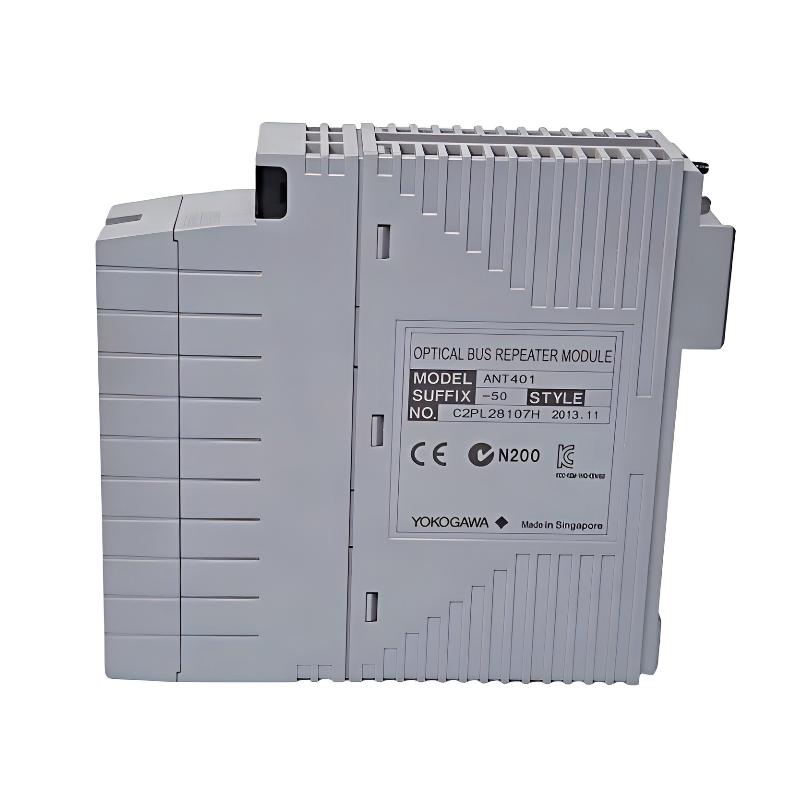
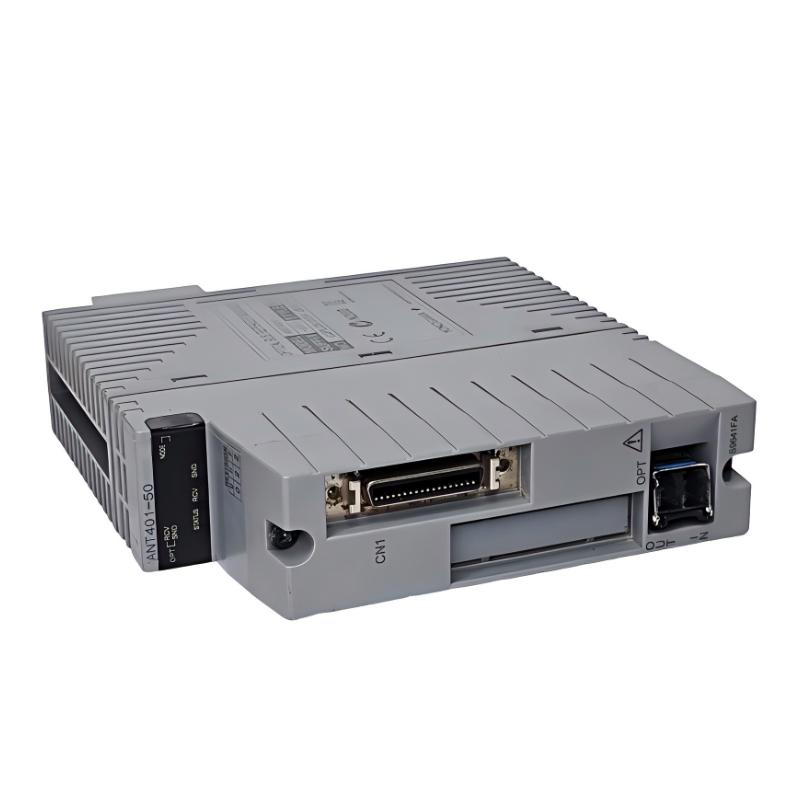
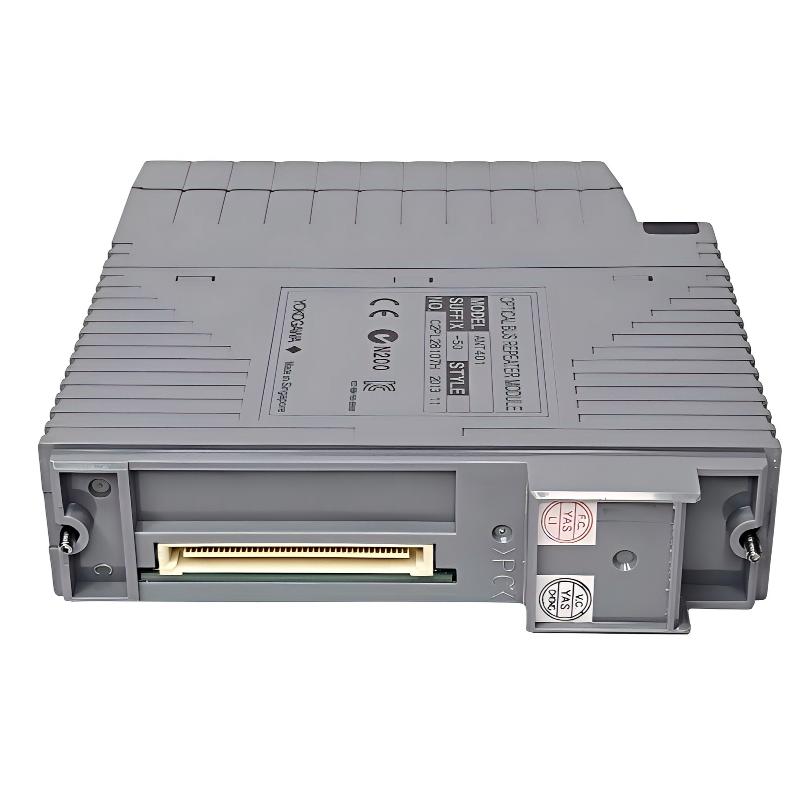
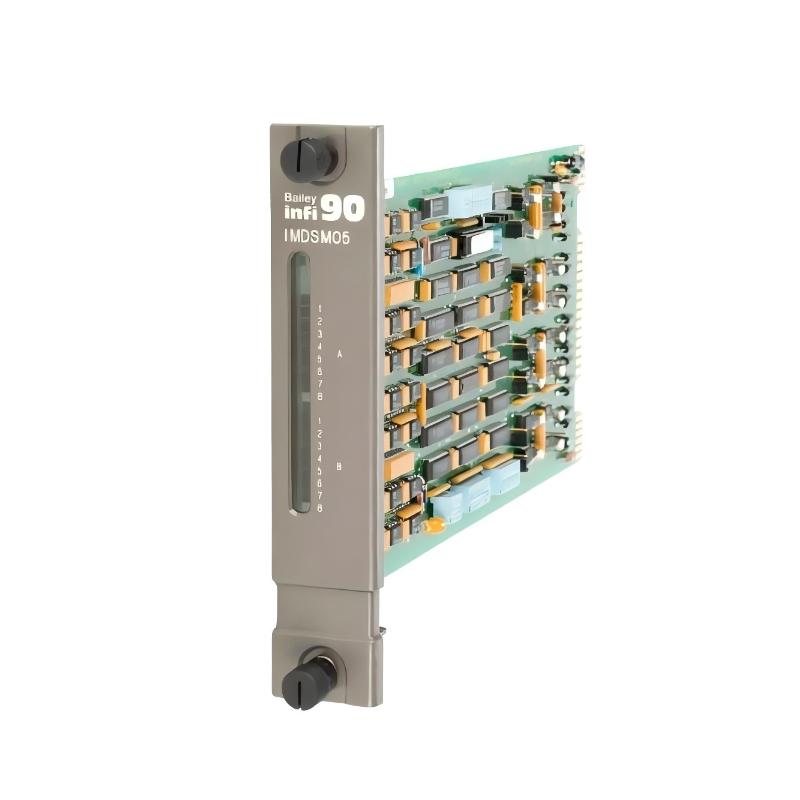
Yokogawa ANT401-50 Fiber Optic Bus Repeater Main Module
Yokogawa ANT401-50 Fiber Optic Bus Repeater Main Module
0.0
Points
Brand:Yokogawa Electric Item No.:ANT401-50 Product Origin:Japan Product Dimensions:142.5 x 130 x 32.8 mm Product Weight:0.3 kg Payment:T/T, Western Union, Credit Card Goods_stock:15 Shipping Port:Xiamen, China Lead Time:1-3 Days Condition:Brand New And Original Warranty:1 Year Certificate:COO
The Yokogawa ANT401-50 Fiber Optic Bus Repeater Main Module is a key infrastructure component used to maintain communication stability in fiber optic-based distributed control systems. It addresses signal attenuation challenges by regenerating optical signals, ensuring consistent and reliable data transmission across extended distances.
It is particularly valuable in large industrial environments where communication reliability directly affects operational continuity and system safety.
Technical Specifications
Parameter
Specification
Model
ANT401-50
Module Type
Fiber Optic Bus Repeater Main Module
Function
Optical signal repeater
Communication Medium
Fiber optic
System Compatibility
Yokogawa DCS / ESB bus
Installation Type
Panel-mounted
Dimensions (W × H × D)
142.5 mm × 130 mm × 32.8 mm
Weight
0.3 kg (0.66 lb)
Applications
The Yokogawa ANT401-50 Fiber Optic Bus Repeater Main Module is designed to extend and stabilize fiber optic communication in distributed control system (DCS) networks. It is typically used in architectures where signal regeneration, long-distance transmission, and network segmentation are required to maintain communication integrity.
Typical deployment scenarios include:
Long-distance fiber optic communication extension in process plants
Signal regeneration between distributed ESB bus nodes
Large-scale oil & gas and petrochemical facilities
Power generation plants with geographically separated control areas
Industrial environments with high electromagnetic interference (EMI)
Fiber optic backbone reinforcement in Yokogawa DCS systems
Multi-segment network architectures requiring signal boosting
Redundant communication loop stabilization
It is especially useful in systems where signal attenuation over distance could compromise communication reliability.
Advantages
From a network engineering perspective, the ANT401-50 is designed to enhance communication reliability and extend fiber network reach without introducing signal distortion.
Key advantages include:
Fiber optic signal regeneration ensures stable long-distance communication
Eliminates signal attenuation issues in extended network segments
High immunity to electromagnetic interference (EMI/RFI)
Supports reliable communication across distributed industrial nodes
Improves network segmentation and structured topology design
Enhances fault isolation in fiber optic communication loops
Compact form factor suitable for dense control panel integration
Reduces need for complex network redesign in expansion projects
Maintains deterministic communication performance
Optimized for continuous industrial operation environments
In real-world systems, it is often deployed to maintain signal quality across expanding fiber networks without redesigning the entire communication infrastructure.
Technical FAQs
1. What is the main function of the ANT401-50 module?
It regenerates and extends fiber optic communication signals within industrial networks.
2. Why is a fiber optic repeater needed in DCS systems?
To overcome signal attenuation and maintain communication integrity over long distances.
3. Is it compatible with Yokogawa ESB bus systems?
Yes, it is typically used within Yokogawa fiber optic communication architectures.
4. Can it improve network reliability?
Yes, by stabilizing signal transmission and reducing communication errors.
5. Does it support redundant communication paths?
Yes, it can be integrated into redundant fiber optic network configurations.
6. How does it handle signal degradation?
It regenerates the optical signal to restore signal strength and clarity.
7. Is it suitable for high-noise environments?
Yes, fiber optic communication is inherently immune to EMI and RFI.
8. Can it be used in large industrial plants?
Yes, especially in systems with long-distance communication requirements.
9. Does it require frequent maintenance?
No, but fiber connectors should be periodically inspected for cleanliness.
10. How is it installed in a system?
It is installed inline within the fiber optic communication path between nodes.