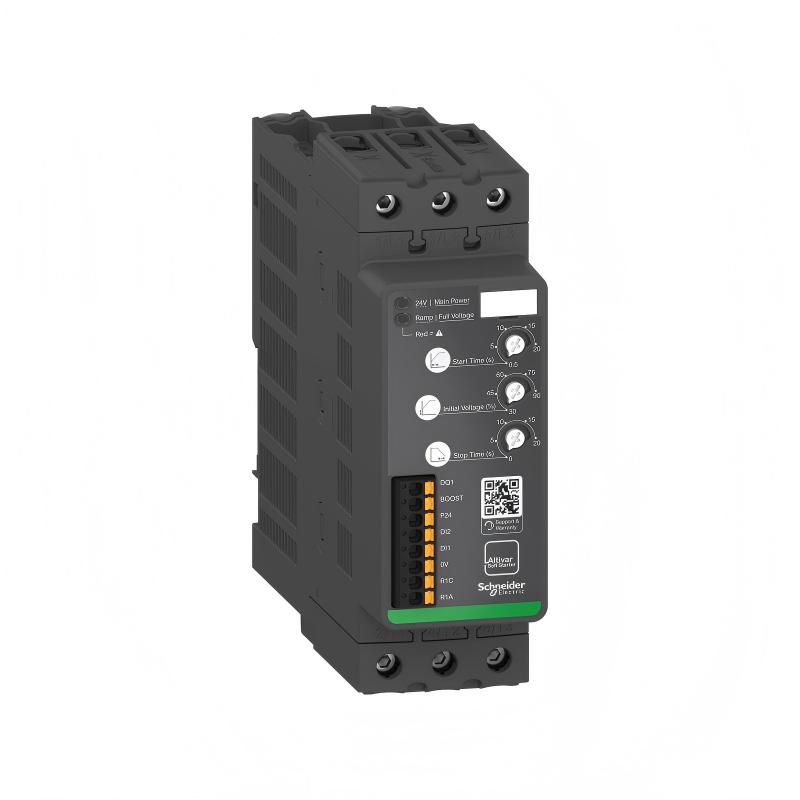
Schneider ATS130N2D45LT Fault Troubleshooting Guide (Start Failure, Overload Trip & Phase Fault)
Schneider ATS130N2D45LT faults are frequently misdiagnosed as motor failure or power supply instability. Field evidence shows most issues originate from wiring errors, phase imbalance, or control signal instability, not soft starter internal damage.
Fault Symptoms in Industrial Systems
- Motor does not start after command
- Immediate trip on start command
- Excessive acceleration time or stalled start
- Overload or phase failure alarms
- Unexpected bypass fault during operation
In one HVAC system, repeated start failure was caused by a missing phase connection on input L2.
Field Diagnostic Approach
1. Power Input Verification
- Measure all three phases under load
- Check phase sequence integrity
- Verify voltage balance (<3% imbalance recommended)
Phase loss is one of the most common causes of immediate start inhibition.
2. Control Signal Validation
- Verify 24V DC start command presence
- Check PLC output timing and logic
- Inspect input terminal tightness
A loose control terminal caused intermittent “start accepted but no output” behavior in one conveyor system.
3. Motor Load and Mechanical Check
- Ensure motor is not mechanically locked
- Verify coupling and load free rotation
- Check for pump blockage or valve closure issues
In one pumping station, “electrical fault” was actually a blocked impeller causing overload trip.
Common Failure Modes
Phase Loss or Incorrect Wiring (Most Critical)
- Symptoms: immediate trip or no start
- Fix: correct phase connection and tighten terminals
Control Voltage Instability
- Symptoms: random reset or failed start
- Fix: stabilize 24V DC supply
Overload / Mechanical Stalling
- Symptoms: trip during ramp-up
- Fix: reduce load or extend ramp time
Field Recovery Case Study
Scenario: Conveyor motor failed to start intermittently.
Diagnosis:
- Phase L2 intermittent connection in terminal block
- Control signal stable
- Motor mechanically healthy
Corrective Actions:
- Re-terminated power wiring
- Tightened terminal connections
- Verified phase balance
Result:
Stable startup restored; no further fault trips during production.