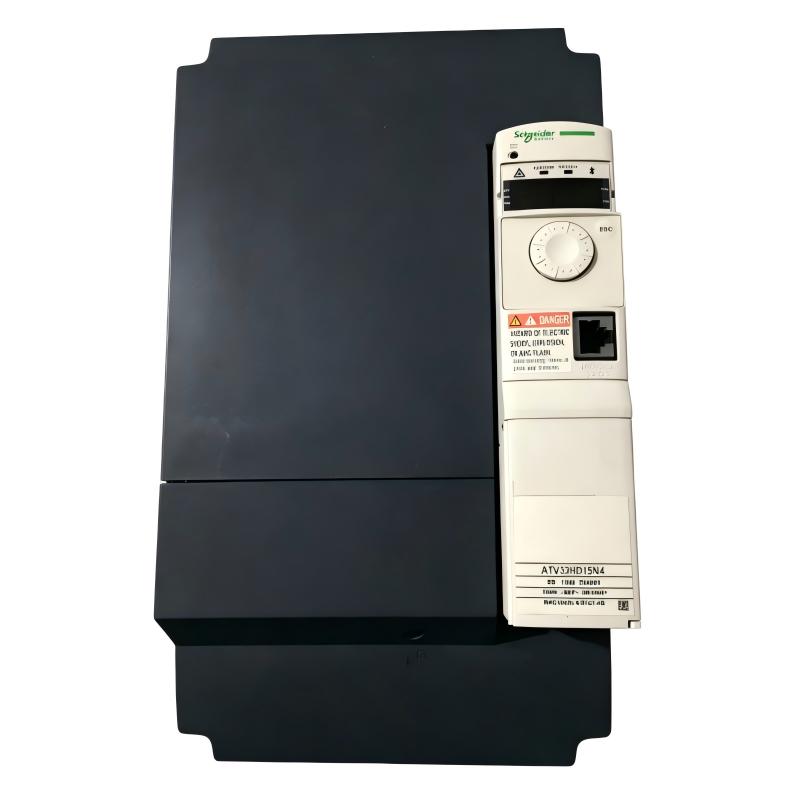
Schneider ATV32HD15N4 Variable Speed Drive Installation Guide (Setup & Commissioning)
Schneider ATV32HD15N4 Variable Speed Drive installation problems are usually caused by incorrect motor configuration, unsuitable wiring practices, poor cooling conditions, or incomplete commissioning procedures rather than drive hardware failure. In industrial automation systems, a variable speed drive can start normally but still experience unstable speed control, excessive current, or acceleration faults when the system parameters do not match the actual motor and machine load.
The Schneider ATV32HD15N4 Variable Speed Drive is designed for industrial motor speed control applications where precise acceleration, stable operation, and reliable torque management are required. Proper installation requires correct electrical wiring, accurate system configuration, and field validation under real operating conditions.
Schneider ATV32HD15N4 Variable Speed Drive Application Overview
The ATV32HD15N4 controls motor speed by adjusting output frequency and voltage according to the machine process requirements.
Typical system structure:
Three Phase Power Supply
          |
          |
Schneider ATV32HD15N4 Drive
          |
          |
Three Phase Motor
          |
          |
Industrial Equipment
Typical applications include:
- Conveyor systems
- Packaging machinery
- Pumps and fans
- Material handling equipment
- Processing machines
- Automated production lines
In one packaging machine upgrade project, engineers installed an ATV32HD15N4 Variable Speed Drive to replace a traditional motor starter.
During initial commissioning:
- Drive power status: Normal
- Control panel: Operating correctly
- Motor rotation: Correct
- Speed control: Unstable
The first assumption was mechanical vibration caused by the machine structure.
Engineers performed a field investigation:
- Checked motor nameplate information
- Measured motor current
- Verified speed reference signal
- Reviewed acceleration parameters
Measured results before correction:
- Acceleration current peak: 43A
- Speed fluctuation: ±7%
- Occasional protection warning
The investigation found that the motor parameters entered into the drive did not match the actual motor specification.
After correction:
- Acceleration became smoother
- Current peak reduced to 30A
- Speed stability improved significantly
The issue was caused by commissioning configuration, not drive failure.
Schneider ATV32HD15N4 Installation Preparation and System Planning
Before installing the variable speed drive, engineers should evaluate the complete motor control system.
Preparation requirements:
- Confirm incoming power supply
- Verify motor rated power
- Check motor current requirement
- Review cabinet cooling conditions
- Plan control signal wiring
Installation checklist:
| Inspection Item | Engineering Requirement |
|---|---|
| Power supply | Match drive voltage requirement |
| Motor capacity | Suitable for drive rating |
| Cabinet ventilation | Maintain sufficient airflow |
| Ground connection | Reliable protection path |
| Control wiring | Proper signal separation |
A common field mistake is completing the physical installation but ignoring system configuration.
The drive depends on accurate motor information to calculate:
- Output current control
- Torque response
- Acceleration behavior
- Protection limits
Schneider ATV32HD15N4 Variable Speed Drive Wiring Installation
Correct wiring is essential for reliable operation.
Engineers should inspect:
Power Circuit Connection
Verify:
- Three-phase input wiring
- Motor output connection
- Ground terminal
- Cable tightening condition
Control Circuit Connection
Check:
- Start command
- Stop signal
- Speed reference input
- Communication interface
In one machine commissioning case:
Initial measurements:
- Supply voltage: 400V AC
- Motor running current: 21A
- Acceleration current: 46A
Field inspection found:
- Motor output terminal connection was loose
- Control wiring was installed too close to power cables
After correction:
- Current waveform became stable
- Control signal interference disappeared
- Drive operation improved
Schneider ATV32HD15N4 Drive Setup and System Configuration
The commissioning stage requires matching the drive settings with the actual application.
Important configuration parameters:
- Motor voltage
- Motor current
- Motor frequency
- Acceleration time
- Deceleration time
- Speed reference source
- Control mode
Typical commissioning logic:
IF Motor_Parameters = Correct
AND Control_Signal = Valid
AND Output_Current = Stable

THEN

Enable Machine Operation
During setup, engineers should verify:
- Correct motor rotation direction
- Stable low-speed operation
- Smooth acceleration
- Proper response under load
Field experience shows that many variable speed drive faults are actually caused by incorrect setup rather than electronic damage.
Schneider ATV32HD15N4 Commissioning Validation and Performance Testing
Final commissioning should include electrical and mechanical verification.
Electrical Testing
Check:
- Input voltage stability
- Output current
- Drive temperature
- Fault history
Machine Testing
Verify:
- Acceleration performance
- Speed regulation
- Load response
Example commissioning results:
Before optimization:
- Startup current: 45A
- Speed variation: ±6%
- Acceleration unstable
After optimization:
- Startup current: 29A
- Speed variation: ±1.5%
- Stable continuous operation
A successful ATV32HD15N4 installation requires correct wiring, accurate configuration, and real machine testing.