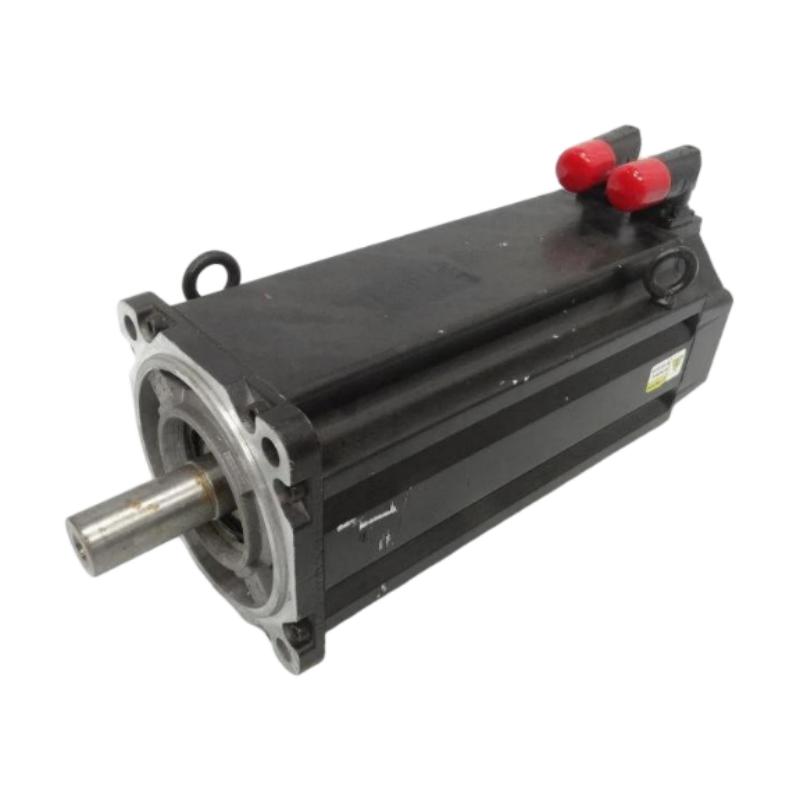
Allen Bradley MPL-B560F-SJ72AA Servo Motor Troubleshooting Guide (Fault Diagnosis & Repair)
Allen Bradley MPL-B560F-SJ72AA Servo Motor Fault Diagnosis for Motion System Failures
Allen Bradley MPL-B560F-SJ72AA Servo Motor troubleshooting requires analyzing the complete motion system instead of immediately replacing the motor. Servo faults can originate from the drive, feedback device, mechanical load, cable connection, or incorrect configuration.
A professional Fault Diagnosis process follows the complete signal chain:
Controller Command → Servo Drive → Motor Response → Feedback Signal → Mechanical Movement
Understanding where the system response becomes abnormal is the key to efficient troubleshooting.
Allen Bradley MPL-B560F-SJ72AA Servo Motor Common Fault Symptoms
Typical Allen Bradley MPL-B560F-SJ72AA Servo Motor problems include:
- Motor cannot enable
- Servo drive overcurrent alarm
- Excessive following error
- Position drift
- Unexpected vibration
- Feedback fault
- Intermittent axis shutdown
The first troubleshooting action should be collecting evidence:
- Drive alarm history
- Controller status
- Axis command value
- Actual position feedback
- Motor current trend
- Machine operating condition
Resetting faults repeatedly without recording information can remove important diagnostic clues.
Allen Bradley MPL-B560F-SJ72AA Servo Motor Overcurrent Fault Troubleshooting
An overcurrent alarm does not always indicate a damaged motor.
Possible causes include:
- Mechanical obstruction
- Incorrect acceleration setting
- Excessive load inertia
- Motor cable issue
- Drive parameter mismatch
A practical diagnostic process:
Check Alarm Timing
        ↓
Measure Motor Response
        ↓
Inspect Mechanical Load
        ↓
Verify Parameters
        ↓
Confirm Root Cause
In one field application, an Allen Bradley servo axis stopped during acceleration with an overcurrent alarm.
Inspection results:
- Drive status: Normal before movement
- Feedback: Correct
- Motor current: Increased rapidly
- Mechanical movement: Abnormal resistance
The mechanical system was inspected, and a damaged bearing created excessive friction.
After replacing the damaged mechanical component:
- Current demand returned to normal
- Servo acceleration stabilized
- No further overcurrent faults occurred
The motor was not the failure source.
Allen Bradley MPL-B560F-SJ72AA Feedback Fault Diagnosis
Feedback faults can create serious motion problems because the servo drive cannot accurately determine motor position.
Common symptoms:
- Encoder alarm
- Position error
- Random axis stop
- Unstable movement
Check:
- Feedback connector locking
- Cable damage
- Shield grounding
- Connector contamination
- Feedback configuration
A field example involved a machine that operated correctly at low speed but failed during high-speed movement.
Investigation found:
- Motor power wiring: Normal
- Drive configuration: Correct
- Feedback cable: Intermittent connection
After repairing the feedback connection:
- Position feedback stabilized
- Axis faults disappeared
- Machine returned to production
Allen Bradley MPL-B560F-SJ72AA Following Error Troubleshooting
Following error occurs when actual motor position cannot track commanded position.
Possible causes:
- Incorrect servo tuning
- Excessive load
- Mechanical friction
- Wrong motion profile
- Feedback problems
Engineers should compare:
| Data | Diagnostic Meaning |
|---|---|
| Command position | Controller request |
| Actual position | Real movement |
| Following error | Tracking performance |
| Motor torque/current | Mechanical effort |
If following error appears only during acceleration, investigate inertia and acceleration settings.
If following error appears randomly, check feedback stability and mechanical connections.
Allen Bradley MPL-B560F-SJ72AA Servo Motor Vibration Fault Analysis
Servo vibration requires both electrical and mechanical analysis.
Possible causes:
- Poor tuning
- Shaft misalignment
- Loose coupling
- Mechanical resonance
- Load imbalance
The timing of vibration provides important clues.
Example:
- Vibration only at high speed → possible resonance
- Vibration after reaching position → tuning issue
- Vibration at specific location → mechanical problem
In one production machine, engineers measured:
Before correction:
- Vibration value: 5.8 mm/s
After mechanical alignment and tuning adjustment:
- Vibration value: 1.9 mm/s
The final diagnosis showed that the servo motor was healthy; the issue was caused by mechanical alignment and control optimization.
Allen Bradley MPL-B560F-SJ72AA Cable and Connection Fault Diagnosis
Servo cables are critical components in motion systems.
Inspect:
- Power cable condition
- Feedback cable routing
- Connector locking
- Shield connection
- Cable carrier movement
Cable-related faults often appear intermittently.
A typical pattern:
- Machine works after restart
- Fault returns after several cycles
- Cable movement affects failure occurrence
This pattern strongly suggests a connection or cable integrity issue.
Before replacing the motor, verify the complete cable path.
Allen Bradley MPL-B560F-SJ72AA Servo Motor Repair Verification
After troubleshooting, confirm that the corrective action solves the original problem.
Verification should include:
- Repeating the original fault condition
- Running multiple motion cycles
- Checking drive alarms
- Monitoring following error
- Confirming positioning accuracy
For example, after repairing a feedback cable problem, engineers performed more than 500 motion cycles without another position fault.
This confirms that the actual failure source was removed.
Allen Bradley MPL-B560F-SJ72AA Servo Motor Replacement Decision
Replacing the servo motor should only occur after confirming that external causes have been eliminated.
Before replacement, check:
- Drive configuration
- Motor cable
- Feedback system
- Mechanical load
- Power supply condition
A servo motor replacement without proper diagnosis may waste time and leave the original problem unresolved.
Allen Bradley MPL-B560F-SJ72AA Servo Motor Troubleshooting Best Practices
Effective Allen Bradley MPL-B560F-SJ72AA Troubleshooting combines:
- Alarm analysis
- Electrical testing
- Feedback verification
- Mechanical inspection
- Motion performance evaluation
The most reliable Fault Diagnosis approach is to locate where the motion control loop fails instead of assuming the motor is defective.
By applying structured troubleshooting methods, engineers can reduce downtime, avoid unnecessary servo replacement, and maintain stable industrial automation motion systems.