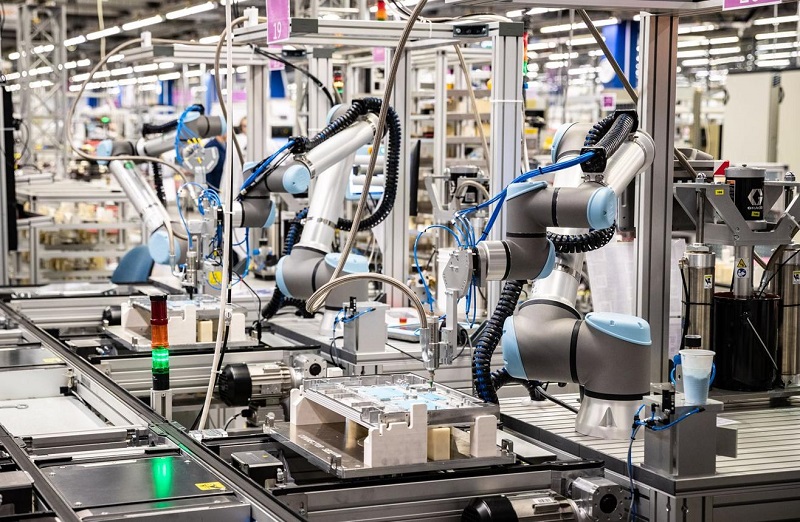
Guanglun Intelligence and Siemens Join Forces to Build a Physical AI Industrial Foundation for Next-Generation Robotics
Meta Description (SEO):
Guanglun Intelligence and Siemens collaborate to develop a Physical AI industrial foundation, accelerating the deployment of intelligent robots in manufacturing through AI, digital twins, and industrial automation.
Guanglun Intelligence and Siemens Partner to Build a Physical AI Industrial Foundation for Smarter Robot Deployment
Siemens and Guanglun Intelligence have announced a strategic partnership to jointly develop a Physical AI industrial foundation, aiming to accelerate the adoption of intelligent robots in real-world manufacturing environments.
The collaboration combines Siemens' expertise in industrial automation, digital engineering, industrial software, and digital twin technologies with Guanglun Intelligence's capabilities in Physical AI, embodied intelligence, and robotics. Together, the two companies seek to reduce the barriers between AI algorithms and industrial production, enabling robots to move more efficiently from laboratory validation to large-scale factory deployment.
Physical AI Is Becoming the Next Stage of Industrial Intelligence
Artificial intelligence is rapidly expanding beyond software applications into physical industrial environments.
Unlike traditional AI systems that focus primarily on data analysis and virtual decision-making, Physical AI integrates intelligent algorithms with industrial hardware, allowing machines to perceive, understand, and respond to real-world production scenarios.
In manufacturing, Physical AI can enable robots to:
- Recognize changing work environments
- Adapt to multiple production tasks
- Optimize motion planning
- Improve autonomous decision-making
- Collaborate safely with human operators
These capabilities are becoming increasingly important as manufacturers pursue more flexible and intelligent production systems.
Siemens Contributes Digital Manufacturing and Automation Expertise
Siemens has established a comprehensive industrial technology portfolio covering the entire manufacturing lifecycle.
Its core technologies include:
- Industrial automation systems
- Digital twin platforms
- Engineering software
- Industrial communication networks
- AI-assisted manufacturing solutions
- Edge and industrial IoT technologies
By integrating virtual engineering with physical production systems, Siemens helps manufacturers shorten development cycles while improving production quality and operational efficiency.
The cooperation with Guanglun Intelligence further extends these capabilities into AI-powered robotics and intelligent manufacturing.
Building an Industrial Foundation for Large-Scale Robot Deployment
One of the biggest challenges in industrial robotics is enabling robots to perform reliably in dynamic factory environments.
A robust Physical AI infrastructure can support:
Faster Robot Training
Digital simulation environments allow robots to learn production tasks before entering actual manufacturing lines.
More Efficient Deployment
Digital engineering tools reduce commissioning time and simplify system integration.
Continuous Learning
Industrial data collected during production can be used to improve robot performance throughout its operational lifecycle.
Greater Manufacturing Flexibility
AI-powered robots can more easily adapt to changing products, production volumes, and workflow requirements.
Digital Twins Bridge Virtual and Physical Manufacturing
Digital twin technology remains one of the key enabling technologies for Physical AI.
Virtual models allow engineers to simulate:
- Robot motion
- Production layouts
- Material flow
- Equipment interaction
- Manufacturing processes
By validating production systems before physical installation, companies can reduce engineering risks, optimize factory layouts, and improve commissioning efficiency.
When combined with AI, digital twins become powerful platforms for developing intelligent robotic systems.
Supporting the Evolution of Smart Factories
Manufacturing industries are increasingly integrating AI into daily production operations.
Potential application areas include:
- Automotive manufacturing
- Electronics assembly
- Battery production
- Precision machining
- Logistics automation
- Semiconductor manufacturing
- Intelligent warehousing
As factories become more connected and data-driven, Physical AI will play an important role in coordinating robots, equipment, and production systems.
Industrial Ecosystems Drive AI Innovation
The cooperation between Guanglun Intelligence and Siemens highlights the growing importance of ecosystem collaboration in industrial AI development.
Building a scalable Physical AI platform requires expertise across multiple disciplines, including:
- Artificial intelligence
- Robotics engineering
- Industrial automation
- Industrial software
- Machine vision
- Sensor technologies
- Digital engineering
By integrating these technologies into a unified industrial framework, manufacturers can accelerate the commercialization of intelligent robotics.
Industry Outlook: Physical AI Will Accelerate Intelligent Manufacturing
As global manufacturers continue investing in Industry 4.0, Physical AI is expected to become a core technology supporting future smart factories.
Future industrial facilities will increasingly rely on:
- AI-powered robots
- Digital twin technologies
- Autonomous manufacturing systems
- Intelligent quality inspection
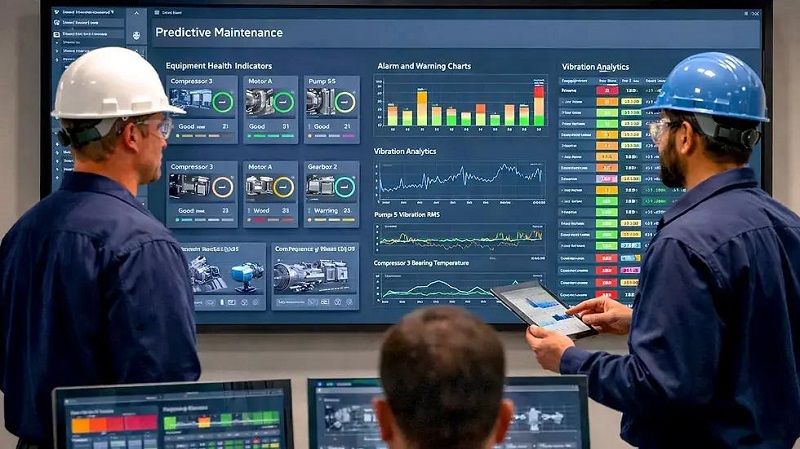
- Predictive maintenance
- Real-time industrial analytics
The partnership between Siemens and Guanglun Intelligence demonstrates how industrial software, automation technologies, and Physical AI can work together to build a stronger foundation for next-generation manufacturing and accelerate the practical deployment of intelligent robots across a wide range of industries.