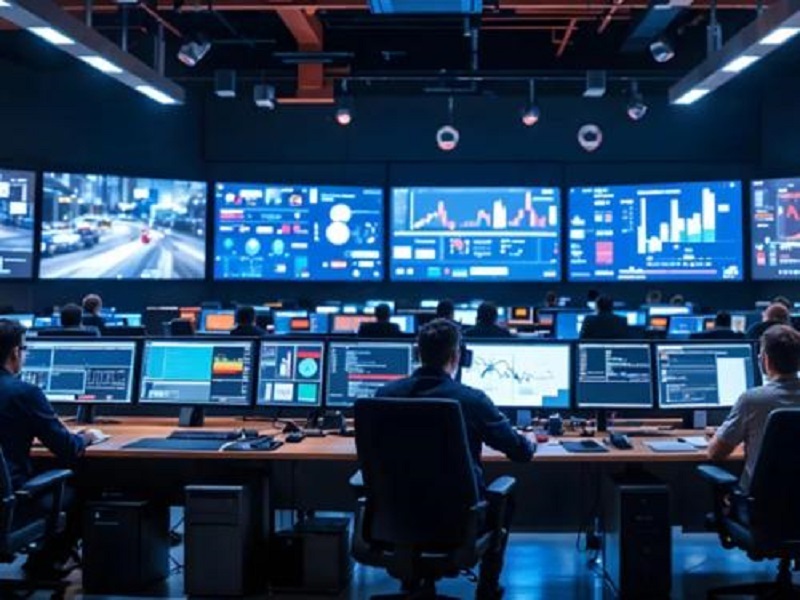
Rockwell Automation Advances Smart Manufacturing with Connected PLC Systems and Industrial Digitalization Technologies Connected Control Platforms, Industrial Software and Intelligent Automation Drive the Next Generation of Manufacturing
Rockwell Automation Strengthens Industrial Automation Development Through Smart Manufacturing Technologies
The global manufacturing industry is undergoing a rapid transformation as companies continue investing in digital technologies, connected automation systems and intelligent production solutions.
Manufacturers are increasingly looking for automation platforms that can provide reliable machine control while also supporting data collection, advanced analytics and real-time decision-making.
Rockwell Automation continues to play an important role in the development of modern industrial automation by focusing on connected control systems, intelligent manufacturing platforms and digital transformation technologies.
The evolution of industrial automation is changing the way factories operate. Traditional production environments were mainly focused on machine operation and process control. Today, manufacturers require automation systems that can connect equipment, analyze production data and improve overall operational performance.
Technologies such as advanced PLC platforms, industrial communication networks, manufacturing software, cloud connectivity and artificial intelligence are becoming essential elements of modern smart factories.
This transformation is creating new opportunities for industrial automation suppliers, system integrators and manufacturers worldwide.
Connected PLC Systems Become the Foundation of Smart Factories
Programmable Logic Controllers remain one of the most important technologies in industrial automation.
For decades, PLC systems have provided reliable control for manufacturing equipment, production lines and industrial processes.
However, the role of PLC technology is changing as factories become more connected.
Modern PLC systems are no longer only responsible for executing control programs. They are becoming intelligent automation platforms capable of communicating with multiple industrial devices and digital systems.
A connected PLC environment can support:
- Machine control
- Industrial networking
- Production data collection
- Remote monitoring
- Equipment diagnostics
- System integration
- Cybersecurity management
This development allows manufacturers to improve production visibility and make faster operational decisions.
In smart manufacturing environments, PLC systems act as a bridge between physical production equipment and digital management platforms.
Industrial Digitalization Improves Manufacturing Efficiency
Digital transformation has become a major priority for manufacturers across the world.
Companies are adopting digital technologies to improve production performance, reduce operational costs and increase competitiveness.
Industrial digitalization enables manufacturers to collect information from different parts of the production process.
This information can include:
- Machine operating conditions
- Production output
- Energy consumption
- Product quality data
- Maintenance information
- Equipment performance indicators
By analyzing this information, companies can identify improvement opportunities and optimize their operations.
For example, production managers can use real-time data to understand machine utilization rates, identify bottlenecks and improve production planning.
Maintenance teams can analyze equipment performance data to detect early warning signs and reduce unexpected downtime.
Industrial Communication Networks Support Connected Automation
Reliable communication is essential for modern automation systems.
As factories become more complex, industrial equipment must exchange information quickly and securely.
Modern automation architectures often include:
- Industrial Ethernet networks
- Remote I/O communication
- Industrial controllers
- Manufacturing software platforms
- Edge computing devices
- Cloud-based applications
These technologies allow different systems within a factory to work together.
A connected production environment enables better coordination between machines, controllers and management systems.
For example, a production line can automatically share operational data with monitoring platforms, allowing engineers to analyze performance and make improvements.
The development of industrial communication technologies is helping manufacturers create more transparent and efficient production environments.
FactoryTalk and Industrial Software Support Manufacturing Intelligence
Industrial software has become an important part of modern automation strategies.
Manufacturers increasingly require software platforms that can transform raw production data into useful information.
Industrial software solutions can support:
- Production monitoring
- Data visualization
- Equipment management
- Performance analysis
- Quality improvement
- Operational decision-making
Manufacturing intelligence helps companies understand what is happening across their production environment.
Instead of relying only on manual observation, engineers and managers can use real-time information to improve processes.
This creates a more proactive approach to manufacturing management.
Artificial Intelligence and Analytics Transform Industrial Operations
Artificial intelligence is becoming increasingly important in industrial automation.
AI technologies allow manufacturers to analyze large amounts of operational data and identify patterns that may not be visible through traditional methods.
Industrial AI applications include:
Predictive Maintenance
AI algorithms can analyze equipment conditions and identify possible failures before they occur.
Quality Optimization
AI-based inspection systems can improve product quality by detecting defects during production.
Energy Management
Data analysis can help companies reduce energy consumption and improve sustainability.
Production Optimization
AI can provide recommendations to improve manufacturing efficiency.
The combination of AI and automation technologies represents a major step toward autonomous manufacturing.
Cybersecurity Becomes a Critical Requirement for Industrial Automation
As industrial systems become more connected, cybersecurity has become an essential consideration.
Modern factories are increasingly connected with enterprise networks, remote monitoring systems and digital platforms.
This connectivity creates new challenges for protecting industrial operations.
Industrial cybersecurity strategies include:
- Secure network design
- User access management
- System monitoring
- Data protection
- Regular security improvements
Manufacturers must ensure that digital transformation does not compromise operational safety and reliability.
A secure automation environment is necessary for long-term smart manufacturing development.
Impact on Global PLC and Industrial Automation Markets
The growth of smart manufacturing continues to influence demand for industrial automation equipment.
As companies modernize their production facilities, they require a wide range of automation products and services.
Key product categories include:
- PLC processors
- Digital and analog I/O modules
- Communication modules
- Industrial control systems
- HMI devices
- Variable frequency drives
- Servo systems
- Industrial networking equipment
- Safety automation products
Many manufacturers choose phased automation upgrades instead of complete system replacement.
This creates continuous demand for automation components, replacement modules and system expansion solutions.
For international automation distributors and suppliers, the modernization of industrial facilities represents significant business potential.
Smart Manufacturing Creates New Opportunities for Automation Engineers
The development of connected automation systems is also changing the requirements for industrial professionals.
Modern automation engineers need knowledge across multiple technical areas, including:
- PLC programming
- Industrial networking
- Motion control
- Data communication
- Cybersecurity
- Industrial software
- System integration
The traditional separation between control engineering and information technology is becoming smaller.
Future automation projects will require professionals who can understand both machine-level control and digital manufacturing systems.
Future Trends of Industrial Automation Development
The industrial automation industry will continue evolving toward more intelligent, connected and flexible solutions.
Major future trends include:
Intelligent PLC Platforms
Controllers will provide stronger processing capabilities and deeper integration with digital applications.
Industrial AI Adoption
Artificial intelligence will support more automated decision-making and optimization.
Greater System Integration
PLC, robotics, sensors and software platforms will become more closely connected.
Sustainable Manufacturing
Automation technologies will help companies reduce energy usage and improve environmental performance.
Autonomous Production Systems
Factories will increasingly use intelligent machines capable of adapting to changing conditions.
These trends will shape the future direction of global manufacturing.