Rockwell Automation Expands Industrial AI Applications for PLC-Based Manufacturing Systems
Artificial Intelligence, Machine Learning and Industrial Data Analytics Transform Factory Automation
Artificial intelligence is becoming one of the most important technologies influencing the future development of industrial automation.
Manufacturers are increasingly exploring AI applications to improve production efficiency, reduce downtime and optimize industrial processes.
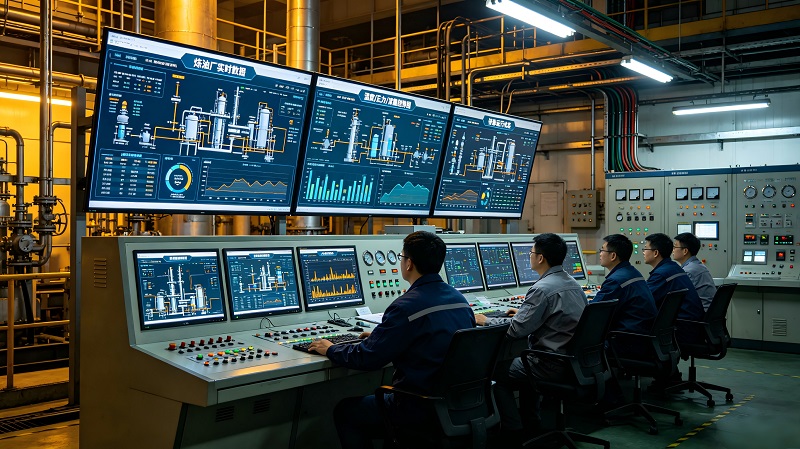
The combination of artificial intelligence with PLC systems, industrial networks and automation software is creating new possibilities for smart manufacturing.
Rockwell Automation and other industrial technology companies are continuing to develop solutions that connect traditional automation systems with advanced analytics.
Modern factories generate enormous amounts of operational data.
This data comes from:
- PLC controllers
- Sensors
- Robots
- Drives
- Machines
- Production systems
AI technologies can analyze this information and provide valuable insights for industrial operations.
AI Changes the Role of Industrial Automation Systems
Traditional automation systems are mainly designed to execute programmed instructions.
A PLC receives signals, processes logic and controls equipment.
AI introduces additional capabilities.
AI-based systems can:
- Analyze operating conditions
- Detect unusual patterns
- Predict equipment problems
- Recommend process improvements
This does not replace PLC control.
Instead, AI works together with automation systems to improve decision-making.
PLC Data Becomes Valuable for Artificial Intelligence
Industrial AI depends on high-quality data.
PLC systems are one of the most important sources of operational information.
PLCs collect data from:
- Sensors
- Motors
- Drives
- Production equipment
This information can reveal:
- Equipment performance
- Production trends
- Process changes
- Maintenance requirements
By analyzing PLC data, manufacturers can better understand their operations.
Predictive Maintenance Becomes More Intelligent
Maintenance is one of the biggest applications for industrial AI.
Traditional maintenance schedules are often based on fixed time periods.
AI-based predictive maintenance uses real operating information.
The system can analyze:
- Vibration
- Temperature
- Operating hours
- Load conditions
- Historical performance
This allows maintenance teams to take action before failures occur.
The result can be:
- Higher equipment availability
- Reduced downtime
- Lower maintenance expenses
AI Improves Industrial Quality Control
Quality control is another area where AI is becoming increasingly valuable.
Manufacturers are using AI together with machine vision systems to inspect products.
Applications include:
- Defect detection
- Product measurement
- Surface inspection
- Assembly verification
AI-based inspection systems can identify problems faster and more accurately than traditional manual inspection methods.
Smart Manufacturing Requires Better Connectivity
AI applications require strong industrial communication.
Modern factories connect:
- PLC systems
- Industrial Ethernet networks
- Sensors
- Edge devices
- Software platforms
Reliable communication allows data to move between different parts of the factory.
This creates the foundation for intelligent automation.
Edge AI Brings Intelligence Closer to Machines
Many industrial AI applications require fast response times.
Edge AI processes information near production equipment instead of sending everything to remote systems.
Benefits include:
- Faster decisions
- Lower network traffic
- Improved reliability
Edge AI can support:
- Real-time monitoring
- Machine vision
- Equipment analysis
Industrial Cybersecurity Becomes More Important
As factories become more intelligent, cybersecurity requirements increase.
AI-connected automation systems must protect:
- Production data
- PLC networks
- Industrial communication
- Remote access systems
Security must be included during system design.
The Future of AI-Driven Automation
Future factories will combine:
- PLC control
- Industrial AI
- Robotics
- Machine vision
- Digital twins
- Edge computing
Automation systems will become more adaptive and intelligent.
Manufacturers will move from reactive operations toward predictive and optimized production.
Opportunities for Industrial Automation Suppliers
The growth of AI-based automation creates demand for many industrial components.
Suppliers may provide:
- PLC controllers
- Communication modules
- Industrial computers
- Sensors
- HMIs
- Edge devices
The automation supply chain will continue evolving as factories become smarter.