Siemens and Battery-NY Advance Digital Automation Architecture for U.S. Battery Manufacturing
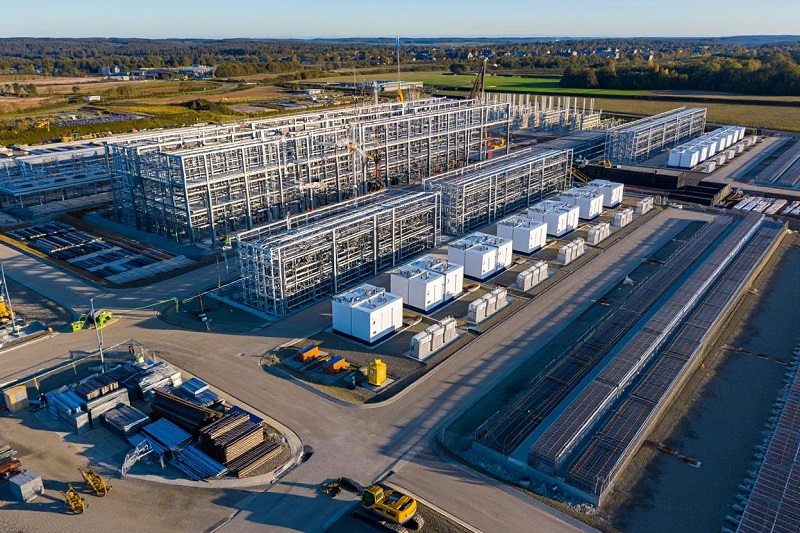
Siemens and Battery-NY are collaborating to establish a standardized automation and digital manufacturing architecture for a flexible battery development and pilot manufacturing facility in upstate New York.
Announced on September 9, 2026, the collaboration is focused on one of the major challenges facing battery manufacturers: integrating production equipment from multiple machine builders into a coordinated manufacturing environment.
Rather than treating automation, production data and digital engineering as separate systems, the project is designed to establish a common architecture from the beginning.
For the industrial automation sector, this development is significant because battery manufacturing requires close coordination between process equipment, PLC control, production data, quality systems and manufacturing engineering.
Battery Manufacturing Requires a Highly Integrated Automation Architecture
Battery production is not a single manufacturing process.
A battery cell production facility can involve multiple stages and specialized machines, each with its own control requirements.
Different equipment suppliers may use different PLC platforms, communication structures, data models and engineering approaches.
When these machines are integrated into a production line, the challenge extends beyond connecting physical equipment.
Manufacturers also need to determine how equipment information will be exchanged, how production data will be structured and how the overall factory will be monitored.
If every machine operates as an isolated system, scaling production can become increasingly complicated.
The Battery-NY project is therefore placing standardization at the center of its digital manufacturing strategy.
Siemens Battery Automation Framework
Battery-NY is building on the Siemens Battery Automation Framework, described as a modular toolbox intended to support standardization and accelerate engineering in battery cell manufacturing.
The framework provides a reference for establishing automation architecture across production equipment.
For system integrators, standardization can have several advantages.
A common approach to equipment interfaces can make it easier to integrate machines from different vendors.
It can also help engineering teams reuse automation concepts across multiple production lines.
Instead of developing every interface from the beginning, standardized structures can provide a starting point for future equipment.
This becomes particularly important in battery manufacturing because production technology continues to evolve rapidly.
A pilot factory must be able to accommodate new processes without requiring a complete redesign of its automation foundation.
IT and OT Convergence in Battery Production
Another important element of the project is the connection between information technology and operational technology.
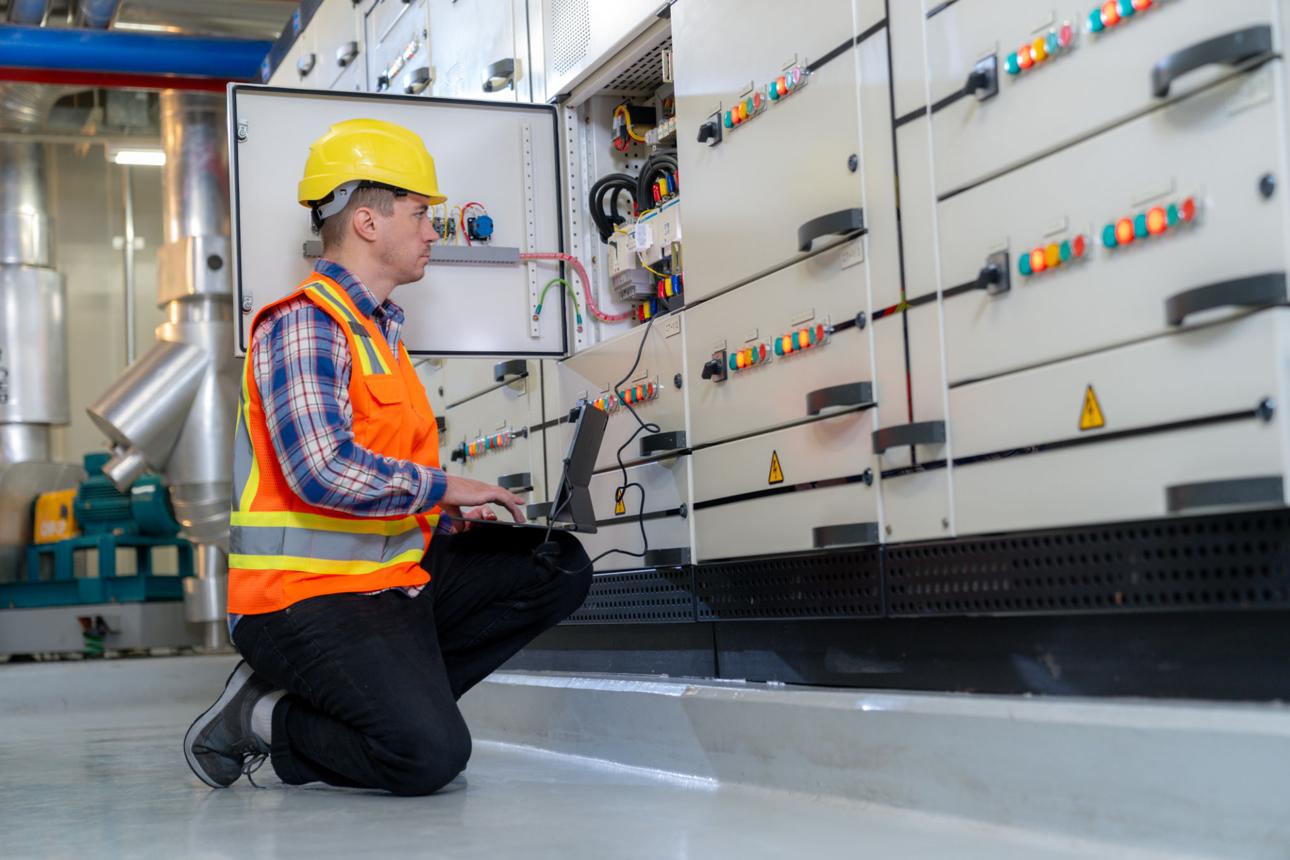
OT systems are responsible for controlling physical production equipment.
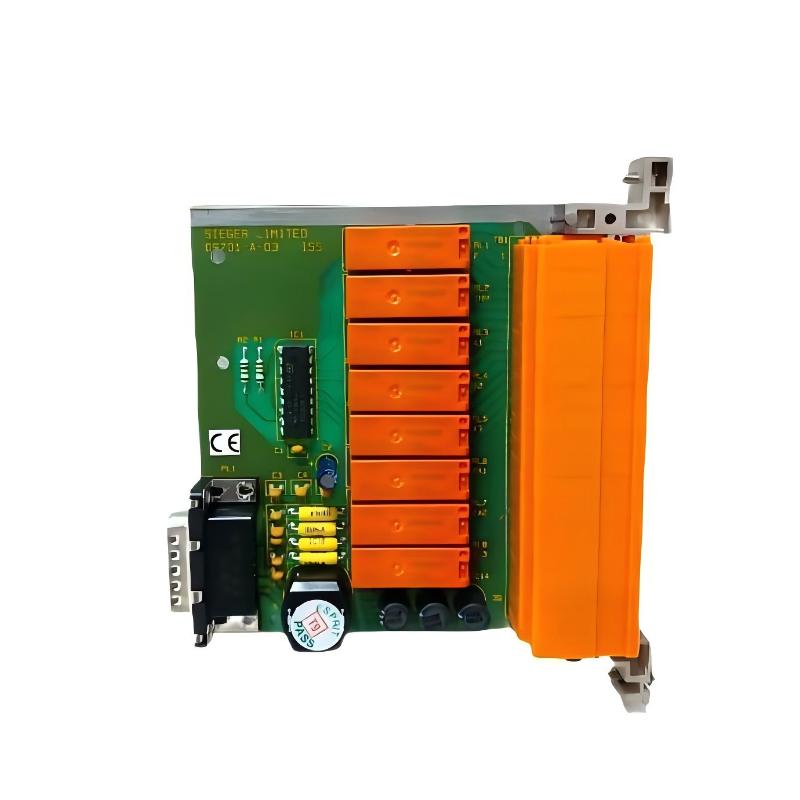
These systems include PLCs, industrial controllers, drives, sensors and machine-level networks.
IT systems, meanwhile, handle areas such as enterprise applications, data management, analytics and business processes.
Modern manufacturing increasingly requires information to move between these layers.
For example, a production machine may generate information about operating conditions, production quantities and quality measurements.
That information can then be used by manufacturing applications for analysis and process improvement.
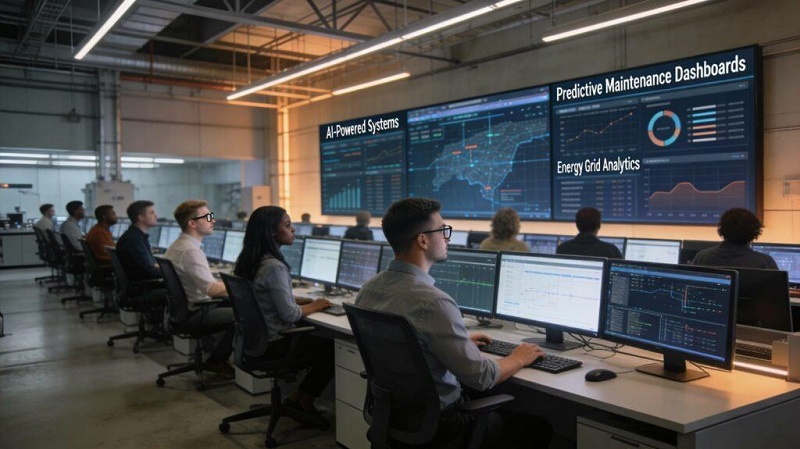
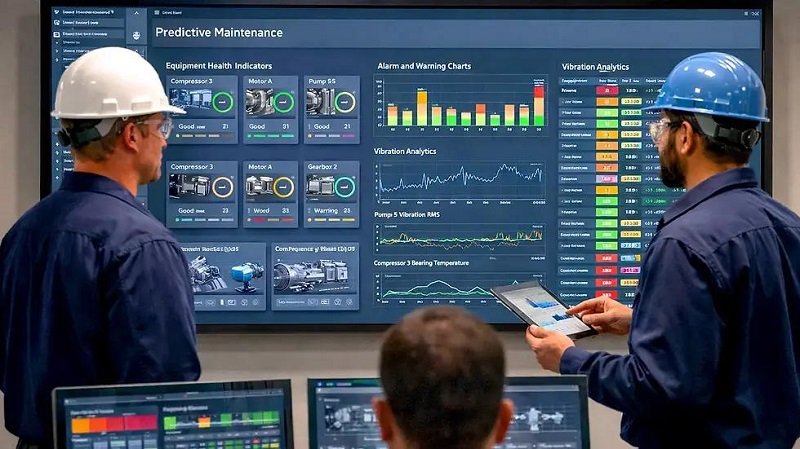
The Battery-NY project is designed around an IT/OT architecture that connects equipment-level control with a broader industrial data foundation.
Why Data Architecture Matters
Automation data is only useful when it can be understood and applied.
A production line may generate thousands of signals, but a data system needs to know what each signal represents.
A temperature value should be associated with the appropriate equipment, process step and time.
A production count should be connected with a specific product or manufacturing batch.
A quality measurement should be traceable to the relevant production conditions.
Without this context, simply collecting more data does not necessarily create more value.
The Battery-NY project therefore places emphasis on establishing an industrial data foundation as part of the automation architecture.
This can help provide a structured basis for future analytics and digital manufacturing applications.
Digital Twin Simulation as Part of the Manufacturing Strategy
Siemens will also provide a roadmap for Digital Twin simulation.
Digital twins allow manufacturers to create virtual representations of physical systems.
In a battery manufacturing environment, digital twin technology can support engineering and production planning before physical equipment is fully deployed.
For example, engineers can model production processes, evaluate equipment interactions and analyze potential bottlenecks.
This can reduce the need to discover every problem during physical commissioning.
Digital twins can also become useful after a factory is operational.
Production data can be compared with the expected behavior of the virtual model, providing additional information for optimization and engineering analysis.
Flexible Manufacturing Is a Major Requirement
Battery technology is evolving quickly.
New cell designs, electrode materials, production processes and manufacturing methods can require changes to production equipment.
A factory designed around one fixed production configuration may struggle to adapt.
Battery-NY is therefore pursuing a flexible and modular manufacturing environment.
The objective is to allow new battery technologies and manufacturing approaches to be introduced while the automation and software foundation evolves alongside them.
This is an important concept for modern industrial automation.
Flexibility should not mean that every part of the control system is redesigned for every product change.
Instead, standardized automation interfaces and modular engineering can allow selected sections of the production system to be changed without disrupting the entire architecture.
Equipment Integration Is a Key Engineering Challenge
One of the most practical issues in battery manufacturing is equipment integration.
Machine builders often specialize in individual manufacturing processes.
One supplier may provide coating equipment, another may provide cell assembly machinery, and another may provide testing systems.
Each machine may have its own control system.
The factory-level automation architecture must therefore coordinate these systems.
Industrial communication protocols, data models, equipment states and interface definitions become important.
Standardization can reduce ambiguity between machine suppliers and the factory engineering team.
It can also make future expansion easier.
Implications for PLC and Industrial Control Systems
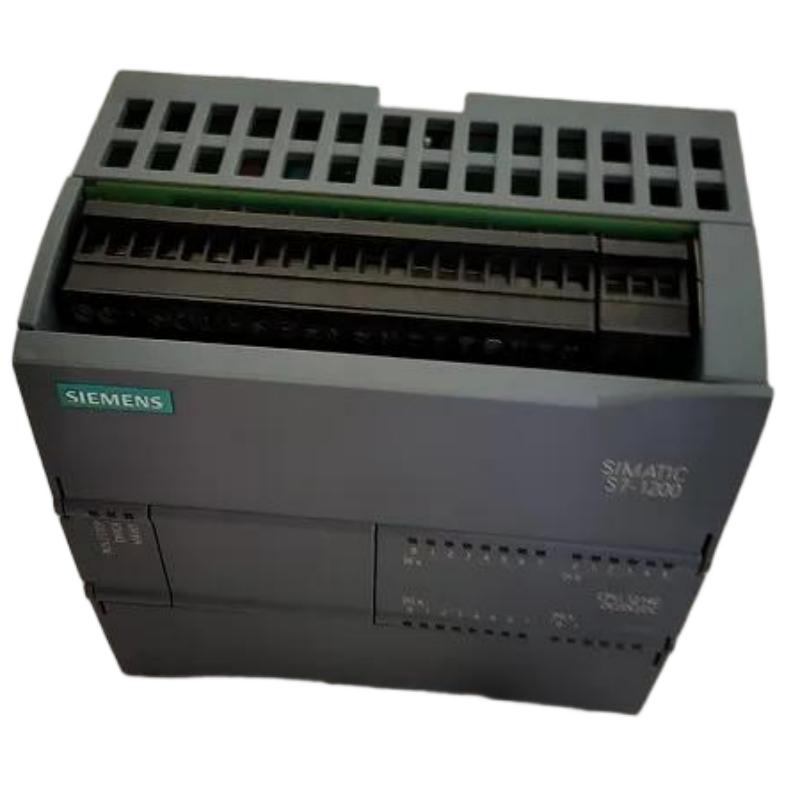
The development of a standardized battery manufacturing architecture does not reduce the importance of PLCs.
Instead, PLCs remain a fundamental layer of the production system.
Individual machines still require deterministic control for motors, valves, actuators, temperature systems and process sequences.
The difference is that these machine-level controllers need to participate in a larger digital architecture.
This can include higher-level manufacturing software, production databases, analytics platforms and digital twin systems.
Therefore, the future battery factory is likely to require both reliable machine control and standardized data communication.
Digitalization From the Beginning
Battery-NY's approach also highlights the importance of considering digitalization before equipment installation.
In traditional manufacturing projects, digital systems are sometimes added after machines have already been selected and installed.
This can create integration problems because the data architecture has to adapt to equipment that was not designed around a common standard.
Designing the automation and digital architecture from the beginning provides an opportunity to define common principles before the equipment is commissioned.
For a pilot facility, this can be especially valuable because lessons learned during the project may influence future manufacturing facilities.
Workforce Development and Engineering Knowledge
A flexible battery factory also requires engineers and technicians who understand both automation and digital manufacturing.
PLC programming remains important, but engineers increasingly need knowledge of industrial networking, data structures, cybersecurity, analytics and digital twins.
This creates a more multidisciplinary engineering environment.
Automation engineers may need to work closely with software engineers and manufacturing specialists.
The Battery-NY project is also intended to connect manufacturing technology with research translation and workforce learning.
That makes the facility relevant not only as a production site but also as an environment for developing practical manufacturing expertise.
Supporting the Scale-Up of Battery Production
Pilot factories play an important role between laboratory research and commercial manufacturing.
A battery technology may work successfully at laboratory scale but encounter completely different challenges when production volumes increase.
Automation becomes essential during this transition.
A scalable control architecture can help manufacturers move from experimental equipment toward repeatable production systems.
Standardized interfaces and data structures can also make it easier to transfer knowledge from a pilot line into future production facilities.
This can shorten the engineering cycle when new battery technologies move toward commercial production.
The Broader Trend Toward Standardized Smart Factories
The Siemens and Battery-NY collaboration reflects a broader trend in manufacturing.
Factories are increasingly being designed around standardized digital architectures rather than isolated production machines.
The objective is to create production environments where equipment, control systems, data and software can work together.
This approach is particularly important in industries experiencing rapid technology changes.
Battery manufacturing is one example, but similar requirements exist in semiconductor production, electronics, automotive manufacturing and advanced materials.
Conclusion
Siemens and Battery-NY are developing a standardized automation and digital manufacturing architecture for a flexible battery development and pilot manufacturing facility in New York.
The project combines automation, IT/OT architecture, industrial data management, Siemens Battery Automation Framework concepts and Digital Twin planning.
For industrial automation engineers, one of the most important aspects is the emphasis on standardization.
Modern manufacturing cannot rely only on individual machines operating correctly. Production equipment must increasingly operate as part of a coordinated system in which PLC control, industrial networks, manufacturing data and digital engineering work together.
As battery manufacturing continues to expand, flexible automation architectures could become an important factor in moving new battery technologies from research into scalable industrial production.