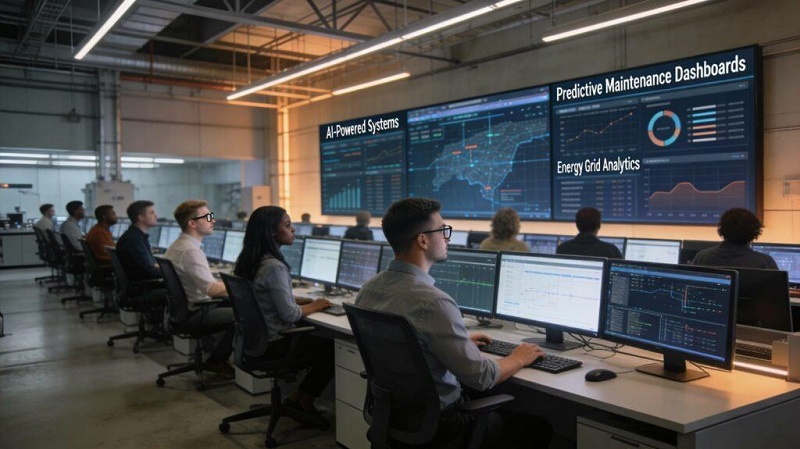
FANUC Expands Industrial Robotics and CNC Automation Technologies for Smart Manufacturing Intelligent Robots, CNC Systems and Factory Automation Technologies Accelerate the Development of Next-Generation Manufacturing
FANUC Strengthens Smart Manufacturing Through Advanced Robotics and Automation Technologies
The global manufacturing industry is undergoing a significant transformation as companies continue adopting intelligent robotics, CNC automation and digital manufacturing technologies.
Manufacturers across automotive, electronics, aerospace, metal processing and general industries are facing increasing demands for higher productivity, improved quality and greater production flexibility.
Traditional manufacturing systems based on manual operations and fixed automation are gradually evolving toward more intelligent production environments.
Modern factories require automation solutions that can provide:
- Higher production efficiency
- Improved manufacturing accuracy
- Reduced operational costs
- Flexible production capabilities
- Better equipment monitoring
FANUC continues expanding industrial automation technologies by integrating industrial robots, CNC control systems, factory automation equipment and intelligent manufacturing solutions.
The development of robotics and CNC automation reflects the broader trend toward smart factories where machines can communicate, analyze production information and improve operational performance.
Industrial Robotics Becomes a Key Technology for Modern Manufacturing
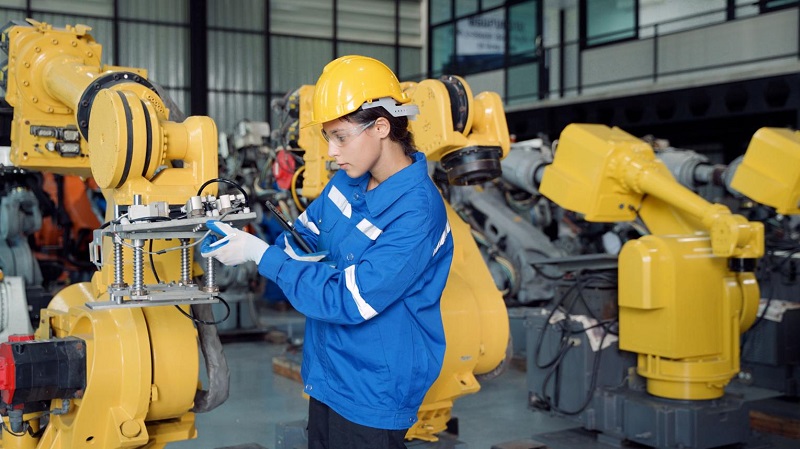
Industrial robots have become one of the most important technologies in advanced manufacturing.
Robotic automation is widely used in industries including:
- Automotive production
- Electronics manufacturing
- Aerospace components
- Metal fabrication
- Packaging
- Logistics
Modern industrial robots provide:
- High repeatability
- Fast operation
- Precise positioning
- Continuous production capability
- Flexible programming
Compared with traditional manual processes, robotic systems help manufacturers improve consistency and production efficiency.
Robots can perform repetitive or high-precision tasks while allowing human workers to focus on more complex activities.
Smart Robots Improve Flexible Production Capability
Manufacturing requirements are becoming increasingly diverse.
Customers demand more customized products and shorter delivery cycles.
This creates challenges for traditional production systems.
Intelligent robotic systems provide greater flexibility through:
- Automated program changes
- Multi-task capabilities
- Sensor integration
- Advanced communication
- Real-time monitoring
Flexible robotics allows factories to adapt faster to changing market requirements.
For example, automotive manufacturers can use robotic systems to support different vehicle models on the same production line.
This improves production efficiency while reducing equipment adjustment time.
CNC Automation Supports High-Precision Manufacturing
Computer Numerical Control technology remains essential for precision manufacturing.
CNC systems control machine tools used for:
- Metal cutting
- Milling
- Turning
- Grinding
- Precision component production
Modern CNC automation provides:
- High machining accuracy
- Improved process control
- Faster production cycles
- Reduced human intervention
Industries such as aerospace and medical equipment require extremely high manufacturing precision.
Advanced CNC systems help manufacturers achieve strict quality standards.
CNC Systems and Industrial Robots Create Integrated Manufacturing Solutions
The combination of CNC technology and robotics is becoming an important trend.
Integrated manufacturing systems connect:
- CNC machines
- Industrial robots
- Sensors
- PLC controllers
- Production management software
This integration enables:
- Automated material handling
- Machine loading and unloading
- Continuous production
- Improved workflow management
By combining robotics with CNC automation, manufacturers can create highly efficient production cells.
Artificial Intelligence Improves Robotic Automation Performance
Artificial intelligence is bringing new capabilities to industrial robotics.
AI technologies allow robots to analyze information and improve operation performance.
Industrial AI applications include:
Intelligent Vision Recognition
AI-powered vision systems help robots identify objects and perform complex tasks.
Predictive Maintenance
AI analyzes robot conditions and detects potential problems.
Production Optimization
AI improves manufacturing processes through data analysis.
Adaptive Control
AI helps robots adjust operations based on real-time conditions.
The integration of AI and robotics will continue transforming industrial production.
Machine Vision Enhances Robotic Accuracy and Quality Inspection
Machine vision technology plays an important role in modern robotic automation.
Vision systems allow robots to:
- Identify components
- Check product quality
- Locate objects
- Perform precision operations
Applications include:
- Assembly inspection
- Packaging verification
- Component positioning
- Defect detection
Machine vision improves automation accuracy and reduces production errors.
As manufacturing quality requirements increase, intelligent vision systems will become more common.
Industrial Communication Connects Smart Manufacturing Equipment
Modern factories require reliable communication between different automation devices.
Industrial networks connect:
- Robots
- CNC machines
- PLC systems
- Sensors
- HMIs
- Industrial computers
Connected automation systems provide:
- Real-time production information
- Faster troubleshooting
- Better equipment coordination
- Improved operational visibility
Industrial communication is becoming a fundamental technology for smart factory development.
Predictive Maintenance Improves Robot Reliability
Industrial robots operate continuously in many production environments.
Unexpected equipment failures can interrupt manufacturing operations.
Predictive maintenance technologies help companies monitor robot performance.
Systems can analyze:
- Motor conditions
- Operating cycles
- Temperature changes
- Mechanical performance
Benefits include:
- Reduced downtime
- Lower maintenance costs
- Improved equipment availability
- Longer robot service life
Data-driven maintenance is becoming an important part of modern automation management.
Energy Efficiency Becomes Important in Robotic Manufacturing
Manufacturers are increasingly focusing on reducing energy consumption.
Robotic automation systems support energy efficiency through:
- Optimized movement control
- Efficient operating cycles
- Intelligent standby management
- Better production scheduling
Energy-efficient automation helps companies reduce operational costs while supporting sustainability goals.
Global Demand for Robotics and Automation Equipment Continues Growing
The expansion of smart manufacturing is increasing demand for industrial automation products.
Companies require:
- Industrial robots
- CNC controllers
- Servo motors
- Motion control systems
- PLC modules
- Communication interfaces
- Industrial sensors
- Automation spare parts
Many manufacturers are upgrading existing production lines with advanced automation technologies.
This creates continuous opportunities for suppliers providing automation equipment and replacement components.
Human and Robot Collaboration Shapes Future Manufacturing
Collaborative automation is becoming an important trend.
Modern factories are moving toward environments where humans and robots work together.
Collaborative robotic systems provide:
- Improved workplace safety
- Flexible production support
- Easier operation
- Increased productivity
This approach combines human problem-solving abilities with robotic precision and efficiency.
Future Trends of Industrial Robotics and CNC Automation
The future of manufacturing automation will continue moving toward intelligent and connected systems.
Major trends include:
AI-Driven Robotics
Robots will become more intelligent and adaptive.
Autonomous Manufacturing Cells
Production systems will require less manual intervention.
Digital Twin Technology
Virtual simulation will improve production planning.
Advanced Vision Systems
Robots will achieve higher recognition capabilities.
Connected Smart Factories
Manufacturing equipment will operate as integrated systems.