Honeywell Advances Industrial Automation with AI-Powered Experion Control and Autonomous Operations
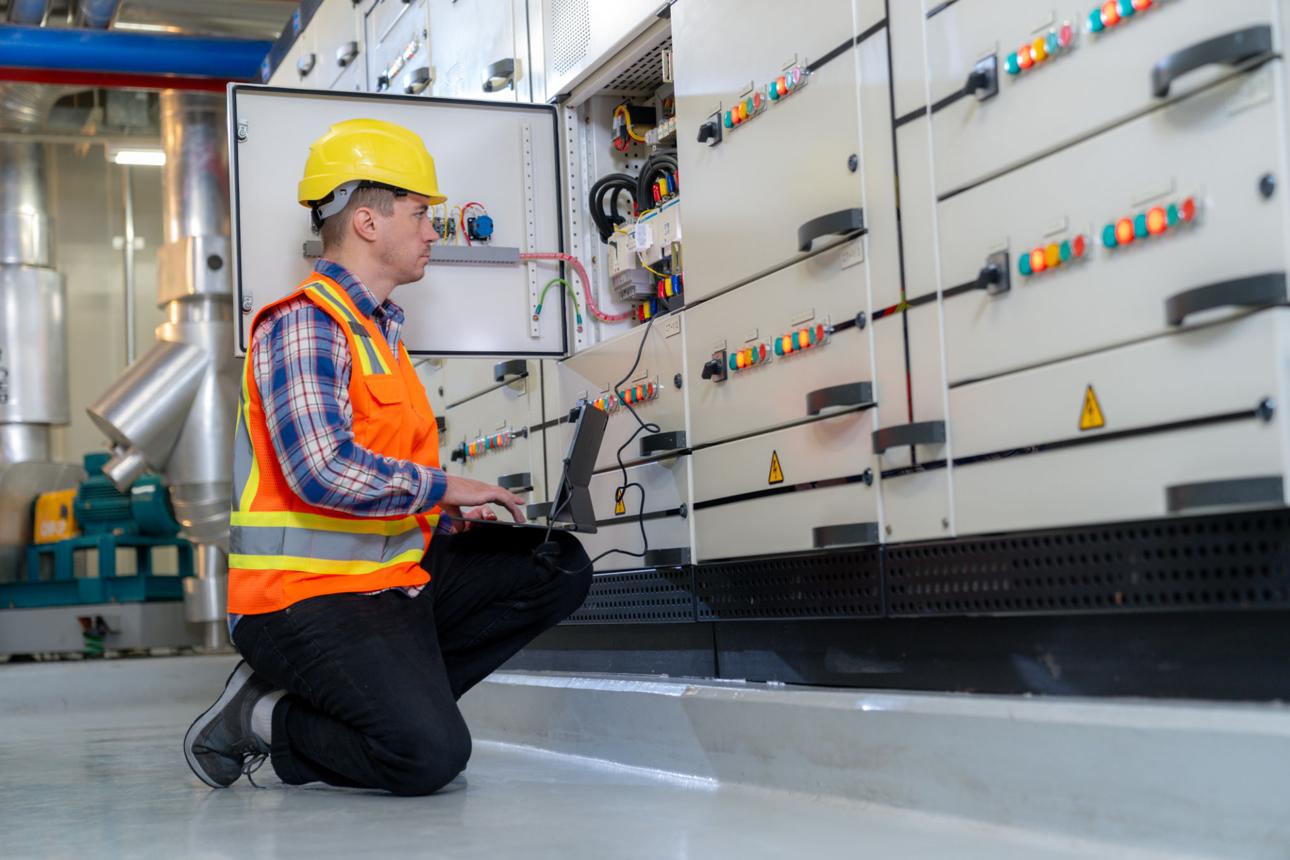
Suggested Image: Honeywell Experion control room with operators monitoring a modern process plant, industrial automation dashboards, AI analytics, DCS architecture, and connected field instruments in a large refinery or chemical facility.
Industrial automation is entering a new stage in which distributed control systems, process data, artificial intelligence, and operator decision support are becoming increasingly interconnected. Honeywell is continuing to develop this direction through its Experion automation platform, with recent developments focused on AI-assisted operations and the transition from conventional automation toward more autonomous industrial processes.
In 2026, Honeywell introduced Experion Cognition, an AI-enabled control system platform designed to support autonomous control room operations. The technology was demonstrated at Borouge International's Ruwais facility in Abu Dhabi, where the company explored how AI-based recommendations and automated decisions could help optimize production and improve operational reliability.
Honeywell Moves Beyond Traditional DCS Operation
For decades, DCS technology has provided the foundation for process control in industries such as oil and gas, refining, petrochemicals, chemicals, power generation, and other continuous-process applications.
Traditional control systems rely heavily on predefined control strategies, alarms, process measurements, operator experience, and engineering logic. These technologies remain essential, but modern industrial facilities generate significantly more operational data than conventional control architectures were designed to handle.
Honeywell's latest developments reflect a broader industry movement toward using this data to support operators and improve decision-making.
Instead of replacing the underlying DCS infrastructure, AI-enabled technologies can work with existing process information to identify operating conditions, detect potential problems, and recommend appropriate actions.
This approach is particularly relevant for large plants where thousands of measurements may be continuously generated by transmitters, analyzers, controllers, motors, valves, and other field devices.
Experion Cognition and AI-Assisted Operations
Honeywell's Experion Cognition represents an important step toward AI-supported process control.
The platform is designed to make recommendations and automated decisions that can help optimize production and improve safety within industrial facilities. Its development demonstrates how AI is increasingly being integrated into the control-room environment rather than operating as an isolated analytics application.
An AI-enabled control system can potentially evaluate large quantities of operational information much faster than a human operator can manually review individual trends.
For example, a process plant may simultaneously experience changes in:
Pressure
Temperature
Flow
Level
Valve position
Equipment condition
Energy consumption
Production rate
Alarm frequency
Process quality
When these signals are analyzed together, relationships between different operating variables can become easier to identify.
The result is a control environment in which operators can receive more contextual information instead of simply responding to individual alarms.
From Alarm Management to Predictive Decision Support
Alarm management has traditionally been one of the most important functions of a process control room.
However, a large industrial facility can generate substantial numbers of alarms, especially during abnormal operating conditions. Operators must determine which alarms require immediate attention and which are consequences of an underlying process event.
AI-based decision-support technologies can help analyze the relationship between alarms, process variables, historical operating patterns, and equipment behavior.
Honeywell previously launched Experion Operations Assistant as an AI-powered solution for real-time decision support and predictive intelligence. The solution is built around Experion PKS and is designed to help operators identify potential operational issues before they develop into more serious events.
This direction creates an important connection between conventional DCS functions and advanced analytics.
Implications for Process Industries
Honeywell's technology direction is particularly relevant to industries where continuous production and process stability are critical.
Oil and Gas
Refineries and upstream processing facilities can use advanced control and analytics to improve process stability, monitor equipment behavior, and optimize production.
Petrochemical and Chemical Plants
Chemical processes often involve complex interactions between temperature, pressure, flow, composition, and energy consumption. AI-assisted control can provide additional operational insight.
LNG
LNG facilities operate with highly integrated process systems where reliability and energy efficiency are critical. Honeywell's 2026 business results also indicated continued demand for LNG-related process automation projects.
Power and Utilities
Power facilities can benefit from continuous monitoring and advanced control strategies to balance efficiency, reliability, and operational requirements.
Honeywell's Broader Automation Strategy
Honeywell's corporate structure also changed significantly in 2026. Following the completion of its aerospace spin-off, Honeywell Technologies became an independent company focused on building, industrial, and process markets.
The company subsequently completed the sale of its Productivity Solutions and Services and Warehouse and Workflow Solutions businesses, further emphasizing its focus on automation and autonomy.
This strategic direction is relevant to industrial automation customers because it places greater emphasis on technologies such as process control, industrial sensing, measurement, software, and autonomous operations.
What This Means for Existing Experion Systems
For plants already using Honeywell Experion infrastructure, the development of AI-enabled capabilities does not necessarily mean that the entire automation architecture needs to be replaced.
A more practical path is progressive modernization.
Existing controllers, I/O systems, instrumentation, historians, engineering stations, and operator workstations can remain part of the control architecture while additional software and analytics capabilities are introduced.
This can help industrial companies modernize their operations without treating automation migration as a single large-scale project.
The Role of Industrial Data
The effectiveness of AI-based automation depends heavily on data quality.
Industrial facilities must maintain reliable process measurements, consistent tag structures, accurate historical data, appropriate alarm configuration, and secure communication between automation systems.
For this reason, AI adoption does not eliminate the importance of PLCs, DCS controllers, I/O modules, industrial networks, sensors, and field instruments.
Instead, these technologies become the data foundation for more advanced automation.
Cybersecurity and Autonomous Operations
As control systems become more connected and software-driven, cybersecurity becomes increasingly important.
An autonomous control environment must be designed so that automated decisions operate within carefully defined engineering boundaries.
Industrial organizations therefore need to consider:
Network segmentation
Access control
System redundancy
Secure remote access
Controller protection
Software authentication
Data integrity
Change management
Backup and recovery
The future of industrial AI will depend not only on intelligence but also on predictable and secure operation.
Looking Ahead
Honeywell's latest automation developments show how the role of the DCS is changing.
The modern control system is increasingly becoming a platform for combining process control, historical information, real-time analytics, AI-based recommendations, and operator support.
The objective is not simply to automate individual control loops. The broader goal is to create industrial environments capable of understanding operating conditions and assisting personnel in making faster and better-informed decisions.
For process industries, this transition could create new opportunities to improve plant availability, reduce unplanned downtime, optimize energy consumption, and increase operational consistency.
Honeywell's Experion ecosystem therefore remains relevant not only as a traditional DCS platform, but also as part of the industry's transition toward AI-assisted and increasingly autonomous industrial operations.
Conclusion
Honeywell's 2026 developments demonstrate a clear expansion of industrial automation toward AI-supported control and autonomous operations. Experion Cognition, Experion Operations Assistant, and the broader Experion ecosystem illustrate how process automation is evolving from conventional control toward data-driven operational intelligence.
For industrial automation users, the most important development is not simply the introduction of AI. It is the integration of AI with established DCS infrastructure, process data, operator workflows, and industrial control practices.
This approach creates a pathway for existing plants to gradually move from traditional automation toward more intelligent, connected, and autonomous operations.