Yokogawa Expands Process Automation with OpreX, Integrated Control and Hydrogen Industry Solutions
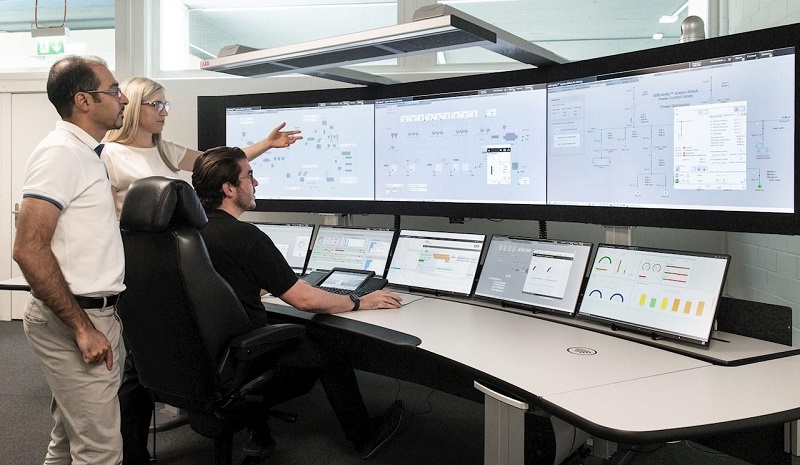
Suggested Image: Yokogawa CENTUM DCS control room connected to a hydrogen production and transportation facility, showing process control screens, industrial instrumentation, safety systems, and integrated automation architecture.
Yokogawa Electric continues to expand its position in process automation as industrial companies modernize control systems, improve operational visibility, and develop new energy infrastructure.
During 2026, Yokogawa announced several developments across process control, integrated automation, cybersecurity, hydrogen applications, and industrial software. These activities demonstrate how modern automation is expanding beyond traditional DCS control toward connected and integrated operational platforms.
One of the latest developments came in September 2026, when Yokogawa announced orders from Kawasaki Heavy Industries to supply integrated automation systems for the world's largest liquefied hydrogen carrier and hydrogen-fueled vessels.
This project highlights the growing role of automation technology in emerging hydrogen infrastructure.
Yokogawa and the Evolution of Process Automation
Yokogawa has long been associated with process control systems such as CENTUM and safety systems such as ProSafe-RS.
Modern process plants, however, require more than basic control-loop management.
Operators need access to production information, equipment status, alarms, historical trends, maintenance information, safety data, and operational performance indicators.
This is driving the development of integrated automation environments in which DCS, safety systems, information servers, analytics, and industrial networks operate as parts of a broader architecture.
Yokogawa's OpreX portfolio reflects this evolution.
OpreX Collaborative Information Server
In June 2026, Yokogawa announced enhancements to its OpreX Collaborative Information Server.
The development is aimed at expanding integrated operations capabilities and supporting advanced plant operations.
Information management is becoming increasingly important because industrial facilities generate large volumes of data from multiple automation layers.
A modern plant may include:
DCS controllers
Safety instrumented systems
PLCs
SCADA platforms
Field instruments
Analyzers
Asset management systems
Historians
Maintenance applications
Energy monitoring systems
A collaborative information layer can help organize this information and make it more accessible to personnel across different operational functions.
Integrated Control and Safety
Another important development in 2026 was Yokogawa's cybersecurity certification for its integrated control and safety system technologies, including CENTUM VP, ProSafe-RS, and related software.
The relationship between control and safety is particularly important in process industries.
A refinery, LNG facility, chemical plant, or hydrogen installation may need to coordinate normal process control with safety functions designed to protect personnel, equipment, and the environment.
Modern automation architecture therefore increasingly requires both operational efficiency and security.
Open Automation and O-PAS
Yokogawa also obtained certification for an OPC UA profile associated with the O-PAS standard in 2026. The company described this as an industry-first achievement.
Open and interoperable automation is an important topic for the future of industrial control.
Traditional automation systems have often been closely associated with specific vendors and proprietary architectures.
Open standards can potentially make it easier to integrate equipment and software from different suppliers.
For system integrators and industrial end users, interoperability can simplify future expansion and modernization.
Hydrogen Becomes an Important Automation Application
Hydrogen is creating new requirements for industrial automation.
Hydrogen production, storage, transportation, and utilization involve complex systems that require monitoring and control of pressure, temperature, flow, safety conditions, and energy consumption.
Yokogawa's September 2026 agreement with Kawasaki Heavy Industries is particularly relevant because it involves integrated automation systems for a large liquefied hydrogen carrier and hydrogen-fueled vessels.
Marine hydrogen applications introduce additional challenges.
Automation systems must operate reliably in demanding environments while coordinating propulsion-related systems, cargo systems, safety functions, and supporting equipment.
Automation for LNG and New Energy Projects
Yokogawa is also expanding its project involvement in LNG and other energy infrastructure.
In June 2026, the company announced that it had been awarded a Main Automation Contractor role for the Commonwealth LNG project. In August, Frontieras North America selected Yokogawa as Main Automation Contractor for its Mason County facility.
The Main Automation Contractor model can involve broad responsibilities covering automation architecture, control systems, instrumentation, integration, engineering, and project execution.
This reflects the increasing importance of automation as a central part of large-scale industrial projects.
The Importance of DCS Modernization
Many industrial facilities around the world continue to operate legacy control systems.
Replacing an entire DCS can be expensive and operationally disruptive, so modernization often takes place in stages.
A modernization strategy may include:
Controller upgrades
I/O migration
Operator station modernization
Engineering system upgrades
Historian improvements
Network modernization
Cybersecurity improvements
Advanced control
Asset monitoring
Integration with enterprise systems
Yokogawa's continuing development of CENTUM and OpreX technologies provides an example of how process automation vendors are adapting their platforms for this environment.
Industrial Cybersecurity
As DCS platforms become increasingly connected, cybersecurity is no longer an isolated IT concern.
Industrial networks require protection against unauthorized access, configuration changes, malware, and communication disruptions.
For process plants, cybersecurity must also consider availability.
A conventional office computer can often be restarted or replaced relatively easily. A process control system may operate continuously for years and control equipment worth millions of dollars.
Therefore, cybersecurity strategies need to account for both digital threats and process continuity.
Data and Operational Excellence
Yokogawa's recent automation developments also highlight the growing importance of operational information.
Industrial data becomes more valuable when it can be connected to actual operating decisions.
For example, a temperature trend alone provides limited value. When combined with equipment condition, production rate, energy consumption, and historical operating conditions, the same information can provide much greater insight.
This is one reason why collaborative information systems and integrated automation architectures are becoming increasingly important.
Future Role of Yokogawa Automation
The next generation of process automation is likely to combine several technologies rather than rely on a single control platform.
DCS technology will continue to provide deterministic process control.
Safety systems will continue to protect critical operations.
Industrial networks will connect field devices and controllers.
Information platforms will organize plant data.
Analytics and AI will increasingly assist operators and engineers.
Cybersecurity technologies will protect the complete environment.
Yokogawa's 2026 developments fit into this broader transition.
Conclusion
Yokogawa's latest activities show how process automation is expanding into new industrial areas while continuing to strengthen its established DCS technologies.
The company's work with CENTUM, ProSafe-RS, OpreX, open automation standards, LNG projects, and hydrogen transportation demonstrates the increasing integration of control, safety, information management, and industrial digitalization.
For process industries, this evolution provides a pathway toward automation architectures that are more connected, interoperable, secure, and adaptable.
As LNG, hydrogen, chemicals, refining, and other process industries modernize their facilities, integrated automation will remain an important foundation for safe and efficient plant operation.