Ovation DCS Advances Power Plant Automation with Digital Control, Grid Modernization and Cybersecurity Solutions
Introduction
The global energy industry is undergoing a major transformation as power producers face increasing pressure to improve efficiency, reliability, cybersecurity, and operational flexibility.
Distributed Control Systems (DCS) remain a critical technology for modern power generation facilities because they provide centralized monitoring, automatic control, and advanced diagnostics for complex industrial processes.
Ovation DCS, developed by Emerson Power & Water Solutions, continues to support power and water industries by providing specialized automation technologies for generation assets, renewable energy integration, and critical infrastructure management.
As energy systems become more digital and decentralized, Ovation is evolving from a traditional plant control platform into a broader automation solution supporting intelligent operations, data analysis, and secure connectivity.
Ovation DCS and Modern Power Generation Automation
Power plants require highly reliable automation systems because production interruptions can affect electricity supply, industrial operations, and economic activity.
A modern power plant contains thousands of measurement points and control functions, including:
Turbine control
Boiler control
Generator monitoring
Fuel management
Emissions monitoring
Electrical balance-of-plant systems
Alarm management
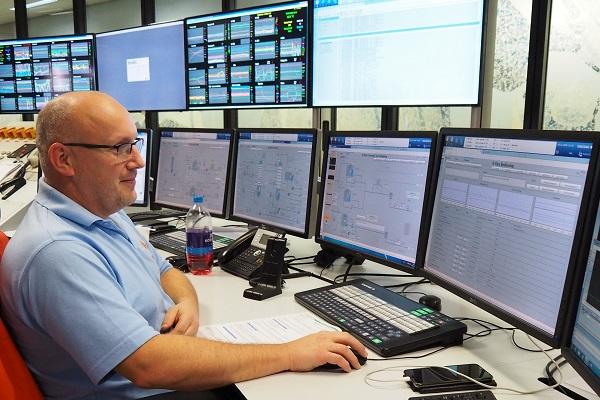
The DCS coordinates these processes and provides operators with real-time information about plant conditions.
Ovation DCS has been widely applied in power generation environments because of its focus on energy industry requirements.
Unlike general-purpose automation platforms, power-focused DCS solutions must address unique challenges including dynamic load changes, equipment protection, grid requirements, and long equipment lifecycles.
Supporting Energy Transition and Grid Modernization
The energy industry is moving toward a more flexible power generation model.
Traditional power plants are increasingly operating alongside:
Renewable energy sources
Battery energy storage systems
Distributed generation
Smart grid technologies
This creates new challenges for control systems.
Power plants must respond more quickly to changing demand conditions.
Operators need better visibility into equipment performance.
Automation systems must support more complex operating strategies.
Ovation DCS technologies are designed to help power producers manage these changing requirements through advanced monitoring, control, and integration capabilities.
Digital Transformation in Power Plant Operations
Digital transformation is becoming a key strategy for improving power plant performance.
Modern operators are using:
Real-time operational data
Advanced analytics
Predictive maintenance
Remote monitoring
Asset performance management
to improve decision-making.
A DCS provides a valuable source of operational information.
Data collected from turbines, boilers, generators, and auxiliary systems can help engineers analyze performance trends and identify improvement opportunities.
For example, abnormal temperature trends may indicate equipment degradation.
Changes in vibration patterns may suggest mechanical problems.
Unusual efficiency changes may indicate process optimization opportunities.
Predictive Maintenance for Power Assets
Power generation equipment represents a significant investment.
Unexpected failures can result in:
Production losses
Expensive repairs
Extended downtime
Reduced grid reliability
Predictive maintenance uses operational data to identify potential problems before equipment failure occurs.
Important monitoring parameters include:
Temperature
Pressure
Vibration
Equipment operating hours
Performance indicators
When combined with advanced analytics, this information helps maintenance teams make better decisions.
Instead of relying only on fixed maintenance schedules, operators can prioritize equipment based on actual operating conditions.
Cybersecurity Becomes Essential for Energy Automation
As power plants become more connected, cybersecurity has become a fundamental requirement.
Modern energy facilities may include:
DCS networks
PLC systems
Engineering workstations
Remote monitoring platforms
Enterprise connections
Protecting these systems requires a comprehensive cybersecurity strategy.
Important practices include:
Network segmentation
Controlled remote access
User authentication
System monitoring
Configuration management
Regular security updates
For critical infrastructure, cybersecurity must be considered throughout the automation lifecycle.
Ovation DCS and Renewable Energy Integration
Renewable energy growth is changing how power systems operate.
Wind and solar generation introduce variability because output depends on environmental conditions.
This requires flexible control strategies and improved grid coordination.
Automation systems can help manage:
Renewable generation assets
Hybrid power systems
Energy storage integration
Grid stability functions
The future power plant will likely combine multiple energy sources with advanced automation platforms.
The Future of Power Automation
The next generation of power automation will combine:
DCS technology
Artificial intelligence
Digital twins
Industrial cybersecurity
Advanced analytics
Cloud and edge computing
However, reliability remains the most important requirement.
Power facilities must continue operating safely and consistently while adopting new digital technologies.
Automation platforms like Ovation demonstrate how specialized DCS solutions are adapting to the changing energy landscape.
Conclusion
Ovation DCS continues to play an important role in power and water automation by supporting reliable control, digital transformation, and energy modernization.
As power producers face new challenges from renewable integration, cybersecurity requirements, and operational efficiency goals, advanced control systems will remain essential.
For DCS engineers, power plant operators, and automation professionals, the evolution of Ovation represents the broader transformation of industrial control toward smarter, more connected, and more resilient energy systems.