ABB Robotics Showcases Imitation Learning, Vision Intelligence and AI Agents at 2026 China International Industry Fair
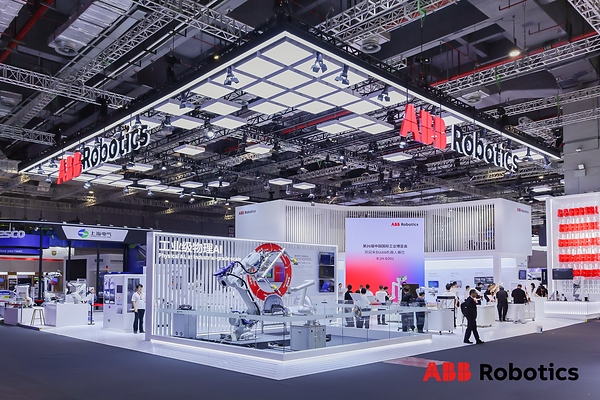
October 14, 2026 — ABB Robotics presented its latest intelligent robotics technologies at the 2026 China International Industry Fair (CIIF), focusing on the integration of artificial intelligence, machine vision, imitation learning and AI agent technologies to accelerate the development of next-generation industrial automation.
The exhibition demonstrated how industrial robots are evolving from traditional programmable machines into more intelligent systems capable of perception, learning, decision-making and flexible interaction.
ABB Robotics showcased several technology directions including AI-assisted robot programming, vision-based perception, intelligent robot applications and digital simulation technologies. These developments reflect the broader transformation of industrial robotics from fixed automation toward adaptive and data-driven manufacturing.
As manufacturers worldwide face increasing demands for flexible production, labor efficiency improvement and faster product changeovers, AI-enabled robotics is becoming an important technology trend in industries such as automotive, electronics, logistics, new energy and general manufacturing.
AI Is Driving the Next Generation of Industrial Robots
Industrial robots have traditionally relied on pre-programmed instructions. Engineers define robot movements, trajectories and production sequences through specialized programming tools.
This approach remains highly effective for stable, high-volume manufacturing environments. However, modern manufacturing is becoming increasingly complex.
Products are changing faster, production lines require greater flexibility, and manufacturers need robots that can adapt to different tasks with less engineering effort.
Artificial intelligence is changing this model.
At CIIF 2026, ABB Robotics highlighted how AI technologies can enhance robot capabilities in several areas:
- Robot learning from human demonstrations
- Intelligent object recognition
- Vision-based decision-making
- Automated programming assistance
- Digital simulation and optimization
- Autonomous task execution
The goal is not to replace traditional robot programming completely, but to reduce deployment complexity and enable robots to handle more dynamic production scenarios.
Imitation Learning Helps Robots Acquire New Skills
One of the key technologies highlighted by ABB Robotics is imitation learning.
Imitation learning allows robots to learn behaviors by observing demonstrations from humans or experienced operators.
Instead of manually programming every movement point, engineers can provide examples of how a task should be performed. The AI system then analyzes these demonstrations and generates robot behaviors.
In industrial applications, imitation learning could support tasks such as:
- Assembly operations
- Material handling
- Machine tending
- Quality inspection
- Pick-and-place operations
- Complex manipulation processes
For example, an operator may demonstrate how to handle a component, position a part or perform a repetitive operation. The robot system can use this information as training data to improve task execution.
However, industrial implementation still requires careful validation.
Unlike consumer AI applications, factory robots must meet strict requirements for:
- Safety
- Repeatability
- Accuracy
- Production stability
- Equipment integration
Therefore, imitation learning is expected to become an additional tool for robot programming and optimization rather than a complete replacement for engineering processes.
Research in robotics has shown that imitation learning can help autonomous systems acquire control strategies from expert demonstrations, particularly in complex manipulation tasks. arXiv
Vision Intelligence Enables More Flexible Robot Applications
Machine vision is another important technology area presented by ABB Robotics.
Traditional industrial robots often operate in highly structured environments where every object position is precisely controlled.
AI-based vision systems allow robots to better understand their surroundings.
By combining cameras, image processing algorithms and artificial intelligence models, robots can identify:
- Object locations
- Product differences
- Assembly conditions
- Surface defects
- Workpiece orientation
- Environmental changes
This capability is especially valuable for industries where products vary frequently.
For example:
Electronics Manufacturing
Robots can identify different components and adjust handling strategies according to product variations.
Automotive Production
Vision systems help robots recognize parts and improve flexible assembly processes.
Logistics
AI vision enables robots to identify packages, materials and changing warehouse conditions.
New Energy Manufacturing
Battery and energy-storage industries require high precision and traceability, creating demand for intelligent inspection and handling solutions.
ABB has continued developing robotics solutions that combine robot control, vision systems and digital engineering tools to support flexible automation applications.
AI Agents Bring New Possibilities to Robot Operation
Another emerging technology direction is the use of AI agents in industrial automation.
Unlike traditional automation software that follows predefined rules, AI agents are designed to interpret information, analyze situations and support decision-making.
In robotics, AI agents could potentially help with:
- Understanding production instructions
- Generating robot task plans
- Optimizing production sequences
- Assisting operators
- Supporting troubleshooting
- Connecting robots with enterprise systems
For example, an engineer could describe a production requirement using natural language, and an AI assistant could help generate a robot programming workflow.
However, industrial AI agents still need to operate within strict industrial boundaries.
A factory robot cannot simply make unrestricted decisions. Industrial environments require:
- Safety verification
- Human supervision
- Process validation
- Cybersecurity protection
- Reliable communication
Therefore, AI agents are expected to initially serve as intelligent assistants that improve engineering efficiency and operational support.
The industrial robotics industry is increasingly exploring multimodal AI systems that combine language models, vision models and robot control capabilities. 维基百科
ABB RobotStudio Supports Digital Simulation and AI Development
Digital simulation is another important foundation for intelligent robotics.
ABB's RobotStudio platform allows engineers to create digital models of robot cells before physical deployment.
Simulation technology helps manufacturers:
- Test robot movements
- Optimize production layouts
- Reduce commissioning time
- Identify potential problems before installation
- Train operators
With AI technologies becoming increasingly important, simulation environments are also becoming valuable for robot training.
Virtual environments can provide large amounts of operational data without interrupting physical production.
This is particularly useful for AI-based robotics because intelligent systems require significant amounts of data for learning and optimization.
The combination of simulation, AI and real-world robotics creates a development cycle:
Simulation → Training → Testing → Industrial Deployment → Continuous Optimization
This approach can help manufacturers accelerate automation projects while reducing engineering risks.
ABB Robotics Focuses on Flexible Manufacturing Needs
The appearance of ABB Robotics at CIIF 2026 reflects several major trends in global manufacturing.
Manufacturers are facing:
- Rising labor costs
- Demand for customized products
- Shorter product cycles
- Higher quality requirements
- Pressure for energy efficiency
- Need for intelligent production management
Traditional fixed automation systems remain important, but flexible robotics is becoming increasingly valuable.
ABB's AI robotics strategy focuses on helping companies achieve more adaptable automation through:
- Intelligent robots
- Digital engineering
- Vision technology
- Data analytics
- AI-assisted programming
These technologies are particularly relevant for industries where product variety is increasing and production requirements change frequently.
Industrial AI Requires Integration With Existing Automation Systems
Although AI attracts significant attention, successful industrial deployment depends on integration with existing automation infrastructure.
Industrial robots do not operate independently.
They usually work together with:
- PLC systems
- Motion controllers
- Industrial networks
- Sensors
- Machine vision systems
- Manufacturing execution systems (MES)
- Enterprise software platforms
For example, a robot used in an automotive production line must communicate reliably with production controllers, safety systems and quality inspection equipment.
This means future intelligent factories will require cooperation between AI technologies and traditional industrial automation platforms.
ABB's experience across robotics, automation and digital solutions provides a foundation for integrating these technologies into industrial environments.
AI Robotics Development Faces Practical Challenges
Despite rapid progress, AI-enabled industrial robotics still faces several challenges.
Data Quality
AI models require reliable training data. Collecting and organizing industrial robot data remains a major task.
Safety Requirements
Industrial robots operate around people and expensive equipment. Safety validation remains essential.
Deployment Costs
Advanced AI systems may require additional computing hardware, sensors and engineering resources.
Industrial Reliability
Manufacturers require stable operation over thousands of production hours.
Application Specificity
A robot trained for one task may not automatically perform another task without additional training.
Therefore, the future of industrial AI robotics will likely be a gradual evolution rather than an immediate replacement of existing automation methods.
ABB Robotics and the Future of Intelligent Manufacturing
The technologies demonstrated by ABB Robotics at the 2026 China International Industry Fair show the direction of industrial robotics development.
The future industrial robot will not only execute programmed movements. It will increasingly combine:
- Mechanical precision
- Artificial intelligence
- Computer vision
- Digital simulation
- Data analysis
- Human-machine collaboration
Imitation learning can help robots acquire skills faster.
Vision intelligence can allow robots to better understand their environment.
AI agents can provide new ways for engineers and operators to interact with automation systems.
Together, these technologies could make industrial robots more flexible, easier to deploy and better suited for complex manufacturing environments.
ABB Robotics' participation at CIIF 2026 demonstrates the company's continued focus on combining robotics expertise with emerging AI technologies.
For manufacturers seeking to improve production flexibility and automation efficiency, intelligent robotics represents an important development path toward the next generation of smart factories.
Key Takeaways
- ABB Robotics showcased AI-enabled robotics technologies at the 2026 China International Industry Fair.
- The company highlighted imitation learning, machine vision and AI agent applications.
- AI is helping industrial robots move from fixed automation toward more flexible systems.
- Vision intelligence improves robot perception and adaptability.
- AI agents may support robot programming, troubleshooting and production optimization.
- Digital simulation remains an important foundation for intelligent robot deployment.
- Industrial AI adoption requires integration with PLCs, automation systems and safety technologies.
- Future factories will combine traditional automation reliability with AI-driven intelligence.