Schneider TCSEGDB23F24FA Modbus Plus Proxy Module Configuration & Integration Guide for PLC Systems
Schneider TCSEGDB23F24FA proxy module configuration issues are usually caused by IP setup mistakes, Modbus Plus addressing conflicts, or incorrect gateway mapping rather than hardware failure. In real Modicon M340 integration projects, most communication failures occur during initial commissioning when engineers misunderstand the role of this module as a protocol bridge between Modbus TCP and Modbus Plus networks.
Schneider TCSEGDB23F24FA Proxy Module Role in Industrial Automation
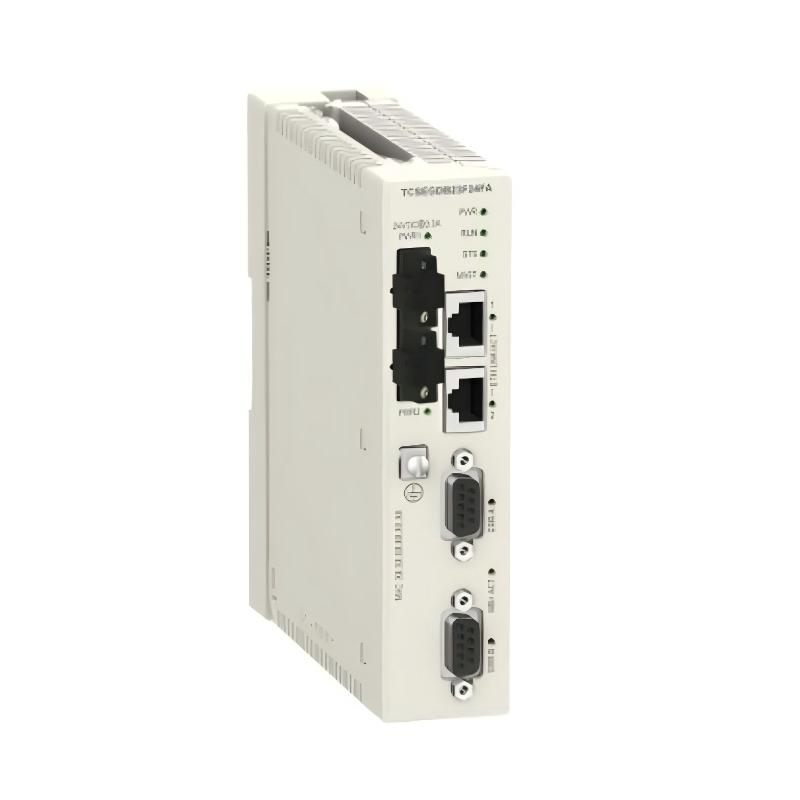
The TCSEGDB23F24FA is a Modbus Plus proxy module designed for the Modicon M340 PLC platform. Its main function is to act as a protocol gateway between:
- Ethernet-based Modbus TCP networks
- Legacy Modbus Plus field networks
- Remote PLC and distributed I/O systems
In practice, this module allows modern PLC architectures to communicate with older Modbus Plus devices without replacing field-level equipment, which is especially important in brownfield upgrades.
Typical applications include:
- Plant modernization projects
- Legacy Modbus Plus migration
- Multi-PLC communication bridging
- Process industry retrofit systems
From a system perspective, it behaves as a communication translator, not a control logic device.
System Preparation Before TCSEGDB23F24FA Installation
Before integrating the module into a rack system, engineers usually validate the following conditions:
- Stable Modicon M340 rack backplane connection
- Correct slot placement (module must be aligned with communication rack design)
- 24V DC power supply stability with low ripple
- Network topology separation between Modbus TCP and fieldbus segments
- Proper grounding to avoid communication noise injection
In one water treatment plant upgrade case, intermittent gateway instability was traced back to shared grounding between the PLC rack and a variable frequency drive cabinet, which introduced low-frequency noise into the communication backplane.
Configuration Process in Real Engineering Practice
Unlike simple I/O modules, TCSEGDB23F24FA requires logical mapping configuration rather than physical wiring alone.
Typical commissioning sequence:
First, engineers assign a valid Modbus Plus network address using hardware configuration switches on the module. This step is critical because incorrect addressing leads to complete communication isolation even if Ethernet configuration is correct.
Next, the module is accessed through its Ethernet interface for initial setup. At this stage, engineers define:
- IP address assignment
- Subnet configuration
- Gateway parameters if required
After network setup, the most critical step is register mapping configuration, which defines how Modbus Plus data is translated into Modbus TCP memory structures.
In a real commissioning project at a cement plant, incorrect register offset configuration caused data inversion between two PLCs, leading to false motor status signals being interpreted as fault conditions.
Once corrected, system stability improved immediately without any hardware replacement.
Common Engineering Mistakes During TCSEGDB23F24FA Setup
Incorrect IP Layer Isolation
One of the most frequent mistakes is placing Modbus TCP and Modbus Plus networks on the same logical broadcast domain, which causes unnecessary traffic flooding and delayed response times.
Misconfigured Register Mapping
If register offsets are incorrectly assigned, data frames may be shifted, causing:
- Incorrect sensor values
- False alarms in SCADA
- PLC logic inconsistencies
Address Conflict in Modbus Plus Network
Legacy Modbus Plus systems are sensitive to address duplication. Even a single conflict can block communication across the entire network segment.
Field Diagnostic Case: Intermittent Communication Loss
In a manufacturing line upgrade project, engineers reported intermittent communication loss between M340 PLC and remote legacy I/O devices.
Initial assumptions included:
- Faulty TCSEGDB23F24FA module
- PLC CPU communication error
- Ethernet switch instability
However, field measurement showed:
- Ethernet link stable at all times
- Modbus TCP traffic normal
- Modbus Plus segment dropping randomly
After deeper analysis, the root cause was identified as duplicate Modbus Plus node addressing introduced during expansion of an older subsystem.
Once addressing was corrected, system communication stabilized completely without replacing any equipment.
System-Level Engineering Insight
The TCSEGDB23F24FA should be understood as a protocol conversion gateway rather than a control device. It does not execute automation logic and does not alter process variables.
Its reliability depends mainly on:
- Correct network segmentation
- Proper protocol mapping
- Stable electrical grounding
- Clean legacy bus topology
In most field failures, the module itself is not defective.
Practical Recovery Actions in Real Projects
Based on field experience, effective corrective actions include:
- Reassigning Modbus Plus node addresses to eliminate conflicts
- Rebuilding register mapping structure from scratch when data corruption is suspected
- Isolating Ethernet network from high-traffic SCADA loops
- Verifying rack backplane seating to avoid intermittent contact
- Reviewing legacy Modbus Plus wiring integrity in retrofit systems
In one refinery automation system, after correcting addressing conflicts and cleaning legacy network topology, communication reliability improved from intermittent drops to continuous stable operation over a 6-week monitoring period.
Engineering Conclusion
Schneider TCSEGDB23F24FA proxy module issues are almost always configuration and network architecture problems rather than hardware failures. Successful deployment depends on correct understanding of Modbus Plus legacy behavior combined with disciplined Modbus TCP integration design.
In modern PLC systems, this module plays a critical role in bridging old and new industrial communication standards, but its stability is entirely determined by system-level engineering decisions rather than internal module performance.