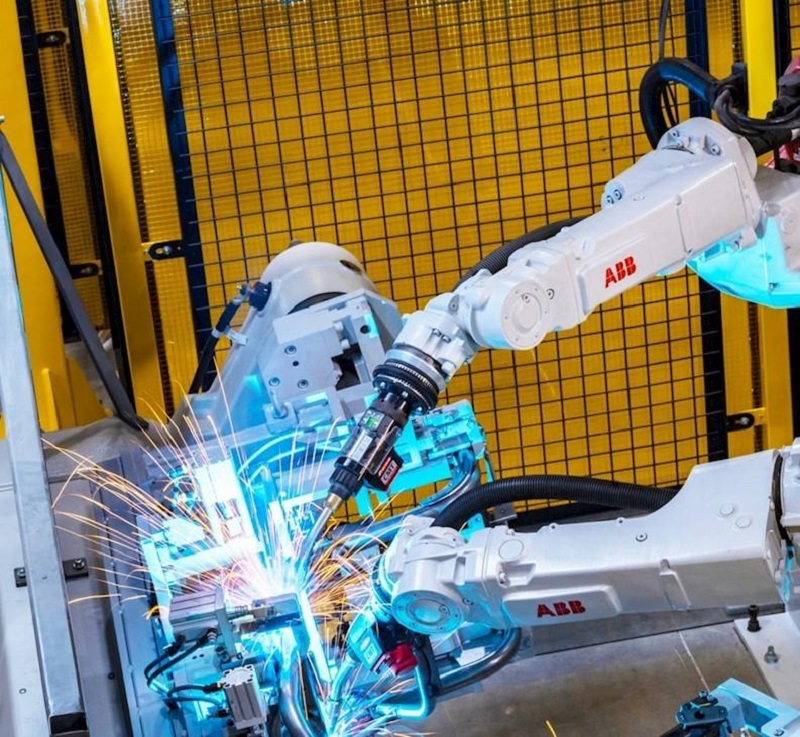
ABB Robotics Showcases Industrial Physical AI Innovations at WAIC 2026, Redefining the Future of Intelligent Automation
Meta Description (SEO):
ABB Robotics presents industrial Physical AI innovations at WAIC 2026, demonstrating how artificial intelligence, robotics, and intelligent automation are reshaping smart manufacturing.
ABB Robotics Brings Industrial Physical AI Innovation to WAIC 2026, Expanding the Boundaries of Robot Capabilities
**ABB Robotics has showcased its latest advances in industrial Physical AI technology at the World Artificial Intelligence Conference (WAIC) 2026, demonstrating how artificial intelligence is transforming the capabilities of industrial robots.
The exhibition highlighted ABB’s vision of next-generation robotics, where robots are becoming more intelligent, adaptive, and capable of handling increasingly complex industrial tasks.
Physical AI Opens a New Era for Industrial Robotics
Traditional industrial robots are mainly based on pre-programmed instructions and are widely used for repetitive manufacturing operations such as:
- Welding
- Assembly
- Material handling
- Painting
- Packaging
However, modern manufacturing environments require greater flexibility and intelligence.
Physical AI combines artificial intelligence with robotic systems, enabling robots to better:
- Understand surrounding environments
- Process complex information
- Adapt to changing production conditions
- Improve decision-making capabilities
- Perform more flexible tasks
This development is helping redefine the role of robots in industrial production.
ABB Explores AI-Driven Robot Intelligence for Smart Manufacturing
At WAIC 2026, ABB Robotics demonstrated how AI technologies can enhance industrial robot performance through:
- Advanced perception technologies
- Intelligent motion control
- AI-assisted programming
- Autonomous operation capabilities
- Human-machine collaboration
These innovations aim to reduce programming complexity and improve the efficiency of automation deployment.
From Traditional Automation to Intelligent Industrial Systems
The manufacturing industry is moving from fixed automation toward more adaptive production systems.
AI-enabled robots can help factories achieve:
Higher Production Flexibility
Modern manufacturers increasingly need to produce customized products with shorter delivery cycles.
Intelligent robots can adapt more easily to:
- Different product models
- Changing production requirements
- Complex manufacturing processes
Improved Operational Efficiency
AI technologies can support:
- Faster robot deployment
- Reduced engineering workload
- Optimized production processes
- Improved equipment utilization
This allows companies to increase productivity while maintaining high quality standards.
ABB Robotics Supports the Development of Smart Factories
The integration of robotics, AI, and industrial data is becoming a key foundation of Industry 4.0.
Smart factories increasingly rely on:
- Industrial robots
- Digital twins
- Machine vision systems
- Industrial software platforms
- Real-time production data
ABB’s Physical AI exploration reflects the industry's transition toward more intelligent and connected manufacturing ecosystems.
AI Enables Robots to Handle More Complex Industrial Applications
With the development of artificial intelligence, industrial robots are expanding into more advanced application areas, including:
- Intelligent inspection
- Precision assembly
- Flexible manufacturing lines
- Automated logistics
- Collaborative robotics
These applications require robots that can operate effectively in dynamic environments rather than only repeating fixed movements.
Collaboration Between AI and Robotics Accelerates Industrial Transformation
The future development of robotics depends on the combination of:
- Artificial intelligence algorithms
- Advanced sensors
- Industrial software
- Automation engineering expertise
- Manufacturing data
ABB continues to invest in robotics innovation to help industries improve efficiency, flexibility, and competitiveness.
Industry Outlook: Physical AI May Become a Core Technology for Future Factories
As global industries accelerate digital transformation, the next generation of factories will increasingly depend on intelligent automation technologies.
Key trends include:
- AI-powered robots
- Autonomous manufacturing systems
- Intelligent industrial equipment
- Digital factory platforms
- Human-robot collaboration
ABB’s participation at WAIC 2026 demonstrates the growing importance of Physical AI in shaping the future of industrial automation.