Emerson Advances Industrial Automation with Autonomous Operations and Next-Generation Process Intelligence Intelligent DCS Platforms, Autonomous Control Technologies and Digital Solutions Transform the Future of Process Industries
Emerson Accelerates Industrial Automation Development Through Autonomous Operations
The industrial automation industry is entering a new phase as companies increasingly adopt intelligent control systems, advanced analytics and autonomous operation technologies to improve efficiency and reliability.
Process industries including oil and gas, chemical manufacturing, pharmaceuticals, power generation and water treatment are facing increasingly complex operational challenges.
Companies need automation solutions that can provide stable process control while also improving decision-making, reducing operational risks and optimizing production performance.
Emerson continues advancing industrial automation technologies by combining distributed control systems, process intelligence platforms, industrial software and digital transformation solutions.
Modern industrial facilities are moving beyond traditional automation models.
Instead of relying only on operators to monitor and adjust processes manually, companies are developing more intelligent systems capable of analyzing conditions and supporting automated optimization.
The development of autonomous operations represents an important direction for future industrial automation.
Autonomous Operations Become a New Trend in Industrial Control
Traditional automation systems were mainly designed to execute predefined control strategies.
Operators monitored processes and adjusted parameters according to operating conditions.
However, modern industries require faster and more intelligent responses.
Autonomous operations use advanced automation technologies to improve industrial decision-making.
These systems combine:
- Process data analysis
- Artificial intelligence
- Advanced control algorithms
- Digital platforms
- Real-time monitoring
Benefits include:
- Improved production efficiency
- Reduced human error
- Faster response to process changes
- Better resource utilization
- Enhanced operational stability
Autonomous industrial systems are becoming increasingly important for companies seeking higher levels of productivity.
Distributed Control Systems Continue Supporting Complex Processes
Distributed Control Systems remain a critical technology for process automation.
Large industrial facilities depend on DCS platforms to manage complex operations involving thousands of control points.
DCS applications include:
- Chemical processing
- Refining operations
- Power generation
- Pharmaceutical manufacturing
- Energy facilities
Modern DCS platforms provide:
- Process monitoring
- Control management
- Alarm handling
- Data collection
- Equipment diagnostics
Advanced DCS systems are also becoming more connected with digital technologies.
This allows companies to combine reliable control with intelligent analysis.
Process Intelligence Improves Industrial Decision-Making
Industrial companies generate enormous amounts of operational data.
However, collecting data alone is not enough.
The challenge is transforming information into useful knowledge.
Process intelligence technologies analyze data from:
- Sensors
- Control systems
- Field instruments
- Production equipment
This analysis helps engineers understand:
- Production efficiency
- Equipment conditions
- Process performance
- Energy consumption
Better information enables faster and more accurate decisions.
Process intelligence is becoming an important component of modern automation strategies.
Artificial Intelligence Enhances Industrial Automation
Artificial intelligence is creating new opportunities for process industries.
AI technologies can analyze complex industrial information and identify patterns that traditional methods may miss.
Industrial AI applications include:
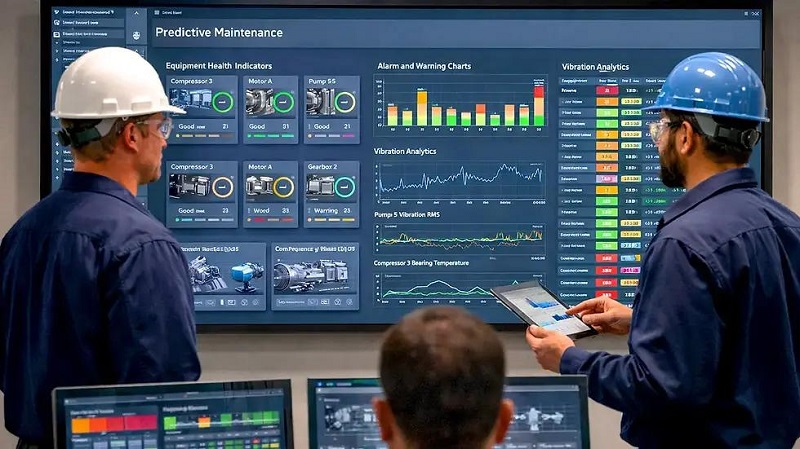
Predictive Maintenance
AI identifies potential equipment failures before they occur.
Process Optimization
AI recommends improved operating conditions.
Energy Management
AI helps reduce unnecessary energy consumption.
Production Analysis
AI improves operational decision-making.
The integration of AI and automation will continue changing how industrial facilities operate.
Digital Transformation Supports Modern Manufacturing
Digital transformation connects automation systems with advanced software platforms.
Modern industrial companies use digital technologies to improve:
- Asset management
- Production efficiency
- Maintenance planning
- Operational visibility
Digital platforms allow engineers and managers to access real-time information about industrial processes.
This creates a more transparent and efficient operational environment.
Industrial Cybersecurity Becomes More Important
As automation systems become more connected, cybersecurity has become a major concern.
Modern industrial environments connect:
- Control systems
- Enterprise networks
- Remote monitoring platforms
- Cloud applications
Security strategies include:
- Network protection
- Access control
- Secure communication
- Continuous monitoring
Future automation systems must balance connectivity with protection.
Energy Efficiency Drives Industrial Automation Innovation
Industrial companies are increasingly focusing on energy optimization.
Automation technologies help improve efficiency through:
- Better process control
- Equipment monitoring
- Automated adjustments
- Energy analysis
Reducing energy consumption helps companies lower costs and improve sustainability.
Energy-efficient automation will continue becoming a key development area.
Demand for Industrial Automation Components Continues Growing
The modernization of process industries creates demand for:
- DCS modules
- PLC systems
- Industrial controllers
- Communication modules
- HMI devices
- Process instruments
- Remote I/O systems
Many companies upgrade existing systems gradually.
This creates long-term opportunities for industrial automation suppliers.
Future Trends of Autonomous Industrial Automation
Future industrial automation will continue developing toward higher intelligence.
Key trends include:
AI-Based Control Optimization
Artificial intelligence will improve automation decisions.
Autonomous Plants
Factories will become more self-adjusting.
Digital Twin Technology
Virtual models will support better engineering.
Advanced Analytics
Industrial data will provide deeper insights.
Sustainable Operations
Automation will support energy efficiency.