Emerson Updates AMS 6500 ATG and AMS Machine Works for Advanced Turbomachinery Monitoring
Emerson has introduced updates to its AMS 6500 ATG online machinery protection system and AMS Machine Works asset health monitoring software, strengthening the connection between turbomachinery protection, continuous data collection and advanced equipment analytics.
Announced on September 8, 2026, the updates are focused on high-criticality turbomachinery and particularly complex operating periods such as equipment startup and shutdown.
The updated AMS 6500 ATG version 5.0 and AMS Machine Works version 2.4 enable continuous data transmission from the protection system into the analytics platform. Emerson says the change allows operators and analysts to examine longer operating periods and gain more detailed insight into machinery behavior.
For industries that rely on compressors, turbines and other critical rotating equipment, this type of monitoring can be an important component of reliability and predictive maintenance strategies.
Why Turbomachinery Startup and Shutdown Require Special Attention
Turbomachinery often operates under different mechanical and process conditions during startup and shutdown than during steady-state operation.
Speed changes, temperature changes, pressure variations and mechanical transients can occur during these periods.
A machine that appears stable during normal operation may exhibit different behavior during acceleration or deceleration.
For this reason, monitoring only steady-state operation can leave important information outside the analysis window.
Emerson says traditional data collection from some machinery protection systems has often been limited to relatively short periods, while startups and shutdowns can take hours or even days.
The updated architecture is designed to address this limitation.
Continuous Data Streaming Extends the Analysis Window
The new software versions support continuous, unlimited machine data transmission from AMS 6500 ATG into AMS Machine Works.
This provides analysts with a much longer view of equipment behavior.
Instead of examining isolated measurements, engineers can review trends across an entire operating event.
This can be particularly useful when investigating intermittent problems.
An abnormal vibration event may occur only during acceleration.
A temperature anomaly may appear during shutdown.
A pressure-related event may occur only when a compressor passes through a particular operating range.
Without sufficient historical data, these conditions can be difficult to analyze.
Continuous streaming gives engineers more information about the complete operating sequence.
AMS 6500 ATG Provides Online Machinery Protection
Machinery protection systems serve a different function from conventional predictive analytics.
Their primary purpose is to protect critical equipment by monitoring operating conditions and responding when predefined limits are exceeded.
For high-value rotating equipment, rapid response can be essential.
Excessive vibration, abnormal shaft behavior or other dangerous operating conditions can potentially lead to serious equipment damage if not addressed.
The protection system therefore forms an important safety and reliability layer.
AMS 6500 ATG combines online machinery protection with embedded prediction capabilities.
The updated connection with AMS Machine Works allows protection data to become a broader source of information for asset health analysis.
Turning Protection Data Into Asset Health Information
Protection systems generate valuable information.
However, historically, much of that information may have been used primarily for immediate protection functions.
By continuously transferring the data into an asset monitoring platform, organizations can use the same information for longer-term analysis.
This creates a connection between immediate machinery protection and maintenance planning.
Engineers can examine trends over time and compare machine behavior across operating cycles.
For example, if vibration levels gradually increase over multiple operating periods, maintenance personnel may investigate the underlying mechanical condition before a serious failure occurs.
This does not mean that every trend automatically predicts failure.
Instead, it gives engineers more evidence with which to evaluate equipment condition.
Programmable Dashboards Improve Operator Visibility
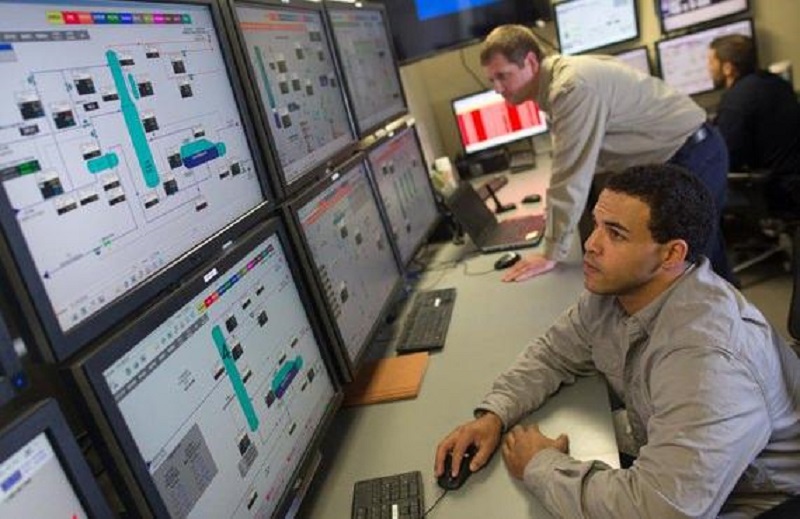
AMS Machine Works version 2.4 introduces programmable dashboards designed to make machinery information easier to interpret.
Emerson says users can configure up to five dashboard pages, with each page supporting up to 25 widgets.
The widgets can include trend displays, Boolean alarm values and live measurement fields.
The dashboards can also display machine components alongside associated data points.
This is useful because raw data can be difficult to interpret when presented without physical context.
An operator may see a vibration value, but understanding which machine component is associated with that measurement makes the information more meaningful.
A visual representation of the asset can help operators connect measurements with physical equipment.
Browser-Based Monitoring Supports Flexible Access
The dashboard is available through a web browser.
Browser-based industrial applications can simplify access to monitoring information because users do not necessarily need a dedicated workstation running specialized client software.
However, browser accessibility should still be managed carefully in industrial environments.
Authentication, user permissions, network segmentation and cybersecurity policies remain important.
For critical machinery, unrestricted remote access should never be assumed to be appropriate.
The system should be integrated into the plant's overall cybersecurity architecture.
Modbus-Independent Connectivity
Emerson also highlights Modbus-independent connectivity in the updated systems.
Reducing dependence on a specific communication method can simplify integration and management in environments where industrial architectures contain multiple systems.
Modern plants often contain equipment from different generations.
A turbomachinery monitoring system may need to interact with existing protection equipment, control systems, historians and analytics platforms.
Simplified connectivity can reduce some of the engineering effort required to move data between these systems.
The exact implementation still depends on the installed architecture and communication requirements of each facility.
Predictive Maintenance for Critical Rotating Equipment
Predictive maintenance is especially valuable for turbomachinery because unexpected failures can have major operational consequences.
Compressors, turbines and other high-value rotating machines may be essential to production.
A failure can result in downtime, maintenance costs and potentially secondary equipment damage.
Condition monitoring helps maintenance teams understand how machinery is behaving.
Important parameters can be trended over time and compared against historical operating conditions.
If an abnormal trend becomes visible, engineers can investigate the equipment before the condition develops into a major problem.
This can support more targeted maintenance planning.
Startup Data Can Reveal Problems Hidden During Normal Operation
One of the most interesting aspects of Emerson's update is its emphasis on startup and shutdown analysis.
Consider a compressor that operates normally once it reaches stable speed.
During startup, however, it may pass through a vibration range where an emerging mechanical issue becomes visible.
If monitoring data is available only after the machine reaches steady state, this behavior may remain unnoticed.
Continuous data allows engineers to examine the complete sequence.
The same principle applies during shutdown.
A machine may behave differently as speed decreases, lubrication conditions change or process pressures fall.
Capturing these periods can therefore provide additional information for reliability engineers.
Combining Real-Time Visibility With Long-Term Trends
Modern asset health management requires both immediate and historical information.
Operators need to know what is happening now.
Maintenance engineers also need to understand how equipment behavior has changed over weeks, months or multiple operating cycles.
The combination of continuous data streaming and asset health software helps bridge these requirements.
Real-time dashboards provide immediate visibility.
Historical trends provide context.
Together, they can support more informed decisions.
Cybersecurity for Critical Machinery Systems
As machinery monitoring systems become more connected, cybersecurity becomes increasingly important.
Turbomachinery protection systems are part of critical industrial infrastructure.
Any network connection must therefore be carefully designed.
Emerson states that the software updates include continued cybersecurity improvements.
For plant operators, this should be complemented by appropriate network segmentation, access management, security monitoring and lifecycle procedures.
Monitoring data can be valuable, but protecting the systems that collect and transmit it is equally important.
Role in Digital Industrial Operations
The evolution of turbomachinery monitoring reflects a broader trend in industrial automation.
Modern plants increasingly combine traditional control systems with analytics and asset health platforms.
The control system maintains process conditions.
The machinery protection system protects critical rotating equipment.
The historian stores operational information.
The asset health platform analyzes equipment condition.
Each layer has a different function, but together they create a more complete digital representation of the plant.
This architecture can help organizations move from reactive maintenance toward more condition-based decision-making.
Conclusion
Emerson's latest updates to AMS 6500 ATG and AMS Machine Works strengthen the connection between machinery protection and long-term asset health monitoring.
The ability to continuously stream machine data provides analysts with a broader view of turbomachinery behavior, including complex startup and shutdown periods that can otherwise be difficult to evaluate.
Programmable dashboards, real-time measurements, historical trending and simplified connectivity provide additional tools for operators and maintenance teams working with critical rotating equipment.
For industrial facilities where compressors, turbines and other turbomachinery play a central role in production, the ability to combine online protection with continuous asset-health analysis can provide a stronger foundation for reliability engineering.
The larger trend is clear: industrial machinery monitoring is moving beyond simple alarm detection toward continuous, data-driven understanding of equipment behavior.