ABB Automation Extended and System 800xA 7.0: A New Era of Flexible DCS Modernization for Industrial Automation
ABB Introduces a New Approach to DCS Modernization
The industrial automation industry is entering a new stage of digital transformation. Traditional manufacturing plants, energy facilities, chemical factories, and process industries are facing increasing pressure to improve efficiency, reduce operational costs, and adopt advanced digital technologies while maintaining stable production.
Distributed Control Systems (DCS) have always been the core control platform for large-scale industrial operations. However, many companies are operating plants with automation systems that were installed years or even decades ago. Completely replacing an existing DCS platform can involve significant investment, engineering challenges, production downtime, and operational risks.
To address these challenges, ABB has introduced its Automation Extended concept together with the latest evolution of ABB Ability™ System 800xA distributed control system. The solution focuses on helping industrial companies modernize their automation infrastructure gradually while protecting existing investments.
For industries such as oil and gas, chemical processing, power generation, mining, and water treatment, this approach provides a practical path toward smarter and more connected operations.
The Importance of DCS Evolution in Modern Industry
Modern factories require much more than basic process control. Companies increasingly need real-time production data, advanced analytics, cybersecurity protection, remote operation capability, and integration with Industrial Internet of Things (IIoT) platforms.
Traditional DCS systems were mainly designed for reliable control of industrial processes. Their main priorities were safety, stability, and continuous operation. However, today's industrial environment requires additional capabilities, including:
- Industrial artificial intelligence applications
- Cloud and edge computing integration
- Advanced process analytics
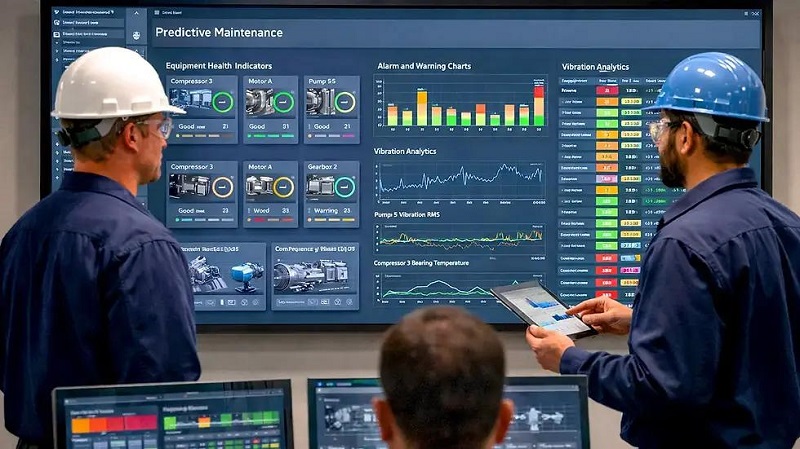
- Predictive maintenance
- Digital twin technology
- Improved energy management
The challenge for many companies is how to introduce these technologies without interrupting existing production.
ABB's latest automation strategy focuses on solving this problem by allowing customers to introduce new digital capabilities step by step.
ABB Ability System 800xA 7.0 Supports Future Industrial Automation
ABB Ability System 800xA has been widely used in process industries worldwide. The latest System 800xA 7.0 version continues the platform's focus on reliability, scalability, and long-term operational support.
The system provides advanced automation capabilities for:
- Process control
- Electrical control integration
- Safety systems
- Asset management
- Operator workplace management
- Industrial information management
One important feature of the latest generation is improved support for digital transformation.
Industrial companies can continue using their existing automation foundation while adding new functions according to their business requirements.
This reduces the pressure of large-scale replacement projects and allows factories to achieve modernization with lower operational risk.
Web-Based Operation and Improved Accessibility
One major development in modern DCS technology is the improvement of operator accessibility.
Traditional control rooms usually depend on dedicated engineering stations and installed software environments. Modern automation systems are moving toward more flexible architectures.
ABB's new DCS extension approach introduces web-based operation capabilities, allowing authorized users to access industrial process information through modern browser-based interfaces.
This development provides several advantages:
1. Flexible Monitoring
Engineers and operators can monitor production information through more convenient interfaces.
2. Reduced Engineering Complexity
Web-based solutions reduce dependence on specific workstation configurations.
3. Better Digital Collaboration
Different departments can access important operational information more efficiently.
For global manufacturing companies operating multiple plants, this type of flexibility can improve maintenance efficiency and decision-making speed.
How ABB's DCS Innovation Benefits Industrial Customers
The evolution of DCS technology creates opportunities across multiple industries.
Power Generation Industry
Power plants require highly reliable control systems to manage complex processes. Modern DCS platforms can improve:
- Equipment monitoring
- Energy efficiency
- Maintenance planning
- Operational visibility
Chemical and Petrochemical Industry
Chemical production requires precise control of temperature, pressure, flow, and safety parameters.
Advanced DCS solutions help companies achieve:
- Better process optimization
- Reduced production variation
- Improved safety management
Mining Industry
Mining operations often involve remote locations and complex production environments.
Modern automation platforms provide:
- Centralized monitoring
- Equipment diagnostics
- Production data analysis
The Future of DCS: Combining Control Reliability with Digital Intelligence
The future of industrial automation will not simply replace existing control systems. Instead, the industry is moving toward continuous evolution.
Factories need automation platforms that combine:
- Proven control performance
- Open digital architecture
- Artificial intelligence
- Data analytics
- Cybersecurity
- Flexible expansion capability
ABB's Automation Extended strategy reflects this industry trend.
Rather than forcing companies into disruptive migration projects, future automation systems will allow manufacturers to gradually adopt new technologies while maintaining production continuity.
Impact on PLC, Automation and Industrial Control Markets
The development of advanced DCS platforms will also influence the wider automation ecosystem.
PLC systems, remote I/O modules, industrial communication networks, sensors, drives, and control components will increasingly need stronger connectivity with higher-level automation platforms.
For automation suppliers and industrial equipment distributors, understanding these technology trends is important.
Customers are no longer only searching for individual automation hardware. They are looking for complete solutions that improve productivity, reliability, and lifecycle management.
Conclusion
ABB's latest DCS development demonstrates the direction of modern industrial automation: flexible modernization, digital integration, and continuous improvement.
As industries worldwide accelerate digital transformation, advanced DCS platforms such as ABB Ability System 800xA will continue playing an important role in helping companies achieve smarter, safer, and more efficient operations.
For industrial automation engineers, system integrators, and global equipment buyers, understanding these trends is essential for future automation projects.