Ingersoll Rand Expands Smart Manufacturing with Precision Assembly, Data Traceability and Robotics
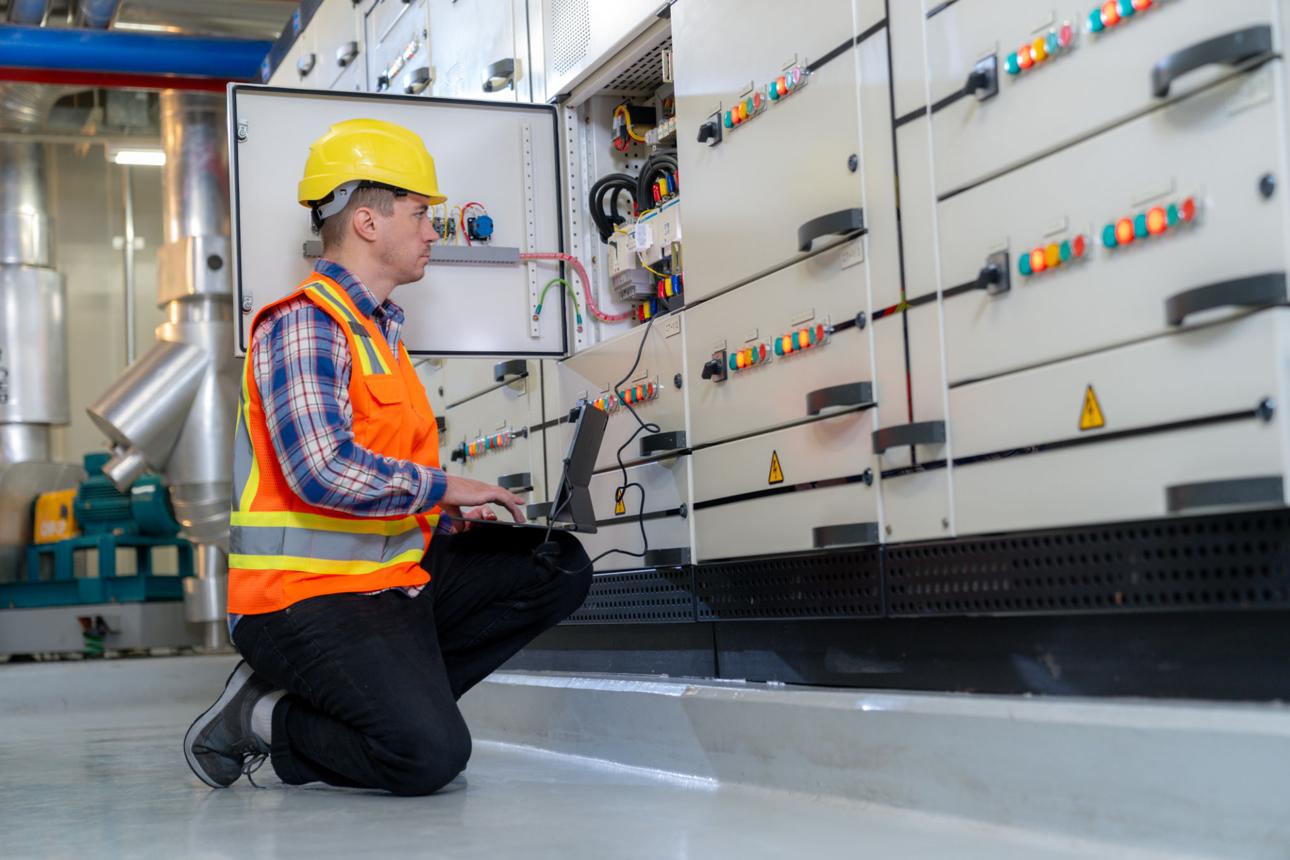
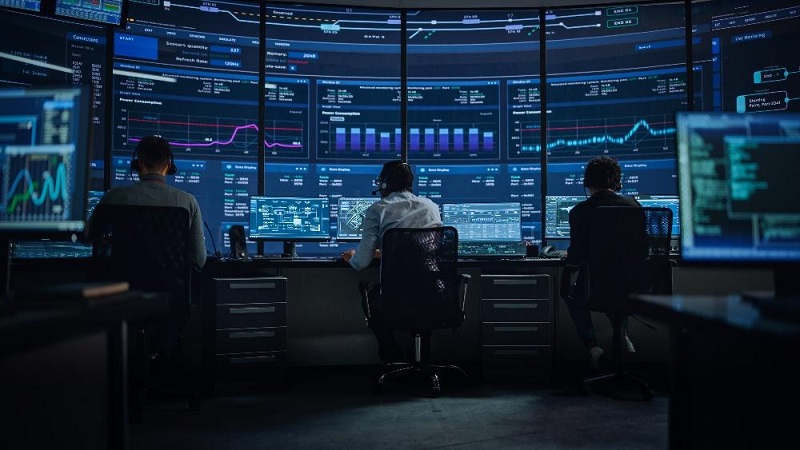
Suggested Image: Ingersoll Rand precision assembly workstation with intelligent fastening tools, torque monitoring, industrial robots, PLC control, production data collection, and engineers monitoring automated manufacturing operations.
Manufacturing companies are under increasing pressure to produce more products while maintaining consistent quality and traceability. This is particularly important for industrial equipment and power-system manufacturing, where fastening quality can directly affect product reliability.
Ingersoll Rand is addressing this challenge through precision assembly technologies that combine intelligent fastening tools, process control, data collection, and automation-ready interfaces.
A 2026 manufacturing case study highlights how an industrial manufacturer used Ingersoll Rand precision assembly technology as part of a broader production expansion and automation strategy. The project included plans for approximately 38 robotic assembly cells.
The development illustrates how fastening technology is becoming part of a larger industrial automation architecture.
Precision Assembly Is Becoming a Digital Process
Fastening may appear to be a simple manufacturing operation.
However, in industrial production, the correct torque, angle, sequence, and fastening status can be critical.
If a fastener is under-tightened, the assembled component may not perform correctly.
If it is over-tightened, the fastener or surrounding component may be damaged.
For this reason, modern assembly systems increasingly monitor fastening parameters electronically.
Instead of relying only on an operator to determine whether a fastening operation has been completed correctly, an intelligent system can record the process data automatically.
INSIGHTqc Process Control
Ingersoll Rand's INSIGHTqc process control system is designed to support real-time torque monitoring, data collection, and traceability.
When combined with precision fastening tools, the system can record information associated with individual fastening events.
This creates a direct connection between the physical assembly process and digital manufacturing information.
A production database can potentially contain information such as:
Torque value
Target torque
Fastening result
Tool identification
Operator information
Production station
Product identification
Time of operation
Fault status
Such information becomes valuable when a manufacturer needs to investigate quality issues.
From Manual Tools to Connected Assembly
Traditional handheld tools are often operated independently from the production control system.
Connected assembly tools are different.
The tool becomes part of the automation network.
The manufacturing system can determine what fastening operation should be performed, while the tool reports whether the actual operation met the required parameters.
This creates a closed-loop process.
For example:
Product identification → Work instruction → Fastening operation → Torque verification → Data recording → Production confirmation
If the fastening result is outside the specified range, the system can prevent the production sequence from continuing until the problem is corrected.
Preparing for Robotic Assembly
The integration of intelligent fastening technology with robotics is another important development.
Ingersoll Rand's 2026 case study describes automation-ready fastening interfaces designed to support integration with robotic assembly cells. The manufacturer involved in the project planned approximately 38 robotic assembly cells as production expanded.
Robotic assembly can provide repeatable motion and consistent process execution.
However, the robot itself does not guarantee assembly quality.
The fastening system still needs to determine whether the connection is correct.
This is why robots, fastening tools, sensors, and process-control software increasingly operate as one integrated system.
PLCs in Automated Assembly
A PLC can act as the central coordinator of an automated assembly cell.
The controller can manage:
Robot signals
Tool enable commands
Product sensors
Safety circuits
Fixtures
Conveyors
Barcode readers
Production sequencing
Quality confirmation
The PLC can receive the result from the fastening system and determine whether the machine should continue.
This creates a direct relationship between intelligent tools and traditional industrial automation.
Data Traceability and Quality Control
Traceability is particularly important for manufacturers producing components that must meet strict quality requirements.
If every fastening operation is recorded, manufacturers can create a digital production history for each product.
Suppose a product later fails during field operation.
Engineers can potentially review its manufacturing data and determine:
Which assembly station processed the product
Which tool was used
What torque was applied
Whether the fastening result was within tolerance
When the operation occurred
Whether any abnormal conditions were recorded
This information can significantly improve root-cause analysis.
Standardization Across Multiple Factories
Another important aspect of Ingersoll Rand's 2026 case study is standardization.
The manufacturer implemented precision assembly technology across multiple facilities, including production lines in Western Canada and the southeastern United States. The company described standardized tools and processes as a way to simplify procurement, training, maintenance, and quality management.
Standardization is an important part of modern manufacturing automation.
When each factory uses completely different equipment and procedures, engineering teams may need to maintain separate systems.
A standardized platform can make it easier to transfer production knowledge between facilities.
Scaling Production with Automation
Production expansion creates additional engineering challenges.
Adding another assembly line is not simply a matter of installing additional machines.
The manufacturer must also consider:
Process consistency
Operator training
Maintenance
Spare parts
Software configuration
Quality control
Data management
Production traceability
Automation can help standardize these processes.
When the same intelligent fastening platform is deployed across multiple production lines, the manufacturer can use similar process parameters and data structures.
The Role of Robotics in Industrial Manufacturing
Robotics is increasingly used for repetitive assembly operations.
Typical applications include:
Screwdriving
Nut fastening
Component insertion
Pick and place
Dispensing
Inspection
Material handling
Machine tending
However, robotic automation works best when the entire production cell is designed as an integrated system.
A robot needs accurate positioning.
The fastening tool needs process control.
Sensors need to confirm component presence.
The PLC needs to coordinate the sequence.
The safety system needs to protect personnel.
The manufacturing system needs to record production information.
This is where industrial automation engineering becomes essential.
Industry 4.0 and Connected Assembly
Intelligent fastening systems are also part of the wider Industry 4.0 trend.
The objective is to make manufacturing equipment more connected and data-driven.
A modern assembly station can communicate with higher-level manufacturing software while maintaining local control.
Data can be used to analyze:
Cycle time
First-pass yield
Tool performance
Fault frequency
Production throughput
Maintenance requirements
This can help engineers identify bottlenecks.
For example, if one assembly station consistently takes longer than the others, production data can reveal the issue.
Predictive Maintenance
Connected tools can also contribute to maintenance strategies.
A fastening tool operates repeatedly throughout the production day.
Over time, its performance can change.
Monitoring tool data can help identify unusual behavior before it develops into a production problem.
Maintenance teams can then schedule service based on actual operating information rather than relying exclusively on fixed intervals.
Cybersecurity and Connected Tools
As assembly tools become connected to industrial networks, cybersecurity becomes increasingly relevant.
Manufacturers should protect communication between tools, PLCs, industrial PCs, and manufacturing systems.
Security measures may include:
Network segmentation
Access control
Device authentication
Secure software updates
Data protection
User permissions
Industrial cybersecurity is no longer limited to PLCs and SCADA systems.
Connected production tools can also become part of the industrial network and therefore need appropriate protection.
The Future of Intelligent Assembly
The development of intelligent fastening technology shows how industrial automation is expanding into individual production operations.
A screwdriver is no longer simply a mechanical tool.
When equipped with sensors, communication, process control, and traceability functions, it becomes an intelligent manufacturing device.
When connected to a PLC, robot, MES, and quality system, it becomes part of a complete digital production architecture.
This transition can be particularly valuable for high-volume manufacturing where consistency and traceability are important.
Conclusion
Ingersoll Rand's latest precision assembly developments demonstrate the growing connection between intelligent tools, industrial automation, robotics, and manufacturing data.
The combination of precision fastening, real-time process control, traceability, and automation-ready interfaces provides manufacturers with a pathway toward more standardized and scalable assembly operations.
As manufacturers expand production and introduce more robotic cells, intelligent tools will increasingly become important components of the automation architecture.
For PLC engineers, system integrators, and manufacturing teams, the key development is the integration of the fastening process into the wider control system.
The future of automated assembly will depend not only on robots, but also on the sensors, intelligent tools, controllers, software, and data systems that allow those robots to perform consistently.