Bailey DCS Modernization: How ABB Symphony Plus Extends Legacy Process Automation
Suggested Image: ABB Bailey legacy DCS and modern Symphony Plus control system operating together in a power or process plant control room, showing operator stations, controllers, I/O modules, industrial networks, and a modern DCS architecture.
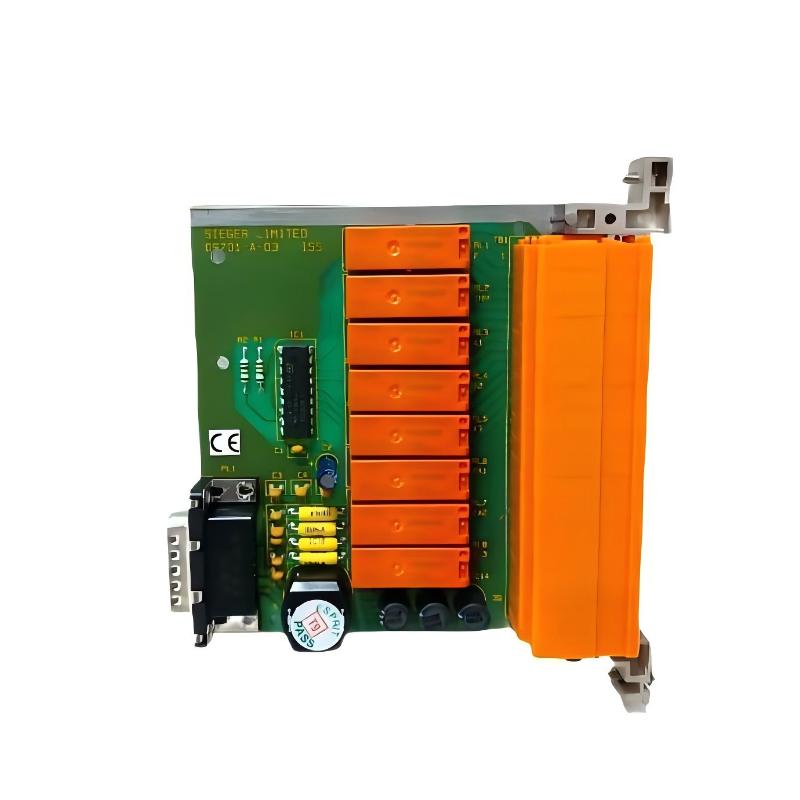
Bailey control systems have been used for decades in power generation, water, oil and gas, chemical, pulp and paper, and other process industries. Many plants continue to operate automation infrastructure based on earlier generations of Bailey and Symphony control technology.
As these facilities age, operators face an important question: how can an existing control system be modernized without completely replacing the installed automation infrastructure?
ABB's Symphony Plus platform provides one pathway for this transition.
The relationship between Bailey legacy systems and Symphony Plus is particularly important because ABB has designed Symphony Plus to support the evolution of earlier Symphony-family systems rather than requiring an immediate complete replacement.
From Bailey Control Systems to Symphony Plus
The Bailey control system family has a long history in process automation.
Earlier systems such as Network 90, INFI 90, INFI 90 OPEN, Harmony, Contronic, and Melody formed the foundation of many industrial control installations.
Over time, however, industrial requirements have changed.
Modern facilities increasingly require:
Ethernet communication
OPC UA connectivity
Advanced diagnostics
Cybersecurity
Modern HMIs
Historical data
Remote access
Asset management
Advanced analytics
The challenge is how to introduce these technologies without unnecessarily disrupting a running plant.
Why Complete Replacement Is Not Always Practical
A traditional "rip and replace" project can require substantial investment.
Replacing a DCS may involve changes to:
Controllers
I/O modules
Operator stations
Engineering workstations
Networks
Field wiring
Power supplies
Communication interfaces
Software
Safety systems
For a continuously operating plant, a complete replacement may also require extended shutdown periods.
This is why phased modernization has become an important strategy.
ABB's Evolution Approach
ABB describes Symphony Plus as a DCS designed to maximize plant efficiency and reliability through automation, integration, and optimization.
The platform maintains backward compatibility with several earlier Symphony-family systems, including Network 90, INFI 90, INFI 90 OPEN, Symphony Harmony, Contronic, and Symphony Melody.
This compatibility provides a basis for gradual modernization.
A plant can potentially upgrade selected parts of the automation architecture while preserving useful existing infrastructure.
Symphony Plus SPR2025
In March 2026, ABB announced its latest Symphony Plus DCS release, SPR2025.
The release adds capabilities including system-wide OPC UA connectivity, enhanced field-device integration, an Ethernet backbone, and Automation Extended functionality.
These functions address several of the most important requirements facing legacy process control systems.
The goal is not simply to install a newer controller.
The objective is to create a modern automation environment while protecting the value of existing investments.
Automation Extended
ABB's Automation Extended concept is designed around separating core control from additional digital and optimization functions.
This approach allows new capabilities to be added without fundamentally changing the underlying control architecture.
For legacy system users, this can be significant.
A plant may need new analytics or digital applications without wanting to modify the core control logic.
By separating these functions, modernization can become more modular.
Ethernet and OPC UA
Industrial communication has changed significantly over the past several decades.
Older DCS architectures often relied heavily on proprietary communication networks.
Modern industrial facilities increasingly use Ethernet-based communication and open standards.
OPC UA is particularly important because it provides a standardized way for industrial systems to exchange information.
With system-wide OPC UA support, modern Symphony Plus architectures can connect control information with other software and automation systems.
This can simplify integration between:
DCS
PLCs
SCADA
MES
Historians
Asset management systems
Enterprise applications
Modern HMI and Operator Operations
The operator interface is one of the most visible parts of a DCS modernization project.
Operators need fast access to:
Process values
Alarms
Trends
Equipment status
Control loops
Diagnostic information
Historical data
ABB's Symphony Plus Operations environment is designed around operator awareness, alarm management, process information, and integrated operations.
A modern HMI can help operators understand abnormal conditions more quickly.
This is particularly important in large process plants where hundreds or thousands of process variables may change simultaneously.
The Importance of I/O Migration
I/O is one of the most challenging components of DCS modernization.
A plant may contain thousands of physical signals connected to:
Pressure transmitters
Temperature sensors
Flow meters
Level instruments
Control valves
Motors
Switches
Analyzers
Replacing all field wiring can significantly increase project complexity.
A phased modernization approach can help reduce this burden.
The objective is to upgrade the control architecture while preserving as much useful field infrastructure as practical.
Power Generation Applications
Bailey and Symphony control technologies have a particularly strong history in power generation.
Power plants require highly reliable control systems because equipment such as boilers, turbines, generators, and balance-of-plant systems must operate continuously.
A modernization strategy may include upgrading:
Boiler control
Turbine control interfaces
Balance-of-plant systems
HMI stations
I/O
Communication networks
Historical data
Engineering workstations
The modernization process can be planned around available maintenance or outage windows.
Water and Infrastructure
Symphony Plus is also used in water applications.
Water treatment and pumping facilities increasingly require remote monitoring and integrated control.
Modern DCS and SCADA architectures can collect information from geographically distributed equipment and present it to operators through centralized interfaces.
This is particularly useful when facilities operate large numbers of pumps, valves, treatment processes, and remote stations.
Oil and Gas and Process Industries
Legacy Bailey control systems can also be found in oil and gas, chemical, pulp and paper, and other continuous-process industries.
These plants often operate equipment for decades.
Modernization therefore needs to balance new technology with operational continuity.
A phased approach can allow individual parts of the plant to be modernized over time.
Cybersecurity in Legacy DCS Modernization
Cybersecurity is one of the strongest reasons for updating aging automation infrastructure.
Older systems may have been designed for relatively isolated industrial environments.
Modern plants are much more connected.
Remote maintenance, enterprise integration, industrial Ethernet, cloud applications, and external data exchange can increase the attack surface.
Modern DCS architectures therefore need security measures such as:
Network segmentation
Access management
Secure remote connectivity
System monitoring
Software patch management
Backup
Redundancy
Security lifecycle planning
Cybersecurity needs to be incorporated into modernization projects from the beginning.
Historian and Plant Data
Another important modernization target is historical data.
A DCS historian can provide valuable information about long-term plant performance.
Historical information can help engineers analyze:
Production trends
Energy consumption
Equipment performance
Process disturbances
Alarm patterns
Maintenance events
ABB's Symphony Plus Historian is designed to integrate information from ABB, third-party, and business systems and make plant information available within the broader automation environment.
This creates a foundation for advanced analytics and optimization.
Why Phased Modernization Matters
One of the most important lessons from legacy DCS modernization is that modernization does not necessarily need to happen in one project.
A plant can develop a long-term roadmap.
For example:
Phase 1: HMI modernization
Phase 2: Engineering workstation upgrade
Phase 3: Network modernization
Phase 4: Controller migration
Phase 5: I/O modernization
Phase 6: Historian and data integration
Phase 7: Advanced analytics
This approach can help distribute investment and reduce operational disruption.
The Future of Bailey-Based Automation
The future of Bailey control systems is closely connected to the ability to evolve existing installations.
Industrial plants do not necessarily need to abandon decades of engineering knowledge when modernizing their control systems.
Existing process knowledge, control strategies, field instrumentation, and operational experience remain valuable.
Modern DCS technology can build on that foundation.
This is why backward compatibility and phased migration are important concepts for long-life industrial assets.
Conclusion
The transition from legacy Bailey control systems to modern ABB Symphony Plus automation demonstrates how industrial DCS technology can evolve without requiring every plant to start from zero.
Modern connectivity, OPC UA, Ethernet, improved HMI technology, advanced data management, cybersecurity, and modular automation functions can be introduced progressively.
For power plants, water facilities, oil and gas installations, chemical plants, and other process industries, this approach provides a practical framework for extending the operational life of existing automation infrastructure while preparing plants for newer digital technologies.
The future of process automation is therefore not necessarily about replacing everything that came before.
In many cases, it is about intelligently connecting proven control technology with modern digital capabilities and creating a gradual path toward a more secure, connected, and maintainable DCS environment.
SEO Keywords: Bailey DCS, ABB Bailey, Bailey control system, ABB Symphony Plus, Symphony Plus DCS, Bailey DCS modernization, INFI 90, Network 90, process automation, DCS migration, DCS modernization, industrial control system, legacy DCS upgrade